Your modern building projects need materials that are strong but light. Aluminum honeycomb core technology changes how architects design and install exterior envelopes. It started in the Apollo program and now helps with today’s complex construction needs.
An aluminum facade system with honeycomb backing gives your projects the stiffness and flatness they need. It lets you use larger panels with tighter tolerances. This is key on tight urban construction sites where space and time are limited.
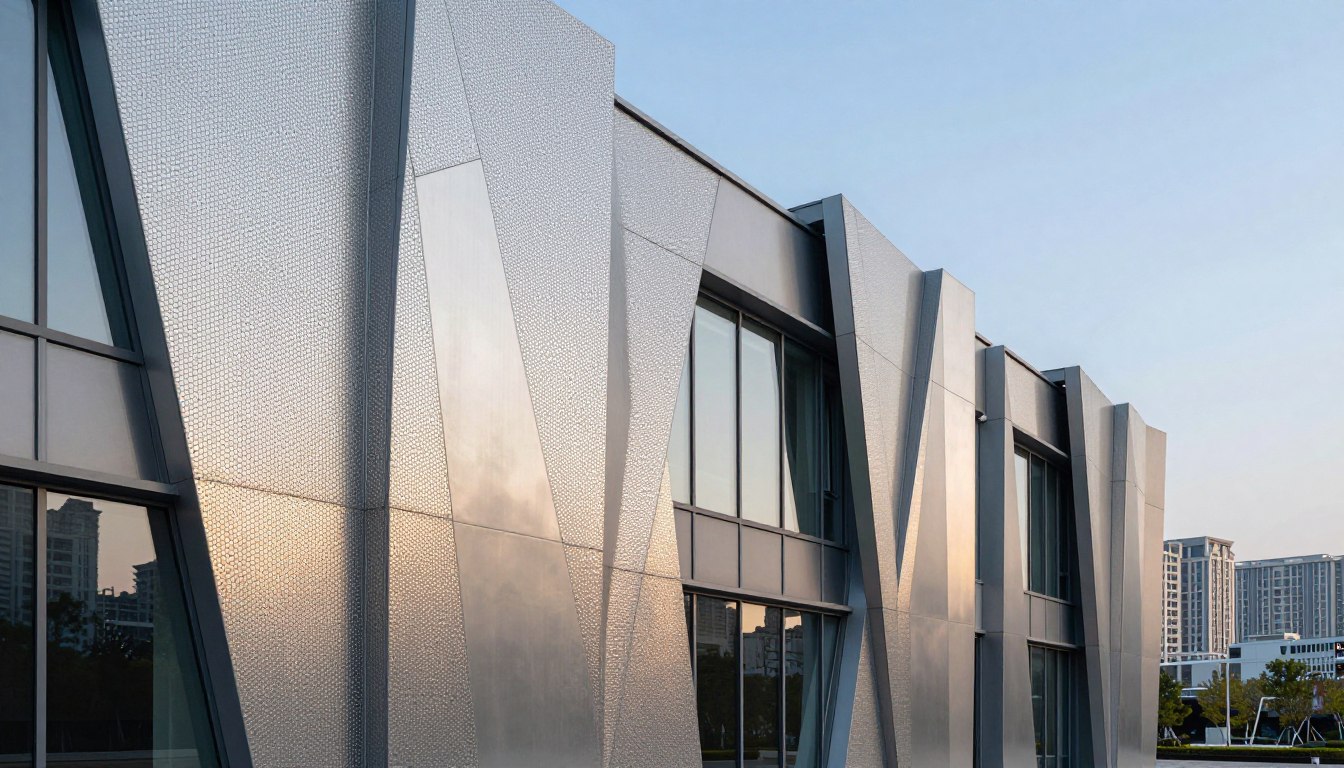
Your architectural cladding solutions now cover many uses. Stone rainscreens, metal panels, and photovoltaics all benefit from honeycomb core support. The aluminum panel technology reshaping modern facades offers the versatility you need for any look.
A high-performance building envelope needs materials that meet many demands. Panels arrive prefabricated, saving time and money. This also makes your design more flexible, supporting large modules and complex shapes without losing performance.
Large-scale facade projects benefit from honeycomb-backed panels that stay stable for decades. You get the proven aerospace heritage of a technology tested in extreme conditions. Major developers and architects choose it for its reliability and performance.
Key Takeaways
- Aluminum honeycomb core technology evolved from aerospace applications into reliable architectural cladding solutions for large-scale facade projects.
- Your aluminum facade system delivers high strength-to-weight ratios that enable longer spans and consistent flatness without structural penalties.
- Prefabricated aluminum panel technology reduces installation time and on-site complexity on constrained urban sites.
- A high-performance building envelope supports stone, metal, porcelain, and photovoltaic finishes through the same structural core.
- Lightweight panels decrease crane activity and enable faster, more predictable installation sequences for your projects.
- Honeycomb-backed systems support dimensional stability and flatness over time, preserving your design intent across large-format surfaces.
- The structural rigidity built into each panel reduces or eliminates sub-framing, streamlining your building envelope with fewer materials and possible failure points.
Aluminum Facade System: Engineering Performance for Modern Architecture
Modern buildings need materials that are strong, light, and easy to install. Aluminum facade systems meet these needs with smart design and solid engineering. They must handle wind, temperature changes, and years of weather while looking good.
The right system uses advanced core technology. This technology spreads out stress evenly across the panel. This keeps the facade strong and looking great.
Choosing aluminum facade systems for big projects means picking a solution that simplifies the building envelope. The panels are made in a way that improves performance. This helps your project finish faster and save money.
Structural Integrity Through Honeycomb Core Technology
Nature shows us how to be efficient, and honeycomb core aluminum panels follow this. Their hexagonal core is strong yet light. When thin aluminum skins cover this core, the whole thing becomes very rigid without being too heavy.
These panels can carry loads, not just cover the building. This means you don’t need a lot of extra framing. They are stronger than other materials for their weight, giving your building more strength.
The hexagonal core spreads out forces in all directions. This keeps the facade flat over time. It protects your building’s look and cuts down on maintenance costs.
| Performance Metric | Honeycomb Core Panels | Traditional Aluminum Composite |
|---|---|---|
| Strength-to-Weight Ratio | Superior | Standard |
| Deflection Resistance | Minimal movement over span | Moderate deflection possible |
| Backing Frame Requirements | Reduced or eliminated | Full secondary framing needed |
| Installation Complexity | Simplified assembly | Multiple trade coordination |
| Long-Term Flatness | Maintains dimensional stability | Subject to gradual warping |
Weight Reduction and Installation Efficiency Benefits
Your project’s schedule is important. Heavy materials slow things down and need special tools. Honeycomb core aluminum panels are much lighter but just as strong.
This lightness brings many benefits:
- Installation is faster, without needing a crane for every panel
- Logistics and handling on site are simpler
- The building’s structure and foundations need less support
- You need fewer workers on the crew
- The project timeline and labor costs are lower
Choosing honeycomb core aluminum panels means your facade can handle loads itself. This makes installation easier. You need fewer people and less framing, which speeds up your project.
Thermal Performance and Energy Efficiency Integration
Building envelopes control temperature. A bad facade makes your HVAC work too hard, wasting energy and money. Aluminum composite panels can include thermal barriers to stop heat transfer.
The strong facade lets you add more insulation without losing structural integrity. Your facade helps save energy, not hinder it.
The hexagonal core in your facade keeps it strong while controlling temperature. This means you meet energy goals without adding weight or complexity. Your facade is a key part of your building’s performance.
Your aluminum facade system is all about performance. It’s designed to do many things well. The honeycomb core is strong, the aluminum skins protect, and it’s light and easy to install. It meets energy standards and looks great. This integrated solution makes your building perform well in every way.
Real-World Applications: SAMIH Building and 481 University Avenue Projects
Two major projects in Toronto highlight the power of aluminum facade systems. The University of Toronto SAMIH building aimed to use renewable energy across its walls. The goal was to hit a 20% renewable energy mark with creative solutions.
The team turned to building-integrated photovoltaics for a solution. This approach led to a facade that produces 513 kW of solar power. This generates about 420,000 kWh of energy each year.
The facade of the University of Toronto SAMIH shows off complex design. Architects created a mosaic with five colors and eight module sizes. This mix balances solar power with beauty.
The darker areas were placed to boost power while keeping the look good. This shows how design can meet both needs.
| Project Feature | University of Toronto SAMIH | 481 University Avenue Toronto |
|---|---|---|
| Primary Challenge | Renewable energy integration | Downtown site constraints |
| Solar Capacity | 632 kW total (513 kW facade) | Not applicable |
| Annual Generation | 420,000 kWh | Not applicable |
| Building Height | Multi-story facility | 55-story tower |
| Facade Material | Building-integrated photovoltaics | Limestone facade panels |
| Core Technology | Honeycomb backing with BIPV modules | Honeycomb-backed stone facing |
| Key Advantage | Structural consistency during design refinement | Lightweight installation on active transit routes |
481 University Avenue Toronto faced unique challenges. The facade needed to look like stone but was on a busy downtown site. Honeycomb-backed limestone panels were chosen for their look without the weight.
This choice allowed for quicker installation with smaller cranes. It also reduced disruptions to the subway lines.
Both projects show how aluminum honeycomb facade systems meet different needs. They can be used for solar panels or stone looks. Customizable facade solutions help refine designs while keeping installation predictable.
- University of Toronto SAMIH delivers 420,000 kWh renewable energy annually
- Eight module sizes accommodate complex mosaic design patterns
- 513 kW facade-mounted solar capacity exceeds rooftop-only alternatives
- Honeycomb backing reduces weight on 55-story towers
- Lightweight panels minimize installation time on constrained sites
- Stone cladding achieves traditional aesthetics with modern efficiency
Your project needs decide the best approach. The University of Toronto SAMIH shows how to meet renewable energy goals. The 481 University Avenue project shows how to solve installation problems in the city.
Both projects prove that aluminum facade systems work well for many goals. They can help with energy or looks, showing reliability across different needs.
Sustainability and Embodied Carbon Reduction in Aluminum Cladding
Your building’s environmental impact starts with the materials you choose. The embodied carbon in your facade system is key to your project’s sustainability. By picking low-carbon cladding materials like recycled aluminum facades, you boost your building’s green credentials and value.
Modern sustainable aluminum systems cut carbon emissions a lot. The move to recycled content is a big change in facade design today.
Recycled Aluminum Content and Carbon Footprint Reduction
Recycled aluminum needs just 5% of the energy to make primary aluminum. This big difference cuts your carbon footprint a lot.
Using Hydro CIRCAL aluminum in your facade system means verified carbon cuts. Here’s what the numbers show:
| Aluminum Type | Recycled Content | Carbon Footprint (kg CO₂e/kg) | Reduction vs. Primary Aluminum |
|---|---|---|---|
| Primary Aluminum | 0% | 10.0 | Baseline |
| Hydro CIRCAL 75R | 75% Post-Consumer | 1.9 | 81% Reduction |
| Hydro CIRCAL 100R | 100% Post-Consumer | 0.5 | 95% Reduction |
At the facade system level, the benefits are clear. TECHNAL systems with recycled aluminum cut total embodied carbon by 50% compared to traditional facades.
Circular Economy Approaches in Facade Systems
Sustainable aluminum systems are more than just aluminum. Your facade’s components all play a part in your carbon goals.
Choosing low-carbon cladding materials means looking at these elements:
- Recycled polyamide thermal breaks (about 75% carbon cut)
- Recycled EPDM gaskets (around 30% cut)
- Aluminum extrusions from verified post-consumer sources
- Assembly methods that reduce waste
This careful material selection leads to real results. Your EPDs and life cycle assessments will back up your green building claims. These aren’t just guesses—they’re verified data.
The financial gains are real too. Buildings with less embodied carbon get higher rents, better occupancy rates, and more asset value. Choosing recycled aluminum facades is a smart investment that pays off financially and environmentally.
Conclusion
Choosing an aluminum facade system meets many building needs at once. It offers strength, quick installation, and good insulation. It also allows for flexible designs and is eco-friendly.
The SAMIH Building and 481 University Avenue examples show how aluminum systems fit your needs. They don’t restrict your design choices. This meets the demands of modern projects.
These systems also save money. They are lighter, so they’re faster and cheaper to install. They meet energy standards and use recycled materials, reducing carbon by 50%.
These benefits add value to your building. High-performance buildings can charge more rent and have higher occupancy rates. They also increase in value by 16-25%.
Your choice helps your building last longer and meet future standards without costly updates. Building codes now focus on carbon emissions and energy efficiency. Tenants want healthy, efficient spaces.
Systems like aluminum facade systems with honeycomb backing meet these needs. They support sustainable practices and keep material value high. This protects your investment and supports your green goals.
These facades are versatile for new buildings, renovations, or adding solar panels. They offer the performance and flexibility needed for modern architecture. They are backed by successful examples and clear data for confident choices.