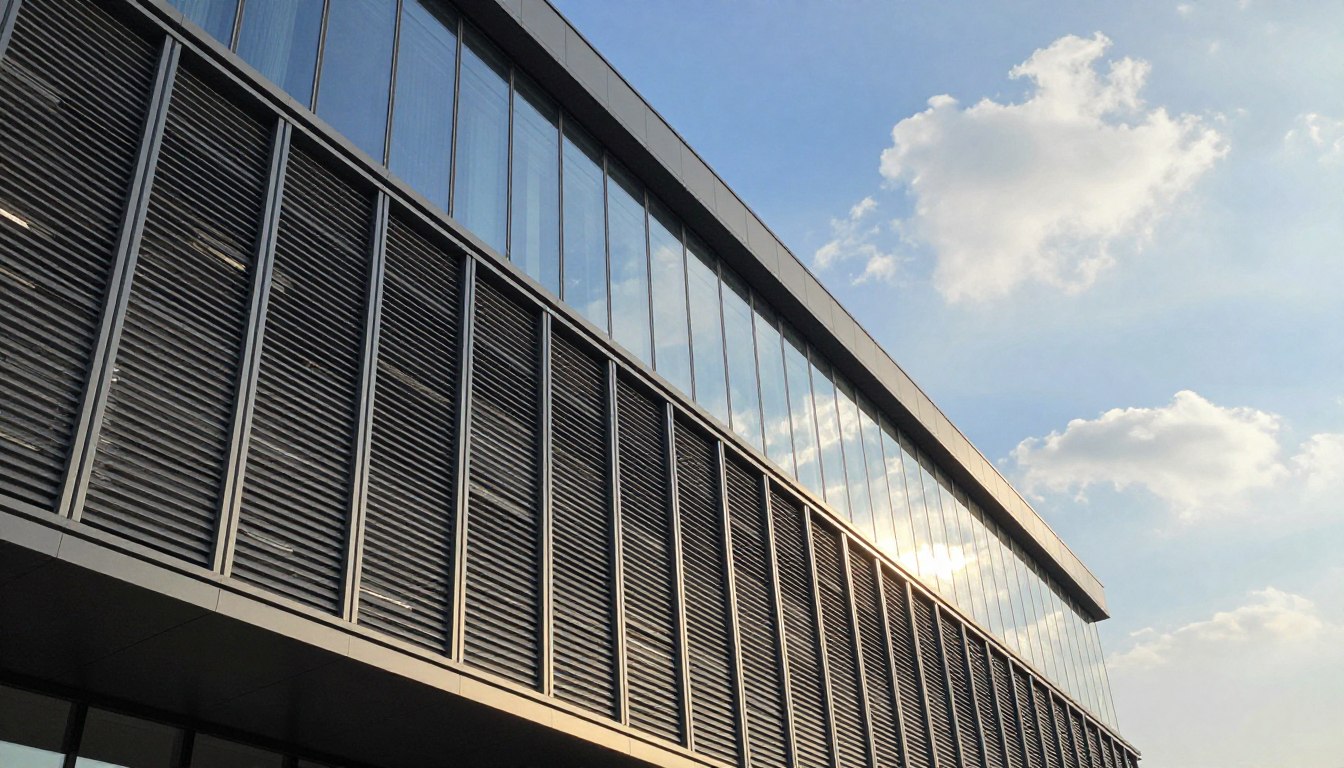
Louvers are key in modern building design. They offer both protection and style. These elements control airflow, manage light, and protect from weather damage.
Building louvers are made from various materials. Aluminum is durable and easy to maintain. Wood adds warmth and natural beauty. Fiberglass Reinforced Panels are weather-resistant. Metal options are strong and industrial.
Architectural louvers now have two roles in building design. They manage airflow and add striking design elements. This makes them essential for projects that want both efficiency and beauty.
Modern architects use louvers in facades, roofs, and windows. This makes projects more efficient and visually appealing. Louvers have evolved from simple wooden structures to sophisticated architectural features.
Understanding louvers helps you make better choices for your project. They improve air quality, reduce energy costs, and enhance your building’s look. Louvers turn ordinary structures into buildings that breathe, perform, and inspire.
Key Takeaways
- Louvers combine functional airflow management with striking visual design
- Building louvers come in aluminum, wood, metal, and fiberglass materials
- Architectural louvers protect interiors while allowing natural ventilation
- Modern louver designs improve energy efficiency and indoor air quality
- Your building gains both performance and aesthetic benefits from louvers
- Integration into facades creates texture and architectural interest
Understanding Louvers in Modern Architecture
Louvers are a smart and stylish choice in today’s buildings. They help control airflow, light, and keep your space safe from outside. Knowing how they work can help you use them in your building designs.
The idea behind louvers is simple yet effective. They let air and light in while keeping out rain, bugs, and debris. The way they are set up affects how well they work for your needs.
What Are Louvers and How Do They Work
Louvered panels help control your building’s environment. They help your HVAC system by managing airflow. The way the blades are set up lets in air while keeping out weather.
You can adjust louvers for different uses. Horizontal ones protect from weather, while vertical ones control light. The space between the slats affects how much air gets through and how well they block rain.
The Evolution of Louvers in Building Design
Louver design has changed a lot over time. From simple wooden shutters to advanced architectural parts, they’ve come a long way. Today’s louvers use new materials and designs.
| Era | Material | Primary Function | Design Focus |
|---|---|---|---|
| Ancient Period | Wood | Weather shielding | Basic protection |
| Industrial Era | Steel, Cast Iron | Ventilation and protection | Durability |
| Modern Era | Aluminum, Composite | Multi-functional | Aesthetics and performance |
Today, louvers meet high standards and offer design freedom. They can make your building look good and work well. New technologies have made louvers more than just protection; they’re key to energy efficiency and comfort.
The Dual Role of Louvers in Commercial Buildings
Commercial louvers play a key role in your building’s design. They manage airflow and protect your structure. At the same time, they enhance your building’s look. This means you get both function and beauty.
Your commercial louvers control ventilation and add visual interest. The slats cast shadows, adding texture and rhythm. This turns a practical need into a beautiful architectural feature.
Choosing louvers wisely brings many benefits. They lower energy use by improving airflow. Your building also gets better protection from weather and UV rays. Plus, indoor air quality and comfort improve without extra equipment.
| Building Benefit | Performance Impact | Design Advantage |
|---|---|---|
| Building Ventilation Control | Reduces mechanical system demand by 15-25% | Creates visual rhythm on façade |
| Energy Cost Reduction | Lowers annual HVAC expenses | Adds architectural depth and texture |
| Weather Protection | Shields building envelope from rain and debris | Enhances exterior aesthetic appeal |
| Indoor Air Quality | Improves occupant comfort and health | Maintains unobstructed sightlines |
Your design elements don’t have to sacrifice function for beauty. Commercial louvers show that ventilation systems can also be part of your design. They fit well into your building plan, saving energy and protecting your structure for years.
Enhanced Ventilation and Indoor Air Quality Benefits
Your building’s air quality affects everyone’s health and comfort. Ventilation louvers are key to keeping the air fresh and clean. By placing these systems right, you can use natural air flow to cut down on pollutants and help breathing.
This method does more than just move air around. It’s a smart way to keep the air healthy and save on energy costs.
Natural Airflow Management
Natural airflow happens when buildings are designed to use wind and temperature differences. Ventilation louvers on opposite sides of the building create a flow that brings in fresh air and pushes out stale air. This system works all the time without using electricity.
It’s like your building is breathing, exchanging dirty air for clean air through the louvers.
Stack effect ventilation works in a similar way. Hot air rises, creating a flow that louvers near the top can help with. This lets warm air out and cooler air in, keeping the air moving.
This movement helps prevent pollutants from building up in one place.
Reducing Dependence on Mechanical Systems
HVAC louvers connect your mechanical systems to the outside air. They let nature help with air exchange, so your HVAC system doesn’t have to run as much. This can cut down energy use by a lot.
Properly designed louvers can make your HVAC system work less hard. This means it lasts longer and needs less maintenance.
Your HVAC louvers have to do a lot. They let air in and out while keeping out rain, bugs, and other stuff. Good louvers help your HVAC system work better, saving money and time in the long run.
| Ventilation Method | Energy Cost | Air Quality Impact | Equipment Strain | Maintenance Level |
|---|---|---|---|---|
| Mechanical HVAC Only | High | Moderate | Heavy | Frequent |
| Natural Airflow with Ventilation Louvers | Low | Excellent | Light | Minimal |
| Hybrid System (HVAC + Louvers) | Moderate | Superior | Minimal | Regular |
Good indoor air quality makes your building a better place to be. It means fewer health problems, better focus, and more productivity. With the right louvers, your building becomes a healthier, happier space.
Energy Efficiency Advantages for Your Building
Energy efficient louvers save you money and are worth the cost. They cut down on energy use in many ways. For example, they let in natural light, reducing the need for artificial lighting during the day.
Your spaces will feel brighter and more welcoming. This also means lower electricity bills. Plus, workers will be happier and more productive in well-lit areas.
The design of the louver blades helps control heat and sunlight. The angle, direction, and spacing of the blades are key. They work together to let in the right amount of light and keep your building cool.
Thermal control systems and power ventilation work together for balanced airflow. Louvers block direct sunlight during the hottest parts of the day. This reduces the need for air conditioning.
Less air conditioning means lower energy bills every month. This saves you money over time.
| Energy Savings Method | Impact on Operations | Annual Benefit Potentia |
|---|---|---|
| Natural Daylighting | Reduces artificial lighting needs by 20-30% | Lower electricity consumption |
| Solar Shading | Minimizes heat gain in summer months | Reduced cooling costs |
| Passive Cooling | Decreases HVAC system workload | Extended equipment lifespan |
| Thermal Control Integration | Optimizes year-round temperature balance | Consistent comfort and savings |
When you add up the savings, the investment in energy efficient louvers makes sense. They often pay for themselves in a few years. Plus, they help your building get green certifications like LEED.
Your building’s reputation for being eco-friendly will grow. And your bottom line will get a boost too.
Louvers as Architectural Design Elements
Louvers do more than just manage airflow and protect buildings. They can change how your building looks. The right louver system can make your building stand out and leave a lasting impression. By choosing the right louver orientation, spacing, and materials, you can make ventilation parts of your design.
Creating Visual Rhythm and Texture
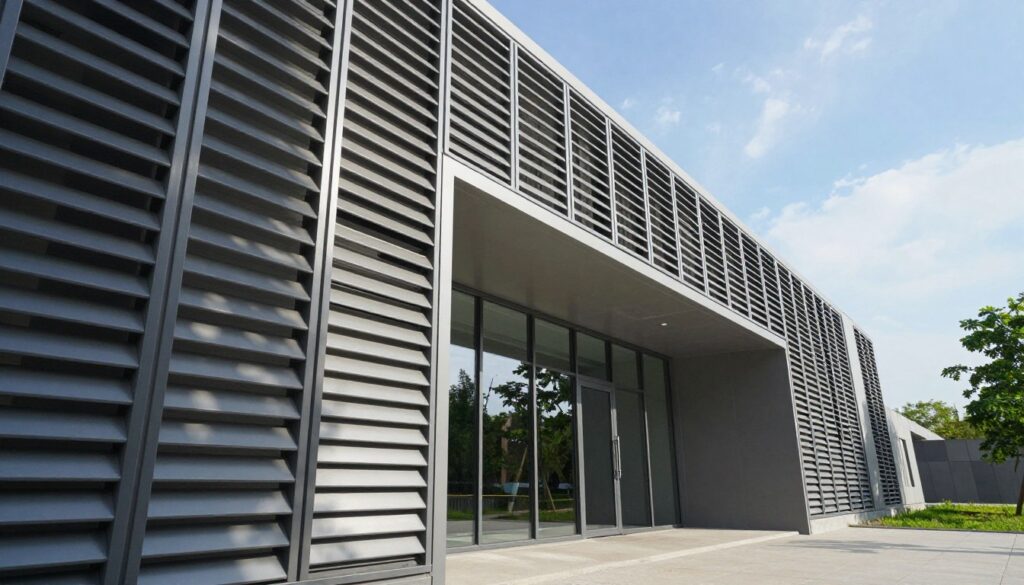
Strategic louver placement adds depth and dimension to your building’s façade. Horizontal blades fit modern styles, while vertical ones suit industrial or traditional looks. The space between blades creates changing shadows, adding interest to your building’s exterior.
Custom finishes and colors make this effect even stronger. Aluminum louvers are durable and come in many finishes. You can match your building’s materials or choose contrasting ones to highlight certain areas.
Blending Function with Aesthetic Appeal
The best projects mix practical needs with great design. Your louver design should improve your building’s look without sacrificing function. Using louver options from United gives you profiles and finishes that do both.
Great architectural projects show how louvers can make a building unique. Your choice of blade profile, material, and orientation turns necessary parts into standout features. This way, louvers add to your building’s character, not just as an afterthought.
Weather Protection and Building Envelope Safeguards
Your building faces threats from rain, wind, and more. Weather resistant louvers are key in protecting your building. They stop water from getting in, which could harm your building’s inside and systems.
The right louvers keep your building safe from water damage. They also let in air for good ventilation and climate control.
Water damage is a big threat to buildings. Metal louvers with the right design keep rain out, even when the wind blows. This is important because wind and rain can push against your building at the same time.
Knowing how wind affects your building helps choose the right louvers. These louvers must fight off water and wind.
Metal louvers are tough against bad weather. They can handle hurricanes, sandstorms, and freezing temperatures with little upkeep. You can test them to make sure they fit your area’s weather needs.
| Louver Feature | Protection Benefit | Best for Conditions |
|---|---|---|
| Blade Angle Design | Directs water away from openings | Heavy rain and wind-driven moisture |
| Drip Edges | Prevents water from running backward | Horizontal rain exposure |
| Drainage Channels | Channels water safely away | Persistent moisture and wet climates |
| Metal Construction | Resists corrosion and warping | Coastal areas and severe weather |
Good louvers keep water, air pollution, and debris out. This is key for buildings with important equipment. It helps keep things running smoothly and lasts longer.
Choosing metal louvers for your building is a smart move. They protect against moisture damage. This saves you money on repairs and keeps your building running smoothly.
Privacy and Security Features in Urban Settings
Urban buildings face unique challenges with spaces close together. Your occupants need privacy but also natural light and fresh air. Louver systems offer a smart solution to this problem.
These installations let you control what people see into your building. They also keep airflow and daylight flowing. Commercial louvers protect your interior spaces from unwanted observation. Architectural louvers balance air and light while blocking direct sightlines from neighboring buildings.
Controlling Light and Air While Maintaining Privacy
The blade angles and spacing in louver systems create privacy without losing ventilation. Your design team can set specific angles to block outside views. This keeps occupants comfortable and safe.
The louvers let natural light into your building. They also allow air to flow freely. You get the openness you want while keeping sensitive areas hidden from view. Architectural louvers achieve this through careful planning and precise installation.
Shielding Interiors from External Observation
Commercial louvers do more than just protect occupied spaces. They also hide vulnerable building systems from view and tampering. Your HVAC equipment, generators, and utility connections stay hidden behind attractive louver installations.
This security feature is key in dense urban environments where buildings are close together. Specialized louver configurations exist for high-security applications. These designs can resist forced entry and unauthorized access. Your facility gains protection while maintaining a clean aesthetic.
Louver systems work quietly to keep your building secure and visually appealing.
| Privacy Feature | How It Works | Urban Benefits |
|---|---|---|
| Blade Angle Control | Angled louver slats block direct sightlines at specific viewing angles | Prevents neighbors from seeing into your spaces from adjacent buildings |
| Ventilation Maintenance | Spacing between blades allows continuous airflow through the system | Reduces reliance on mechanical cooling in compact urban areas |
| Equipment Screening | Commercial louvers conceal mechanical systems and utility connections | Protects infrastructure from tampering and surveillance in shared zones |
| Natural Light Passage | Louver blade geometry permits daylight penetration while blocking views | Reduces lighting costs while maintaining occupant privacy in close quarters |
| Security Reinforcement | Heavy-duty louver systems resist forced entry and unauthorized access | Guards sensitive areas without creating fortress-like appearances on facades |
Your urban project deserves solutions that work on multiple levels. Louver systems deliver privacy, security, ventilation, and aesthetic appeal in one integrated package.
Material Options for Your Louver System
Choosing the right louver materials is key for your building’s performance and look. It also affects your budget and specific needs. Knowing the benefits of each material helps you make the best choice for your project.
Aluminum louvers are popular in commercial buildings because they are strong yet light. They don’t rust easily and can be shaped into complex designs. They work well in most weather conditions and need little upkeep. Their light weight makes installation easier and reduces the building’s load.
Metal louvers, like steel and stainless steel, are best for industrial areas where strength is critical. They can handle harsh weather and last long in stressful conditions. Stainless steel is great for areas near the sea or where chemicals are present, as it doesn’t rust.
FRP louvers are perfect for places where chemicals and moisture are common. They don’t break down in saltwater or moisture. These louvers can fit any building style and are good for industrial sites and places by the water.
How you finish your louvers affects their look and how long they last. Anodizing, powder coating, and fluoropolymer coatings protect them from damage. Each finish looks different and has its own upkeep needs, helping you choose materials that last.
| Louver Material | Weight | Corrosion Resistance | Maintenance | Best Applications | Cost Range |
|---|---|---|---|---|---|
| Aluminum Louvers | Lightweight | Excellent (Natural) | Minimal | Commercial High-Rises, Office Buildings | Moderate |
| Steel Metal Louvers | Heavy | Good (With Coating) | Regular | Industrial Facilities, Warehouses | Low to Moderate |
| Stainless Steel Metal Louvers | Heavy | Superior | Minimal | Coastal Areas, Chemical Plants | High |
| FRP Louvers | Lightweight | Outstanding | Minimal | Marine Environments, Industrial Parks | Moderate to High |
| Wood Louvers | Lightweight | Moderate (Requires Treatment) | Regular | Residential, Heritage Buildings | Low to Moderate |
Think about the total cost of louver materials for your project. The initial cost is just one part. Consider installation, upkeep, replacement, and lifespan. Aluminum louvers are cost-effective in commercial settings due to low upkeep and long life. FRP louvers are pricier but save money in corrosive areas where metal needs frequent replacement.
Your area’s climate affects which louvers work best. Coastal areas need FRP or stainless steel to avoid rust. Inland, aluminum with a powder coat is fine. Industrial sites with chemicals should use FRP or coated metal for safety and durability.
Key Considerations When Selecting Louvers for Your Project
Choosing the right louver systems for your building is important. You need to consider your location’s climate and your project’s needs. This careful planning helps avoid costly mistakes and ensures your louvers work well for years.
Environmental Conditions and Climate Factors
Your building’s location is key in choosing louvers. In windy areas, you need louvers that can handle strong winds. These wind-resistant systems keep your space safe while allowing air to flow.
In rainy places, you need louvers that keep water out. Materials that resist moisture protect your indoor air. Sunlight also matters, as it can raise cooling costs. Louvers that block sunlight help keep your space cooler.
Extreme temperatures can damage standard materials. Choosing louvers made for your climate ensures they last and work well.
Functionality Requirements and Performance Needs
What your project needs determines the louver features you should look for. Adjustable louvers let you control air and light. Fixed louvers are better for steady airflow.
For quiet buildings, acoustic louvers are a must. In fire-risk areas, fire-resistant louvers are vital. In wet places, drainable louvers keep moisture out.
| Climate Factor | Performance Need | Recommended Louver Feature |
|---|---|---|
| High Wind Areas | Structural Integrity | Wind-Resistant Frames |
| Heavy Rainfall | Water Protection | Water-Resistant Materials |
| Intense Solar Exposure | Heat Reduction | Solar-Deflecting Design |
| Noise Concerns | Sound Control | Acoustic Dampening |
| Fire Risk Areas | Safety Protection | Fire-Resistant Materials |
| Moisture-Prone Spaces | Drainage Support | Drainable Louver Systems |
Choosing the right louver systems protects your investment. Make sure to match your louvers to your climate and needs. This careful planning ensures your building performs well.
Installation and Maintenance Best Practices
Getting your louver installation right from the start is key. It affects how well your louvers work. The way you place them impacts ventilation, light, and weather control.
Proper flashing integration with your building’s moisture barrier system is vital. It stops water from entering where it shouldn’t. Working with architects, engineers, and contractors early ensures everyone knows how louvers fit with other systems. This coordination prevents pressure imbalances, unwanted noise, and system efficiency loss.
Your louver maintenance schedule depends on the materials and your location. Regular cleaning removes dirt and debris that can block airflow. Metal louvers need inspections for corrosion, more so in coastal areas or harsh climates.
With proper care, your louver maintenance is simple and quick. Most facilities only need to clean their louvered panels a few times each year. Small maintenance investments protect your initial louver installation investment and keep your system working at peak performance.
Quality control during louver installation catches problems before they start. Poor sealing, wrong fastener spacing, or missing drainage paths cause real performance drops. Your installation team should verify that louvers sit properly on their mounting surfaces and that all connections stay secure.
Many property managers find that learning about quality louver installation from experienced helps them understand what to expect. Building operation manuals should include maintenance procedures so facility staff knows exactly how to care for louver systems throughout their service life.
| Maintenance Task | Frequency | Purpose |
|---|---|---|
| Visual Inspection | Quarterly | Check for damage, corrosion, and debris buildup |
| Cleaning Louvered Panels | 2-4 times yearly | Remove dirt that reduces airflow and appearance |
| Fastener Check | Annually | Ensure all bolts and connections remain tight |
| Corrosion Assessment | Annually (coastal areas twice yearly) | Detect rust or degradation in metal components |
| Drainage System Check | Twice yearly | Verify water drains properly away from building |
Conclusion
Architectural louvers are more than just design elements. They are key parts that make your building better and look great. Your louver systems mix function and style in a unique way. Choosing quality louvers means you get better ventilation, save energy, protect from weather, and enhance looks.
It’s important to think about louvers early in your design. Not doing so limits their benefits. Instead, make them a key part of your design plan. This way, you can use them to their fullest and make your building better over time.
Next, talk to louver experts and makers. They can help you pick the right ones for your project. Contact them early in your design phase. This ensures your louvers meet both performance and style needs. Getting professional advice makes choosing louvers a smart move.
Today’s buildings need parts that work well and look good. Louvers do just that. As we focus more on energy and design, louvers will keep being key. Include them in your design talks now.