Your corporate headquarters renovation needs more than looks. It must ensure fire safety, control sound, and last long. Real projects show how an aluminum ceiling system can change office spaces and meet strict standards.
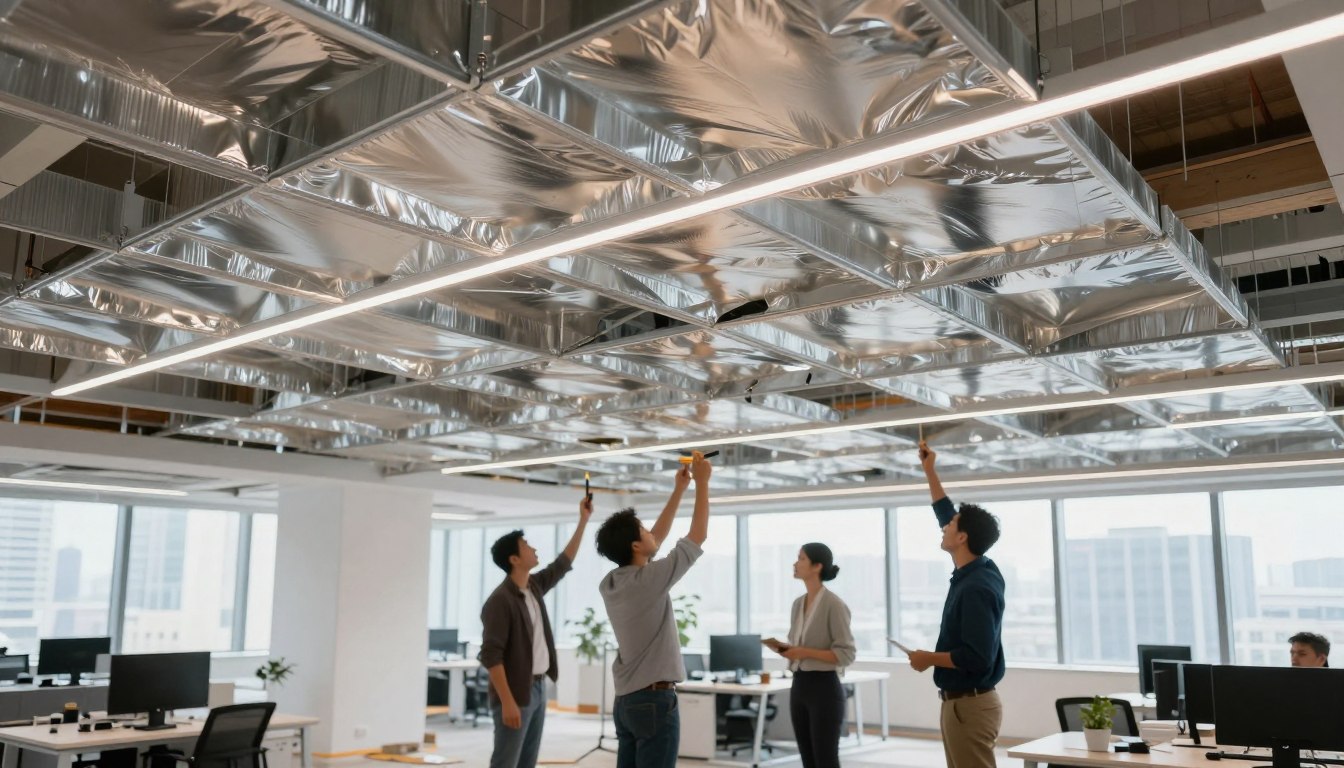
The Delos Global Headquarters at 860 Washington Street in New York City got a big makeover in September 2017. The renovation covered 19,318 square feet on floors 4 and 5. It aimed for three big certifications: Living Building Challenge Petal Certification, LEED v4, and WELL New & Existing Interiors. An aluminum ceiling system was key to reaching these green goals.
Planning your renovation can learn from big projects like the MARTA Inman Park/Reynoldstown station in Atlanta. It serves about 3,000 people every day. After 40 years, a $6.9 million update made it better, with metal ceilings playing a big role.
These two projects, different in location, purpose, and size, both used aluminum ceilings to solve big building problems. Knowing how they worked can help you make smart choices for your renovation.
Key Takeaways
- An aluminum ceiling system supports multiple building certifications including LEED v4 and WELL standards
- Corporate headquarters design projects ranging from 19,000 to 25,000 square feet benefit from metal ceiling specifications
- Commercial ceiling renovation budgets exceeding $6.9 million leverage aluminum systems for durability and performance
- Metal ceiling systems address fire safety, acoustic control, and aesthetic requirements simultaneously
- Transit and corporate projects demonstrate aluminum ceiling systems perform reliably across different building types
- Proper product selection delivers measurable long-term value for your renovation investment
Transforming Transit Infrastructure: MARTA Station Aluminum Ceiling System Renovation
The Inman Park/Reynoldstown station shows how metal ceiling panels work well in tough places. When you’re planning to renovate your office, learning from this example is key. It shows how durable ceilings can be and how they add value over time.
MARTA spent $6.9 million to fix a 25,000-square-foot station. They did it while 3,000 passengers used it every day. This shows how choosing the right materials can make your building last longer.
Original Installation and Performance History
The station opened in 1979 with Chicago Metallic metal ceiling systems. These systems worked well for 40 years, even with Atlanta’s humid weather. Investing in metal ceiling panels can give you similar benefits.
These systems lasted longer than other materials, which need to be replaced every 10-15 years. MARTA chose metal again because of its durability. Metal doesn’t get wet and doesn’t grow mold or mildew, which is great for transit areas.
Renovation Scope and Design Objectives
MARTA worked with Reeves Young, Acousti Engineering Company, and Rockfon’s Technical Services team from December 2018 to April 2019. They planned ahead to make sure the design met performance needs. They kept the old suspension systems after checking them.
This saved money and made the structure stronger than before. Tests showed the metal ceiling systems could handle wind and pressure from trains. They also met standards for coastal climates, which is important for many offices.
| Product Type | Dimensions | Finish Options | Application Area |
|---|---|---|---|
| Rockfon Planar Macroplus Linear Planks | 4-inch, 6-inch, 8-inch widths | Satin Silver, Winchester Gray | Pedestrian bridges, primary walkways |
| Rockfon Planostile Snap-in Panels | 18×24-inch, 24×24-inch, 10×10-inch | Satin Silver, Winchester Gray | Secondary ceiling areas, transition zones |
| Rockfon Infinity Perimeter Trim | 4-inch, 12-inch heights | Satin Silver, Winchester Gray | Perimeter edges, wall transitions |
| Custom-Engineered Access Panels | Variable dimensions per specification | Satin Silver, Winchester Gray | Technical systems, fixture integration |
Product Selection and Custom Fabrication Solutions
Your office renovation can look great without costing too much. MARTA used Rockfon Planar Macroplus and Planostile Snap-in panels in different sizes. They chose two finishes to add interest to 25,000 square feet.
They picked panels that could be perforated or not, for sound and looks. Custom panels fit around columns and angles perfectly. This shows how custom work can make your space look good and work well.
The project was finished on time and didn’t go over budget. It shows how smart choices in materials and design can improve your building for years to come.
Strategic Considerations When Specifying Metal Ceiling Systems for Corporate Renovations
When planning a corporate renovation, picking the right ceiling systems is key. It affects fire safety, budget, timeline, and building performance. Knowing these factors helps you make smart choices that meet codes and satisfy everyone involved.
Fire safety is a must for commercial projects. Aluminum and steel ceiling tiles are non-combustible, getting Class A fire ratings without needing chemical treatments. This means no worries about fire code approval and no risk of fire ratings getting worse over time.
Managing your budget wisely is important. Using standard designs and materials can make your space look great while saving money. Choosing domestic products helps avoid price changes and tariffs, making your budget more predictable.
Fast production is vital for tight schedules. U.S. makers can deliver in weeks, unlike overseas which takes months. This quick turnaround helps avoid delays that can affect other parts of the project.
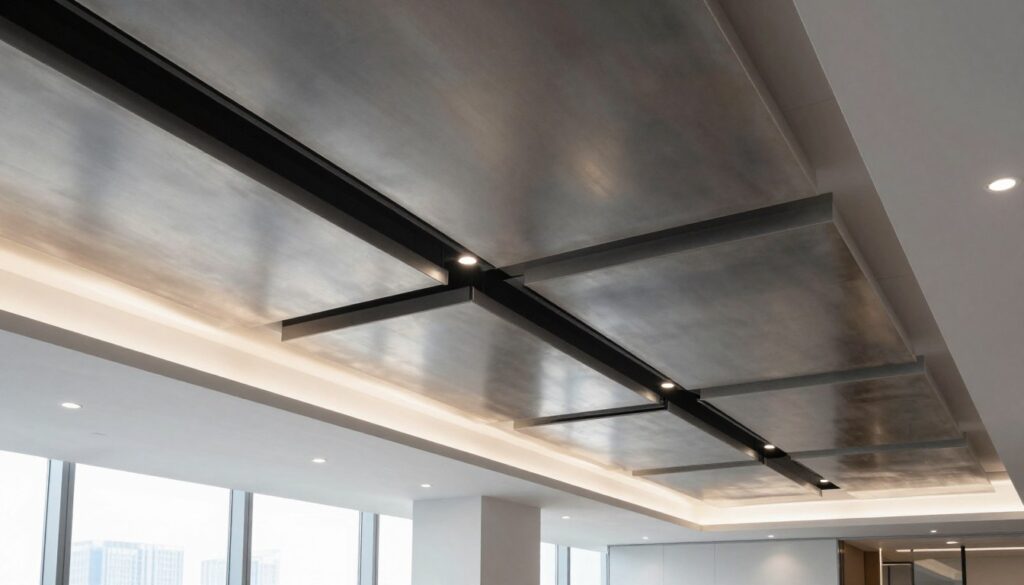
Customizing your ceiling design is easy with metal systems. You can choose patterns, colors, and sizes to fit your building perfectly. This flexibility lets you keep your design vision without breaking the bank.
Going green? Choose LEED certified materials and makers who are open about what’s in their products. Look for labels that show what’s in the materials, helping you meet green building standards.
| Specification Factor | Aluminum Systems | Benefit to Your Project |
|---|---|---|
| Fire Rating | Class A (Non-combustible) | Code compliance without chemical treatments |
| Manufacturing Location | U.S. Production | 2-4 week delivery vs. 12-16 weeks overseas |
| Customization Options | Pattern, finish, size variations | Design alignment within budget constraints |
| Certification Support | LEED certified materials available | Supports multiple green certifications |
| Maintenance Requirements | Minimal long-term maintenance | Lower lifecycle costs and labor |
| Environmental Disclosure | HPD, EPD, Declare labels | Transparency for certifications |
Start early by working together on design and budget. Have meetings to talk about project goals and what you need to achieve. Regular meetings keep everyone on the same page and avoid problems.
Choosing the right materials means looking at what’s in them and how they’re made. Ask for detailed lists of materials and test results. Pick suppliers who use safe materials and care about the environment.
Your plan should cover fire safety, budget, speed, design options, and being green. Metal ceiling systems made in the U.S. offer big advantages. They help you meet your renovation goals without going over budget or schedule.
Performance Benefits and Long-Term Value of Aluminum Ceiling System Implementation
Investing in aluminum ceiling systems brings many benefits. They last for decades, meet strict fire safety codes, and improve sound quality. Knowing these advantages helps you choose the best for your office renovation.
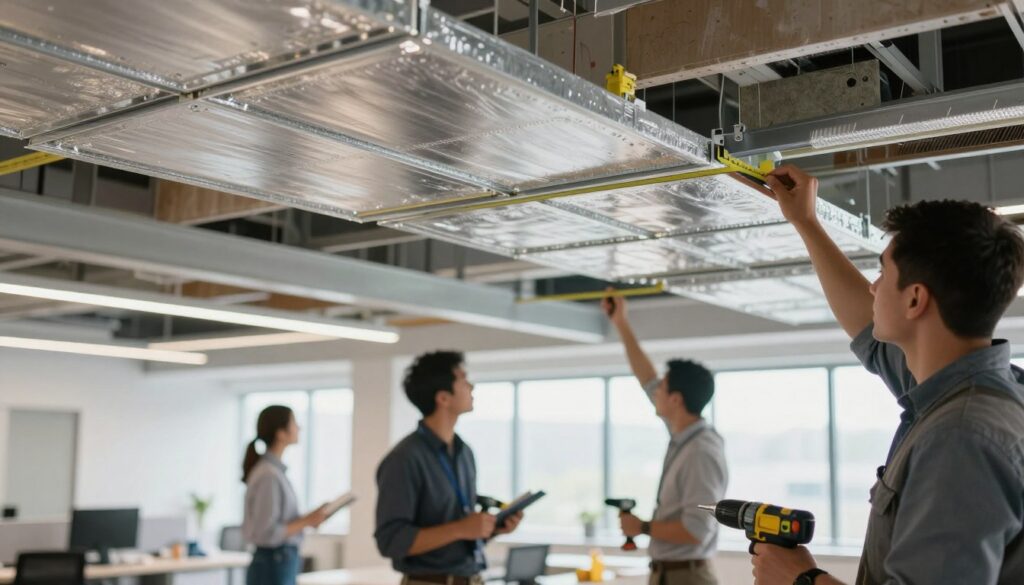
Durability and Maintenance Requirements
Metal ceiling systems don’t absorb moisture, so they don’t grow mold or mildew. Unlike plaster or wood, they keep their shape for years. This means your maintenance team has less work to do.
The MARTA transit station shows how durable these systems are. After 40 years, it looks and works like new. For your office, this means less need for replacements that disrupt work.
These systems are also recyclable, helping the environment. They cost less to maintain and last longer than other materials. This saves you money over time.
Fire Safety Compliance and Code Requirements
Steel and aluminum ceiling tiles have Class A fire ratings. They don’t burn easily and keep their fire rating over time. This makes it easier to meet fire safety codes without needing to re-certify them often.
Commercial buildings need Class A ratings for ceilings. Metal ceilings automatically meet this standard. This makes it easier to get approval from building inspectors.
| Fire Safety Metric | Metal Ceiling Systems | Alternative Materials |
|---|---|---|
| Flame Spread Rating | 25 or less | Varies, often requires testing |
| Fire Rating Duration | Permanent, no degradation | May degrade over time |
| Chemical Treatment Required | No | Often required |
| Re-certification Needed | No | Potentially required |
Acoustic Performance and Environmental Control
Metal ceilings are not just durable but also good at sound absorption. They can improve sound quality without losing their look. This can save you money on separate sound treatments.
Good sound quality in offices makes employees happier and more productive. Metal ceilings also make it easy to add lights and air systems. This keeps the air clean and the space comfortable.
Metal ceilings don’t hold onto moisture or support mold growth. This keeps the air in your building clean. Using materials from nearby places also reduces carbon emissions. The Delos project showed how this can cut down on carbon by 101 tons.
Choosing metal ceilings can help you meet green building standards. They are recyclable and support sustainable practices. This adds value to your building that lasts long after it’s installed.
Conclusion
The MARTA Inman Park/Reynoldstown station renovation and the Delos headquarters project show key lessons for your commercial ceiling renovation. Both projects were finished on time and within budget. The MARTA station served 3,000 daily passengers without major disruption during the renovation.
The Delos project got three major certifications: Living Building Challenge Petal, LEED v4, and WELL New & Existing Interiors. These achievements highlight the importance of careful planning and choosing the right materials.
Early collaboration was key to the success of both projects. At MARTA, the team started planning a year before construction. This ensured the renovation kept the original design intent while meeting technical needs.
Start talking to your ceiling system manufacturer, contractors, and installers early. This helps confirm custom fabrication needs, set realistic budgets, and coordinate with other systems.
Aluminum ceiling systems offer real value in several areas. They last 40 years with low maintenance costs. They also have a permanent Class A fire rating, meeting all code requirements.
They provide excellent acoustic performance, supporting occupant comfort and wellness. They contain recycled materials and are fully recyclable, making them a smart choice for sustainable solutions. The MARTA project was the first major investment from a $2.7 billion regional transit plan.
Studies show every dollar spent on public transportation generates four dollars in economic return. Investing in quality materials means investing in your building’s future and your community’s growth.
When planning your corporate interior renovation, think beyond the initial cost. Compare ceiling systems based on their total cost of ownership over their lifespan. Choose manufacturers with U.S. production facilities and strong technical support.
Prioritize sustainable ceiling solutions that match your organization’s values and employee wellness goals. Aluminum ceiling systems have proven performance in demanding environments like transit stations and certified healthy buildings. Apply these lessons to your project for renovation results that offer both immediate visual impact and lasting value.