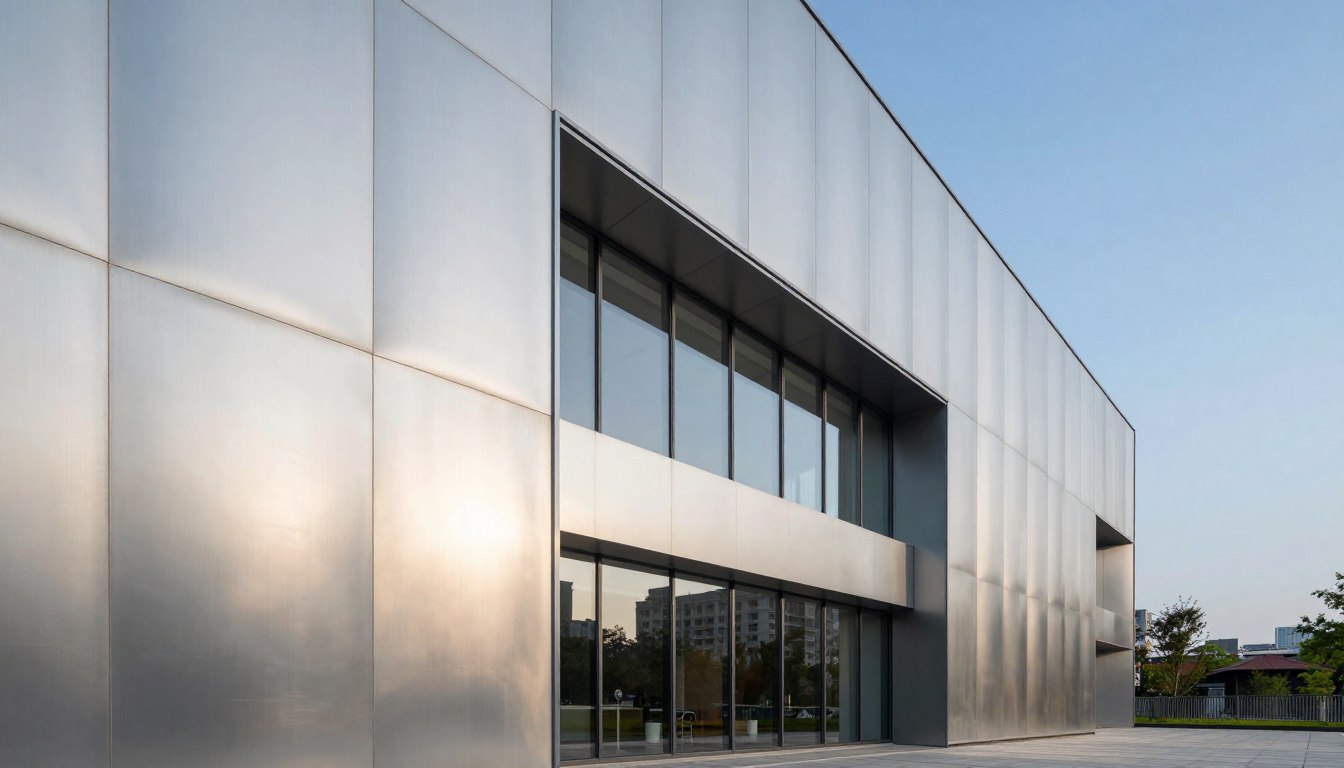
Your building’s exterior is the first thing people notice. It sets the tone for how your building looks and functions. An aluminum facade system is a smart choice for style, strength, and savings.
Your building needs to protect your interior from the elements. It should also keep your heating and cooling systems from working too hard. Modern facade solutions, like aluminum, meet these needs with style and durability.
Choosing the right facade system is a big investment. It can save you money on energy bills and maintenance. Plus, it keeps your building looking professional for decades. Today’s architectural cladding options are far better than older materials.
Aluminum facade systems are becoming the top choice for smart builders. They’re not just about looks. They save energy, withstand harsh weather, and look great doing it. Your building deserves a facade system that works as hard as you do.
Key Takeaways
- An aluminum facade system protects your building while cutting energy costs year after year
- Modern facade solutions outperform traditional materials in durability and weather resistance
- Your building exterior systems directly impact heating, cooling, and maintenance expenses
- Architectural cladding using aluminum offers design freedom with reliable performance
- Choosing the right facade system adds long-term value to your property
- Contemporary buildings depend on aluminum facade systems for sustainable, efficient operation
- Your investment in quality exterior systems pays back through reduced operational costs
The Challenges of Traditional Facade Materials in Modern Construction
Building owners and construction managers face real obstacles with traditional cladding materials. Brick and stone facades have been used for centuries. But modern construction demands speed, efficiency, and cost-effectiveness. Understanding these challenges helps you make better decisions for your building projects.
Weight and Installation Complications
Traditional cladding materials like brick, stone, and concrete are extremely heavy. This weight creates serious installation challenges. It impacts your timeline and budget.
Transporting these materials requires specialized trucks and equipment. This adds substantial costs before work even begins on your building.
The installation process demands skilled labor and extended time on site. Your project timeline stretches longer when workers must carefully position each piece. Labor expenses climb quickly because installation takes weeks or months instead of days. Unexpected delays become common, pushing your completion date further out.
Maintenance Issues and Weather Vulnerability
Once installed, brick and stone facades develop facade maintenance problems. Weather exposure causes real damage over time. Freeze-thaw cycles crack the material. UV rays fade the color. Water penetrates the surface, leading to rot and corrosion.
Your building requires constant repairs and repainting. These interruptions disrupt daily operations and create unexpected expenses. What seemed like a permanent solution becomes a money pit.
Energy Performance Limitations
Traditional materials lack proper insulation properties. Your heating and cooling systems work overtime trying to maintain comfortable temperatures inside. During winter, heat escapes through thin facades. Summer heat penetrates the building easily. This means your HVAC system runs continuously, consuming excessive energy.
| Material Type | Weight Per Square Foot | Annual Maintenance Cost | Energy Loss Factor |
|---|---|---|---|
| Brick and Stone Facades | 35-50 lbs | $500-$1,200 | High |
| Concrete Cladding | 40-50 lbs | $600-$1,500 | High |
| Traditional Stucco | 10-15 lbs | $400-$900 | High |
Your energy bills increase significantly every month. Carbon emissions rise as your building becomes less efficient. These ongoing costs compound year after year, making traditional cladding materials an expensive long-term investment for your property.
Why Aluminum Facade System Solutions Are Transforming Building Design
Your building deserves better than old construction methods. Aluminum facade systems are changing how architects and builders design modern buildings. These solutions fix problems that old materials cause on job sites. Choosing aluminum cladding means your project will be faster and cheaper.
The move to lightweight facade materials is a big change. Aluminum is 60 to 70 percent lighter than brick and stone. This makes setting up panels much quicker, saving time and money.
Modern facade technology means strength without the weight. Aluminum is stronger than heavier materials but lighter. This means your building lasts longer with less material used. It’s why smart builders choose aluminum.
Design options get a lot better with these new solutions. Aluminum cladding lets you create modern or traditional looks. You can match any style you want.
- Lightweight facade materials reduce installation time and labor costs
- Superior strength-to-weight ratio outperforms heavy traditional materials
- Design flexibility enables any architectural style or finish
- Faster project completion saves you money and time
- Better performance through advanced modern facade technology
Investing in aluminum facade systems brings big benefits. You save on installation time, labor costs, and get better value than traditional materials.
Superior Durability: How Aluminum Facades Withstand Extreme Weather Conditions
Your building faces constant challenges from nature. Rain, wind, snow, and intense sun all attack your exterior walls year after year. Aluminum facade systems stand up to these forces in ways that traditional materials cannot match. Unlike wood that rots or steel that rusts, aluminum maintains its strength and appearance through decades of harsh weather exposure. Your investment in aluminum cladding means choosing a material built to last.
Aluminum’s natural properties make it ideal for weather resistant facades. The material does not absorb moisture like porous materials such as brick or wood. This means your walls stay protected from rain, snow, and humidity that cause deterioration in other building materials. Your building’s structure remains safe from water damage and the expansion and contraction problems that plague traditional facades.
Corrosion Resistance and Structural Integrity
Your aluminum facade benefits from a natural protective layer. When aluminum is exposed to air, it forms a thin oxide layer on its surface. This invisible shield prevents corrosion from taking hold. Even in coastal areas where salt spray attacks buildings constantly, your aluminum cladding resists degradation that would destroy steel or compromise other materials.
Modern aluminum systems receive additional protection through specialized coatings and treatments. These enhancements boost corrosion resistance even further, ensuring your structural integrity remains intact in the most challenging environments. Your building’s framework stays strong, supporting years of reliable performance without unexpected failures or costly repairs.
Long-Term Performance in Harsh Climates
Your aluminum facade excels in extreme conditions. From scorching desert heat that exceeds 120 degrees to freezing Arctic temperatures below minus 40 degrees, aluminum performs consistently. The material does not become brittle in cold or lose strength in intense heat. Your building maintains its protection in any climate zone across North America.
Aluminum facade cladding delivers superior durability and energy-saving that protect your investment through decades of harsh climate performance. Heavy snow loads, hurricane-force winds, and intense weather events that damage traditional facades barely affect your aluminum system. Your building’s harsh climate performance remains reliable season after season.
| Environmental Challenge | Traditional Materials Response | Aluminum Facade Response |
|---|---|---|
| Salt Spray (Coastal Areas) | Rust and corrosion within 5-10 years | Natural oxide layer prevents corrosion indefinitely |
| Heavy Rain and Moisture | Absorption causes rot and structural weakness | Non-porous material repels water completely |
| Extreme Temperature Swings | Expansion and contraction cause cracks | Minimal movement maintains structural integrity |
| UV Sun Exposure | Fading and surface degradation | Protective coatings maintain appearance and strength |
| Heavy Snow Loads | Sagging and material fatigue | High strength-to-weight ratio handles loads easily |
Your aluminum cladding system delivers lasting protection. Unlike materials that deteriorate over time, aluminum maintains its appearance and performance for 30 to 50 years or longer with minimal maintenance. Your building stays protected, your budget stays controlled, and your property retains its value through changing seasons and challenging weather patterns.
- Non-porous composition prevents moisture infiltration
- Natural oxide layer creates permanent corrosion protection
- Advanced coatings enhance durability in coastal environments
- Lightweight design reduces structural stress
- Flexible enough to handle temperature extremes
- Maintains appearance through decades of weather exposure
Your choice of aluminum facades means choosing proven performance in real-world conditions. Buildings using aluminum cladding in Miami withstand salt spray. Projects in Denver handle daily temperature swings. Structures in Minneapolis endure heavy snow loads. Your building can achieve the same reliability regardless of your location or local weather challenges.
Energy Efficiency Benefits of Aluminum Cladding Systems
Your building’s facade is key in keeping temperatures inside right and saving on energy costs. Aluminum cladding systems make a strong thermal envelope. This keeps your building safe from harsh weather.
This means your HVAC system doesn’t have to work as hard. It stays comfortable inside without using too much energy.
Choosing aluminum cladding means your building reflects the sun’s rays instead of absorbing heat. This keeps your building cool in summer. In winter, it traps warm air inside, saving you money on heating.
Aluminum facades save you money. Building owners see HVAC energy savings of 20 to 40 percent. This leads to big savings over time.
Your tenants will also feel more comfortable. A well-insulated building keeps temperatures steady. This makes them happier and more likely to stay.
Key Energy Savings Advantages
- Reduced heating and cooling costs through superior thermal performance
- Lower monthly utility expenses over your building’s lifetime
- Decreased strain on HVAC systems and equipment
- Improved indoor comfort for all occupants
- Enhanced building energy performance ratings
Going for energy efficient facades is good for the planet and your wallet. It’s a smart choice that saves you money for years to come.
Thermal Performance and Insulated Facade Panels
Modern buildings need smart energy solutions. Aluminum facade systems with insulated panels are a great choice. They keep your building comfortable all year. These systems control your indoor climate, saving energy on heating and cooling.
Insulated facade panels have foam or mineral wool cores between aluminum skins. This design offers high R-values, better than single-layer materials. Your building stays warm in winter and cool in summer, saving energy.
Reducing Heating and Cooling Costs
Buildings with insulated facade panels can save thousands on HVAC costs each year. Many owners see their investment pay off in just a few years. You’ll enjoy better temperature control and lower utility bills.
- Lower monthly energy expenses
- Consistent indoor temperatures
- Reduced HVAC system strain
- Quick return on investment
Advanced Insulation Technologies
Ventilated facade systems lead in thermal performance. They have an air cavity behind the cladding for air circulation. This helps remove summer heat and adds insulation in winter.
Thermal bridging is a problem in building envelopes. It happens when heat escapes through weak points. Modern aluminum systems use thermal break technology to stop this, keeping temperatures stable and energy use low.
Ventilated facade systems create buffer zones between your building’s exterior and interior. This double-skin approach offers better thermal control than single-layer materials. Your building becomes a climate-controlled envelope, protecting your comfort and budget.
Design Flexibility and Aesthetic Versatility of Aluminum Facades
When planning your building’s exterior, you want a material that lets you be creative. Aluminum facades offer this freedom. They can be molded into many shapes and colors, fitting your architectural dreams.
Aluminum’s unique properties make it very flexible. You can shape it into curves, angles, and patterns. You can also paint it in almost any color. This flexibility means your building can look exactly as you imagine.
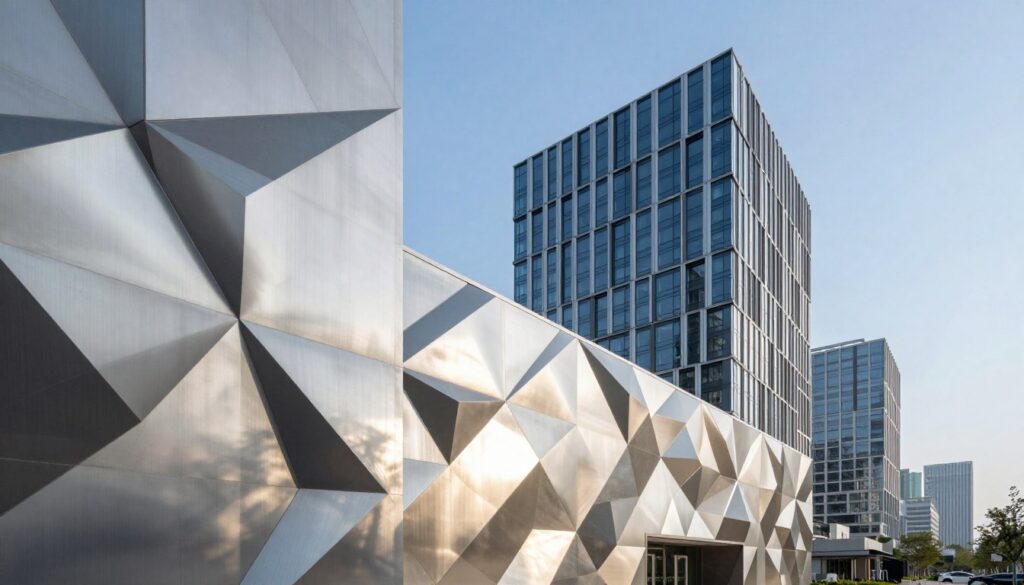
- Perforated aluminum screens that provide shade while maintaining views
- Corrugated panels that create shadow play and dimension
- Mixed-finish combinations that blend metallic and textured surfaces
- Three-dimensional surface textures mimicking natural materials like wood or stone
- Curved panels forming dynamic architectural statements
Aluminum facades also offer a wide range of finishes and colors. Modern techniques like powder coating and anodizing create many looks. You can get metallic effects, solid colors, or textured surfaces that add character.
| Design Element | Effect on Building | Best For |
|---|---|---|
| Perforated Panels | Provides ventilation and visual interest | Commercial buildings and retail spaces |
| Corrugated Surfaces | Creates shadow patterns and dimension | Industrial and contemporary designs |
| Curved Facades | Makes bold architectural statements | Premium residential and hospitality projects |
| Wood-Grain Finishes | Mimics natural materials with durability | Mixed-material aesthetic projects |
| Metallic Coatings | Reflects light and creates premium appearance | Corporate headquarters and luxury buildings |
Aluminum is special because it combines beauty with function. When you use aluminum facade systems, you get energy efficiency, durability, and stunning looks. It’s the best of both worlds.
Aluminum can be shaped to fit your brand or style. Whether you want simple lines or complex textures, aluminum can do it. It’s perfect for corporate spaces, retail, and homes, adding sophistication or warmth.
Your building’s exterior can be a statement. With aluminum, you’re not limited by material constraints. You can create exactly what you envision. The result is a facade that looks amazing and lasts for decades.
Sustainability and Environmental Impact of Aluminum Wall Cladding
Choosing sustainable facade materials is more than just about looks. It shows you care about the planet and want to add value to your property. Aluminum cladding is a top choice for being eco-friendly. It’s good for the environment without sacrificing style or function.
Your building’s outside is key to its environmental impact. Choosing aluminum for your exterior means you’re going green. This material supports the circular economy, making your investment eco-friendly.
Recyclability and Carbon Footprint Reduction
Aluminum is a top pick for sustainability. It’s fully recyclable, keeping its quality. About 75% of all aluminum ever made is in use today. When your building needs a refresh, the aluminum can be recycled, reducing waste and saving resources.
Recycling aluminum saves a lot of energy. It takes just 5% of the energy to make new aluminum from recycled metal. This big energy savings cuts down on carbon emissions. By picking recyclable materials for your exterior, you’re making a choice that helps the planet for years to come.
| Aluminum Production Method | Energy Required | Carbon Emissions | Environmental Impact |
|---|---|---|---|
| Virgin Aluminum from Ore | 100% (baseline) | High | Significant mining and processing impact |
| Recycled Aluminum | 5% | 95% Lower | Minimal environmental disruption |
| Recovered Aluminum Facade | 5% | Reduced | Zero landfill waste, circular economy |
Contributing to Green Building Certifications
Your aluminum facade system helps you get green building certifications. Programs like LEED, BREEAM, and Green Star give points for using sustainable materials. Aluminum cladding earns points in several areas.
Here’s how your aluminum facade helps with certification:
- Recycled content credits for using post-consumer aluminum
- Regional material sourcing when you select locally-produced panels
- Energy performance improvements through advanced insulation
- Innovation points for sustainable design solutions
Green building certifications offer financial benefits. Buildings with these certifications get higher rental rates and sell for more. Your aluminum facade investment pays off in both environmental and financial gains. By aiming for green building certifications, you make your building a forward-thinking asset that attracts eco-conscious tenants and buyers.
Low Maintenance Requirements and Cost Savings Over Time
Aluminum facades are a breeze to care for, unlike traditional materials. You don’t need to paint wood or tuckpoint brick. Just a quick wash with water or mild detergent keeps your aluminum exterior looking great.
Looking at costs over 20 to 30 years, aluminum might seem pricier at first. But, the savings add up when you avoid constant repairs and replacements. This saves you money in the long run.
Aluminum resists UV rays, moisture, and corrosion well. The coatings applied during manufacturing last for decades. This means your facade stays strong without needing frequent recoating.
What Makes Aluminum So Easy to Care For
Caring for aluminum is simple and predictable. Here’s what you need to do:
- Wash it annually or semi-annually with water
- Check for dirt or debris
- No need to repaint
- No special treatments needed
- It’s resistant to weather, so repairs are rare
Comparing Long-Term Value Across Materials
| Material | Initial Cost | Annual Maintenance | 30-Year Total Cost | Replacement Needs |
|---|---|---|---|---|
| Aluminum Facades | $$ (Moderate-High) | $200-400 | $8,000-12,000 | None expected |
| Wood Siding | $ (Low) | $800-1,500 | $28,000-50,000 | Every 15-20 years |
| Brick | $$ (Moderate) | $600-1,200 | $22,000-40,000 | Tuckpointing every 25 years |
| Stucco | $ (Low-Moderate) | $500-1,000 | $20,000-35,000 | Every 15-25 years |
For facility managers and owners, this means stable, low budgets. You avoid unexpected repair costs. Plus, there’s less disruption to your operations.
Aluminum’s durability means less damage from weather. Rain, wind, and UV rays don’t affect it as much. Your building looks and performs well with little upkeep year after year.
How Aluminum Facades Enhance Your Building's Visual Appeal and Property Value
Your building’s exterior is the first thing people notice. It sets the tone for how they see your business. Aluminum facades turn ordinary buildings into eye-catching landmarks. They show off your business’s style and make a strong impression.
Your building’s look is more important than you think. A good facade attracts people, impresses tenants, and leaves a lasting impression. It tells everyone about your company’s values and quality. Choosing an aluminum facade boosts your building’s value and financial success.
Creating Striking First Impressions
Aluminum facades have clean lines and quality feel. They show innovation and forward thinking. Whether it’s a store, restaurant, or office, an aluminum facade makes your business stand out.
Design elements greatly improve your building’s curb appeal:
- Modern finishes that show sophistication and professionalism
- Custom colors and textures that match your brand
- Strategic lighting that highlights details
- Bold design that grabs attention
- Sleek surfaces that suggest quality
These elements draw people in and make them want to explore your building.
Professional Image and Brand Representation
Your facade choice shows your place in the market. An aluminum facade lets you show off your brand colors and design. This builds recognition and trust with your audience.
The link between building look and property value is clear:
| Building Characteristic | Property Value Impact | Commercial Benefit |
|---|---|---|
| Well-maintained aluminum facade | 5-15% value increase | Higher rental rates and reduced vacancy |
| Dated or poorly maintained exterior | Baseline comparison | Lower tenant quality and longer vacancies |
| Modern custom aluminum system | 10-15% premium value | Attracts premium tenants and faster leasing |
| Standard facade with minimal design | 2-5% value increase | Standard market rental rates |
Buildings with attractive aluminum facades have higher property values. For commercial properties, this means higher rental rates and shorter vacancies. Your building becomes a financial asset that also represents your brand well.
Selecting the Right Aluminum Facade Partner for Your Project
Finding the right partner for your aluminum facade project is key. Not all suppliers and installers are equal. Your choice affects your project’s success, budget, and quality.
Look for companies with a lot of experience in aluminum facade systems. A contractor for homes might not have the skills for big commercial projects. You need experts who know your project well and can help at every step.
Experience is very important. Companies with years of work have learned a lot. They know how to solve problems and work well in different climates.
Key Qualifications to Verify
Ask your partners these important questions:
- Do they offer design help during planning?
- Do they have their own fabrication facilities with quality control?
- Can they give references from similar projects?
- What warranties and support do they offer after installation?
- Are their products tested and certified?
- Do they know the local building codes in your area?
Choosing a facade system needs partners who know about energy performance in your area. The best contractors help design to improve performance, looks, and budget.
| Evaluation Criteria | Why It Matters | What to Look For |
|---|---|---|
| Specialized Experience | Ensures installation expertise tailored to aluminum systems | Portfolio of completed aluminum facade projects |
| In-House Fabrication | Maintains consistent quality control standards | Facility tours and manufacturing certifications |
| Local Code Knowledge | Guarantees compliance with regional requirements | Familiarity with your area’s building regulations |
| Design Support | Optimizes performance and aesthetics from the start | Engineering team and design consultation services |
| Sustainability Focus | Aligns with green building goals and certifications | Recyclable materials and energy-efficient practices |
| Warranty Programs | Protects your investment long-term | Comprehensive coverage and responsive support |
Green building goals are important. Look for partners who use recyclable materials and efficient practices. They should really care about the environment, not just say they do.
Choose companies with a long history of success. GTO Aluminum, for example, has over 32 years of experience. They offer custom solutions and focus on innovation and sustainability.
Meet with your top choices. The right partner will listen, explain their expertise, and show they care about your project’s success. Trust your gut; you want a team that’s really invested in your project.
Conclusion
Your choice to invest in an aluminum facade is a wise one for your building’s future. This guide has shown how aluminum facade systems work well. They protect your building from bad weather, save on energy costs, and look great doing it.
The benefits of aluminum facades go beyond looks. They last for decades, withstand extreme weather, and can be designed to fit your vision. This makes them a smart choice over traditional materials.
Aluminum is easy to install because it’s lightweight. If a panel gets damaged, it’s simple to replace it. This keeps your building running smoothly and saves on repair costs.
Aluminum facades also improve your building’s energy efficiency. They meet fire safety standards, protecting your investment and saving on long-term costs.
Now, it’s time to talk to experts in aluminum facades. Ask them about projects like yours and get details on costs and timelines. They can show you how aluminum facades can increase your property’s value and support green building goals.
Start designing today and see how aluminum facade systems can change your building’s look, performance, and value.