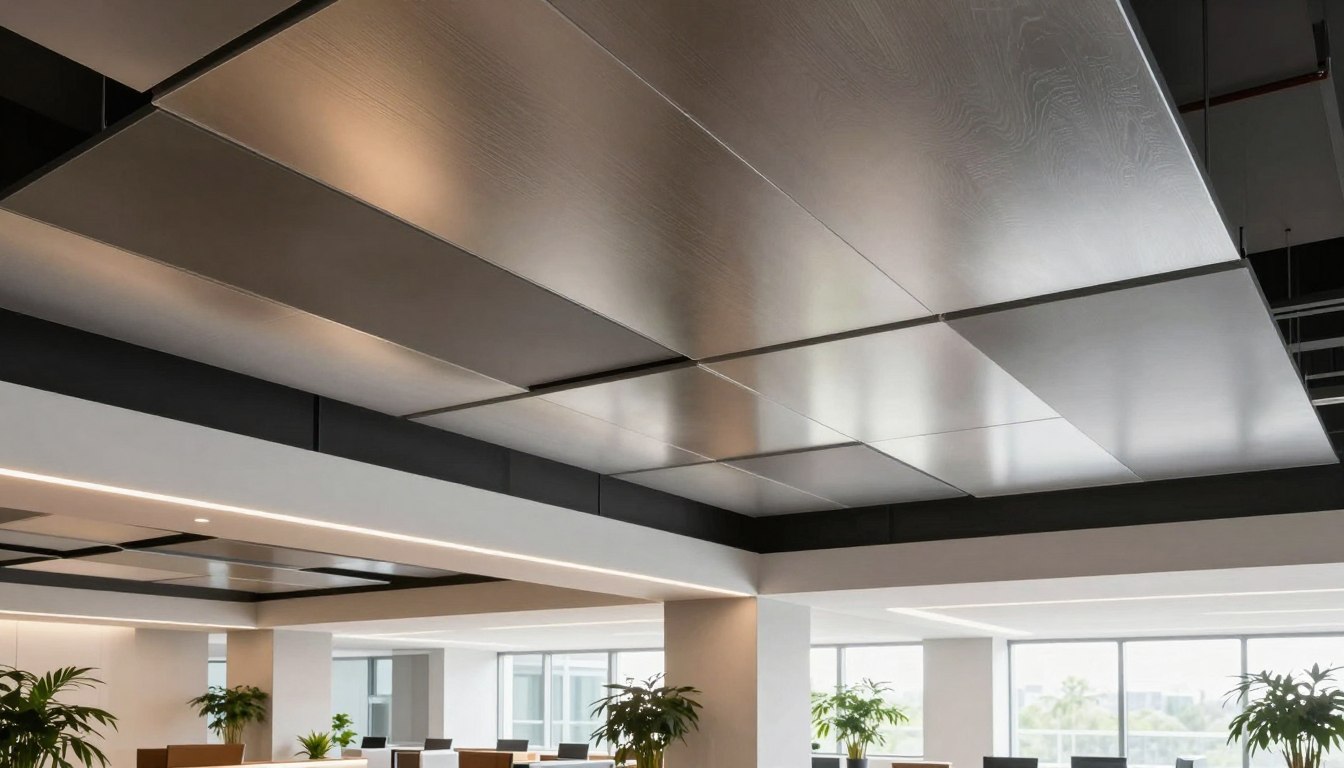
Choosing the right ceiling system for your commercial space is important. It affects how your building looks, works, and performs. Modular metal ceilings are popular because they offer quality finishes, are easy to install, and save money.
Many factors go into making this choice. You need to think about sound quality and how to hide pipes and wiring. Building codes and your sustainability goals also matter. The look of your ceiling impacts the whole room’s feel.
Finding the right ceiling system means balancing sound, infrastructure, codes, sustainability, and aesthetics. This balance ensures your investment meets your business needs for years. The right choice saves money and improves comfort and compliance.
This guide will help you through the selection process. You’ll learn about different ceiling types and how room features like windows and height affect your choices. You’ll understand the importance of acoustic ratings for your workers and clients. Fire safety rules and design choices are also important.
Key Takeaways
- Modular metal ceilings offer contemporary finishes with benefits like quick installation and long-term durability
- Your choice must balance acoustic needs, building codes, and room aesthetics
- Space planning includes managing pipes, wires, and maintenance access above the ceiling
- Aluminum ceiling systems provide cost efficiency and reusability across different projects
- Sustainability and environmental impact play growing roles in commercial design decisions
- Proper selection reduces long-term maintenance costs and improves workplace comfort
- Code compliance and fire safety standards shape all ceiling choices in commercial buildings
Understanding Aluminum Ceiling System Options for Commercial Spaces
Choosing the right aluminum ceiling system for your commercial project is key. Each type has its own benefits and fits different needs. Your choice depends on your building’s design, budget, and function. The main types are clip-in panels, lay-in panels, and linear panels.
Each installation method changes how your space looks and works. Your choice affects maintenance, sound control, and looks. Knowing these differences helps you choose the best for your space.
Clip-In Ceiling Panels
Clip-in panels attach to a frame using clips. This method is strong and works well in busy areas. Panels stay in place without sagging.
- Panels lock into aluminum runners
- No tools needed for panel removal
- Excellent for areas with vibration
- Professional, seamless appearance
- Easy access to plenum space when needed
Clip-in systems are great for retail, offices, and factories. They’re durable and easy to maintain.
Lay-In Ceiling Panels
Lay-in panels sit on a grid frame. They’re easy to install and access. This is good for spaces needing to get to overhead systems.
- Panels rest on aluminum grid frame
- Quick and easy installation process
- Simple panel replacement and removal
- Excellent for HVAC system access
- Cost-effective solution for many applications
Lay-in systems are perfect for offices, hospitals, and schools. They allow easy access to mechanical systems.
Linear Ceiling Panels
Linear panels create a modern look. They interlock for a clean, strong ceiling. Your space gets a sleek, sophisticated look.
- Panels arrange in linear or perpendicular patterns
- Creates clean architectural lines
- Hides mechanical systems effectively
- Available in various widths and finishes
- Enhances contemporary design aesthetics
Linear systems are ideal for corporate offices, hotels, and retail. They offer a premium look. Your design team can customize the look to fit your vision.
| Ceiling System Type | Installation Method | Best For | Maintenance Access |
|---|---|---|---|
| Clip-In Panels | Direct attachment to frame using clips | High-traffic areas, manufacturing facilities | Excellent – quick panel removal |
| Lay-In Panels | Resting on grid frame support | Offices, hospitals, schools | Superior – lift panels for full access |
| Linear Panels | Interlocking panel arrangement | Corporate offices, hotels, retail | Good – removable for system access |
Understanding these options helps you choose the best for your project. Each system has unique benefits for different spaces. Consider ease of installation, maintenance, aesthetics, and budget. Choose wisely for your commercial space and future needs.
Assessing Your Space: Window Placement and Natural Light Considerations
Natural light greatly impacts how your commercial space feels and works. When picking an aluminum ceiling system, think about your building’s window placement. Windows let daylight into your workspace, affecting your ceiling panels’ look and function.
Your ceiling design should complement your window placement, not clash with it. Rooms with lots of windows need different ceiling solutions than those with little natural light. Knowing this helps create a welcoming space for everyone.
How Windows Impact Your Ceiling Selection
Windows create bright spots and shadowy areas in your commercial space. These light patterns affect which ceiling panel style is best for your project. Rooms with lots of sunlight might need ceiling panels that reflect or diffuse that light. Areas with few windows might need panels that spread artificial light better.
Consider these window-related factors:
- Direction your windows face (north, south, east, or west)
- Size and quantity of windows in the room
- Glass type and tinting on your windows
- Proximity of windows to work stations and seating areas
- Seasonal changes in daylight hours
Ceiling Panels and Light Reflection
Different aluminum ceiling finishes handle natural light in different ways. Light-colored panels with matte finishes absorb daylight, creating calm spaces. Glossy or reflective panels bounce light around, brightening dark corners or creating visual balance.
| Ceiling Panel Finish | Light Reflection Level | Best for Window-Rich Spaces | Best for Limited Natural Light |
|---|---|---|---|
| Matte White | Moderate | Yes | Limited |
| Glossy/Reflective | High | Yes | Yes |
| Textured | Low | Limited | No |
| Perforated | Diffused | Yes | Yes |
Your aluminum ceiling system is a tool for managing natural light. Choosing the right finish and style ensures your commercial space feels balanced, comfortable, and welcoming all day.
Ceiling Height and Visual Impact on Your Design
Choosing the right aluminum ceiling system is key to making your commercial space feel bigger. The right panels can make rooms look taller, wider, and more open. How we see the height of the ceiling affects how we move and interact in the space.
Aluminum ceiling panels come in various depths and designs. These choices affect how our eyes move across the room. Knowing these visual elements helps you create the perfect atmosphere for your business.
How Panel Depth Affects Perceived Space
Panel depth is how far the ceiling panels extend down from the ceiling. Shallow panels give a clean, modern look and make spaces feel more open. Deep panels add depth and interest but can make rooms feel smaller.
Your panel choice greatly impacts your design:
- Shallow panels (1-2 inches) open up the room and work well in smaller spaces
- Medium panels (2-4 inches) balance style and spaciousness
- Deep panels (4+ inches) create dramatic visual effects in large areas
Light colors on panels make spaces feel bigger. Darker finishes add sophistication but can make the space feel lower. The finish and depth of your panels affect how they reflect light.
Choosing Panel Arrangements for Optimal Height Perception
The way you arrange your aluminum ceiling panels greatly changes how tall your space appears. Vertical arrangements make the space feel taller. Horizontal patterns make it feel wider and more open.
Consider these arrangement strategies for your commercial ceiling design:
| Panel Arrangement Type | Visual Effect | Best For |
|---|---|---|
| Linear Horizontal | Emphasizes width and openness | Long corridors and wide spaces |
| Linear Vertical | Draws eyes upward for height | Standard ceiling heights |
| Grid Pattern | Creates balance and structure | Professional offices |
| Mixed Directional | Adds visual interest and flow | Modern commercial spaces |
Your ceiling system choice affects lighting and sound quality. Strategic panel arrangement ensures your commercial space looks professional and meets functional needs. Light-colored panels with vertical arrangements make spaces with 8 to 10-foot ceilings feel taller.
Installation patterns are as important as panel selection. It’s wise to consult with your ceiling installer about how different arrangements affect your specific room dimensions and lighting design.
Plenum Space Access and Mechanical System Integration
Your aluminum ceiling does more than look good. It also helps your HVAC system work well. The space above your ceiling is key for air to flow back to your heating and cooling systems. This keeps everything hidden and efficient.
Good design in the plenum space stops air from getting stuck. Your HVAC system needs clear paths for air to return. Without these, your system might not work as well, and you could face pressure issues.
Your maintenance team needs easy access to the equipment above. Some projects use walkable ceiling systems for this. They let technicians work on your HVAC without messing up your space. Plus, they’re easy to take apart for checks and fixes.
Sealed spots in your ceiling keep everything clean. Your HVAC systems must work well with your ceiling, like diffusers and ducts. If they don’t, it can mess up your comfort and cost you more on energy.
- Plenum design routes return airflow efficiently back to your HVAC system
- Sealed penetrations prevent air leaks and maintain system performance
- Modular panels provide easy access for maintenance and inspections
- Balanced air supply and return positioning prevents dead zones
- Early coordination with HVAC engineers ensures optimal system integration
Plan your HVAC system early to avoid expensive changes later. Work with your HVAC engineer and ceiling supplier to make sure everything fits right. This way, your aluminum ceiling will support your systems for a long time.
Acoustic Performance Requirements for Your Commercial Environment
Sound control is key to a comfortable commercial space. Your team and clients need a quiet place to work without distractions. Aluminum ceiling systems offer great sound solutions, keeping your space comfortable and productive.
Choosing the right acoustic performance depends on your needs. Different spaces need different sound management. For example, an open office is different from a medical facility or conference room.
Understanding NRC Ratings for Sound Absorption
The Noise Reduction Coefficient (NRC) shows how well your ceiling absorbs sound. It ranges from 0 to 1.0. A 0 rating means it reflects sound, while a 1.0 rating absorbs almost all sound.
Higher NRC ratings mean quieter spaces. Most aluminum ceiling panels have NRC ratings between 0.55 and 0.95. Your choice depends on your space and the noise levels you want to manage.
- Office spaces typically need 0.70 to 0.85 NRC ratings
- Open floor plans benefit from 0.80 to 0.95 NRC ratings
- Retail environments work well with 0.60 to 0.80 NRC ratings
- Warehouses may use 0.50 to 0.70 NRC ratings
CAC Ratings for Sound Blocking Between Spaces
Ceiling Attenuation Class (CAC) shows how well your ceiling blocks sound between rooms. This is important for spaces that share walls. A higher CAC rating means better sound isolation.
CAC ratings range from 25 to 35 for most commercial ceilings. Spaces needing privacy, like private offices or conference rooms, need higher CAC ratings.
| Ceiling Type | Typical NRC Range | Typical CAC Range | Best Used In |
|---|---|---|---|
| Lay-In Panels | 0.70 – 0.90 | 25 – 30 | Open offices, classrooms |
| Clip-In Panels | 0.60 – 0.85 | 28 – 32 | Corporate offices, healthcare |
| Linear Panels | 0.55 – 0.75 | 24 – 28 | Modern retail, restaurants |
| Perforated Aluminum | 0.65 – 0.88 | 26 – 31 | Mixed-use spaces, offices |
Your acoustic goals guide your choice of aluminum ceiling. Test different panels in your space before deciding. Sound travels differently based on room size, furniture, and materials.
Fire Safety Standards and Code Compliance for Aluminum Ceilings
Fire safety is key when picking a ceiling for your commercial space. Your aluminum ceiling must follow strict building codes and fire rules. This ensures safety for everyone and meets legal standards.
The ceiling material greatly impacts fire safety. Aluminum ceilings are known for their fire-resistant qualities. They often get a Class A fire rating, which means they don’t catch fire easily. This makes them a good choice for many buildings.
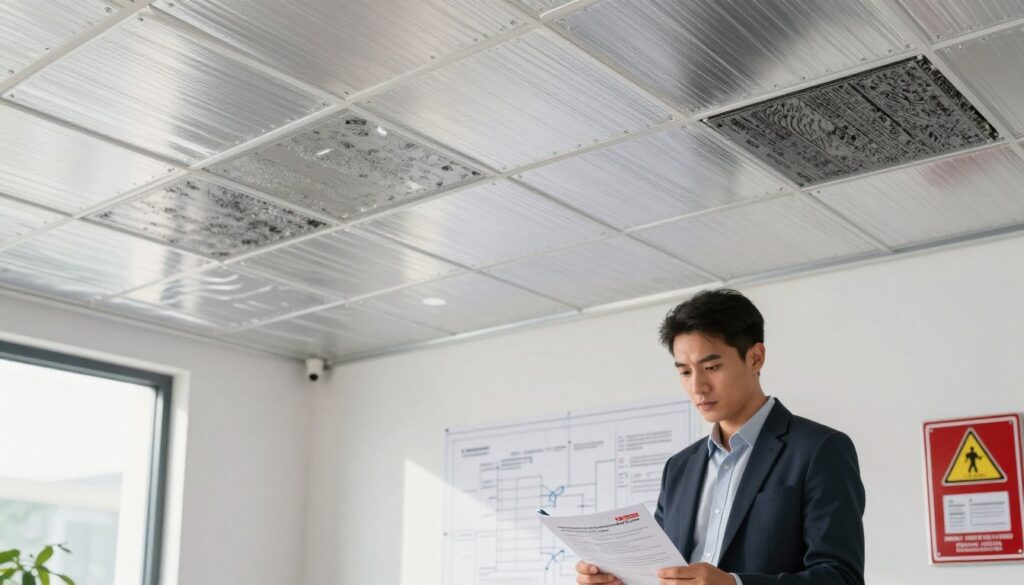
The suspension system is also vital for fire safety. It must hold the ceiling up and keep it fire-resistant when it’s hot. Steel systems are usually better at this than others. Building codes say the system must stay strong during a fire to keep the ceiling from falling.
Any holes for lights or sprinklers need careful handling. Building codes say these holes must have fire-rated panels and be sealed well. This stops fires from spreading through the ceiling. Fire dampers and protective covers around these holes also help reduce fire risks.
- Install fire-rated trim around all penetrations for lights or sprinklers
- Use non-combustible materials in your suspension system
- Ensure your ceiling material meets ASTM E84 fire ratings
- Request fire-rated access panels for maintenance areas
- Schedule regular inspections of all penetrations and seals
Your local building department can help with fire code rules for your project. Following these rules saves lives and avoids expensive fines during checks.
Aluminum Ceiling System Finishes and Aesthetic Customization
Your commercial space needs a ceiling that looks good and works well. The finish you pick is key for both looks and durability. By exploring different finishes, you can match your design and ensure your ceiling lasts.
Aluminum ceilings offer many ways to customize beyond just color. You can choose from surface treatments, panel designs, and special coatings. Knowing these options helps you make choices that fit your project’s goals and budget.
Powder Coating and Anodizing Options
Powder coating is a top choice for aluminum ceilings because it’s durable and comes in many colors. It creates a protective layer that resists scratches, fading, and corrosion. This is great for places like kitchens and bathrooms.
Anodizing is another premium method that makes the aluminum stronger. It gives your ceiling natural protection against corrosion and makes it harder than untreated aluminum. This process also lets you choose from many colors while keeping the metal strong.
- Powder coating offers unlimited color choices and exceptional durability
- Anodizing provides natural corrosion resistance and elegant metallic finishes
- Both methods enhance the lifespan of your ceiling system
- Custom color matching helps coordinate with your interior design scheme
- Low-maintenance finishes reduce long-term cleaning costs
Perforated and Textured Panel Designs
Perforated aluminum panels add interest and improve sound in your ceiling. They let sound in while looking modern and sophisticated. This pattern also helps air flow, making your space sound better.
Textured panels let you change your ceiling’s look without losing performance. They can hide flaws, cut down on glare, and add depth. You can choose from many patterns, from simple to bold, to highlight your space.
| Panel Design Type | Best Uses | Acoustic Benefits | Aesthetic Appeal |
|---|---|---|---|
| Perforated Linear Panels | Open offices, collaborative spaces | Superior sound absorption with NRC ratings up to 0.95 | Modern, clean aesthetic with hidden fasteners |
| Textured Panels | Executive offices, reception areas | Moderate sound dampening capabilities | Professional appearance with depth and dimension |
| Baffle Ceilings | Large open spaces, atriums | Excellent acoustic control in expansive areas | Contemporary design with visual impact |
| Solid Aluminum Panels | Clean rooms, moisture-prone areas | Minimal sound absorption | Sleek, minimalist appearance |
Choosing aluminum ceiling finishes means investing in both looks and function. Your space will benefit from finishes that perform well, whether you want great sound or a striking look.
By mixing different finishes and designs, you can create something unique for your project. Your aluminum ceiling can show off your brand while meeting important standards and safety needs.
Budget Planning: Square Meterage and Cost Estimation
Planning your aluminum ceiling system budget needs careful square footage and material cost calculation. Knowing the price factors helps you make smart choices for your commercial project. Your budget is influenced by several key elements that affect the total cost.
Begin by accurately measuring your space. Calculate the total square meters or square feet you need to cover. This measurement is the base of your cost estimation. Accurate measurements help avoid overspending and ensure you buy the right materials.
Different aluminum ceiling panel types have different prices. Basic clip-in panels are less expensive than custom linear or perforated designs. The finish, whether powder coating or anodizing, also adds to the cost. Textured panels usually cost more than smooth surfaces.
Consider these cost factors when planning your budget:
- Material costs for aluminum panels
- Installation labor expenses
- Suspension system components
- Finishing treatments and customization
- Delivery and handling fees
- Permits and inspections
Getting quotes from multiple suppliers helps you compare prices. Ask for detailed breakdowns of material costs, labor, and additional fees. This clarity helps you find the best value for your project.
| Aluminum Ceiling Type | Cost Per Square Foot | Installation Complexity | Best For |
|---|---|---|---|
| Clip-In Panels | $8-$15 | Moderate | Quick installations |
| Lay-In Panels | $6-$12 | Low | Standard applications |
| Linear Panels | $12-$25 | High | Modern aesthetics |
| Perforated Panels | $10-$20 | High | Acoustic control |
Consider long-term savings when budgeting. Quality aluminum ceilings need little maintenance over decades. They resist moisture and corrosion, saving on replacement costs. Energy efficiency features also lower utility bills in climate-controlled spaces.
Work with your contractor to create a realistic timeline and budget schedule. Phased installations can spread costs over multiple years. This approach manages cash flow while completing your commercial space transformation strategically.
Sustainability and Environmental Benefits of Aluminum Ceilings
Choosing aluminum ceiling systems for your commercial project is more than just about looks and function. They also offer big environmental benefits that fit with today’s building standards. These systems help your company show it cares about the planet while lasting a long time.
The materials you pick affect the environment in many ways. Aluminum ceilings are a green choice that makes your commercial space better for the planet. Knowing these benefits helps you make choices that are good for your business and the Earth.
LEED Certification Contributions
Aluminum ceiling systems can help your commercial project get LEED certification points. The U.S. Green Building Council praises aluminum ceilings for being good for the environment. By choosing these ceilings, your building can get better LEED ratings.
These ceiling systems help in many ways for LEED credits. They improve indoor air quality, get credits for material sourcing, and support energy-efficient design. Choosing aluminum ceilings means you’re picking a material that meets green building standards.
- Contributes to energy efficiency requirements
- Supports indoor air quality improvements
- Qualifies for regional material sourcing credits
- Enables lower lifecycle environmental impacts
- Reduces waste during installation processes
Recyclability and Long-Term Environmental Impact
Aluminum is one of the most recyclable materials in building. Your aluminum ceiling panels can be recycled endlessly without losing quality. At the end of your building’s life, these materials can be made into new products instead of going to landfills.
Recycling aluminum uses only five percent of the energy needed to make it from scratch. This means your ceiling system’s environmental impact lasts long after it’s in your building. Even decades later, your aluminum ceilings can become valuable raw material for new products.
| Environmental Benefit | Impact | Long-Term Value |
|---|---|---|
| Recyclability Rate | 100% recyclable indefinitely | Zero landfill waste at end-of-life |
| Energy Savings in Recycling | 95% less energy than virgin production | Reduces carbon footprint over decades |
| Material Durability | 25-50 year lifespan typical | Extends recycling value indefinitely |
| Production Emissions | Lower VOC emissions from aluminum | Improves indoor air quality continuously |
| Waste Generation | Minimal installation waste | Reduces construction debris significantly |
Aluminum ceiling systems are a wise choice for sustainability. Your commercial space becomes more eco-friendly while keeping the quality and durability your business needs. These materials support your green building goals and save money by reducing environmental costs.
Maintenance Requirements and Durability Considerations
Aluminum ceiling systems need little upkeep compared to other materials. They save you money on maintenance and last longer. Knowing how to care for them keeps your ceiling looking great for years.
Aluminum doesn’t rust, making it perfect for places with moisture or changing temperatures. It doesn’t get water stains like drop ceiling tiles do. This means you won’t have to replace or fix it as often.
Keeping your aluminum ceiling clean is easy. Just wipe it with a soft cloth to get rid of dust. Most places only need to clean it every few months.
Basic Cleaning and Care Procedures
Here’s what you should do to keep your ceiling in good shape:
- Wipe panels with soft, dry cloths to remove dust
- Use mild soap and water for stubborn spots
- Avoid abrasive cleaners that scratch surfaces
- Inspect panels annually for damage
- Check suspension systems for looseness
Long-Term Durability Benefits
Aluminum ceilings last up to 25 years with the right care. They don’t warp, sag, or get damaged like other ceilings. They stay strong in changing temperatures and humid places where other ceilings fail.
| Maintenance Task | Frequency | Time Required |
|---|---|---|
| Dust removal | Quarterly | 1-2 hours per 1,000 sq ft |
| Deep cleaning | Annually | 3-4 hours per 1,000 sq ft |
| Hardware inspection | Annually | 30-45 minutes |
| Damage assessment | Bi-annually | 1 hour per floor |
Choosing aluminum ceiling systems means you get a durable option that needs less care. Your commercial space will look great and work well for years to come.
Conclusion
Choosing the right aluminum ceiling system for your commercial project is important. You must think about your space needs, budget, design, and building codes. Each decision about panel type, finish, and installation method affects the outcome.
Consider how acoustic performance, fire safety, and looks come together. Think about how natural light affects your space and the impact of ceiling height. Remember, aluminum panels are strong, weather-resistant, and easy to install and maintain. These qualities make them great for commercial spaces.
Sustainability is key in today’s construction. Aluminum ceilings help meet your environmental goals through recyclability and LEED certification. When planning your budget and timeline, remember the low maintenance costs of quality aluminum systems. Your investment today will protect your building’s value and performance for years to come.