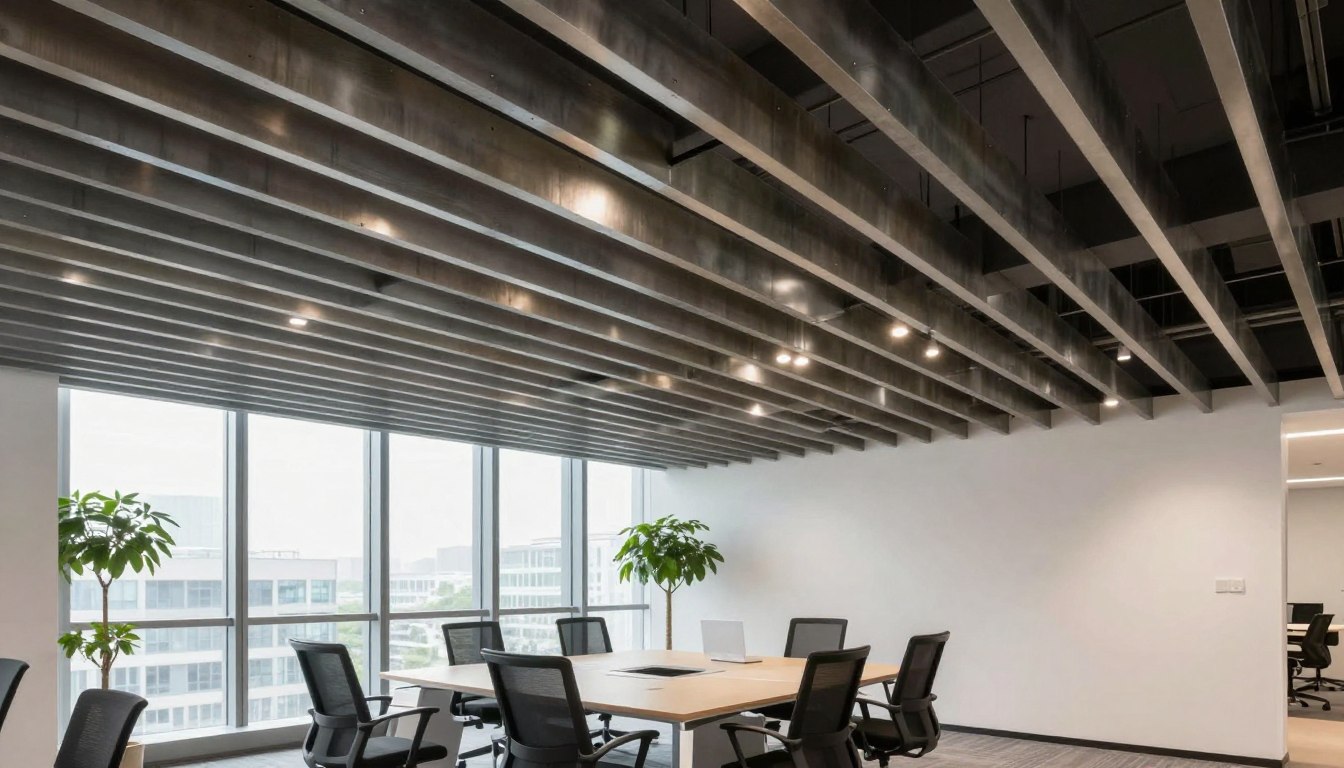
A metal baffle ceiling is a modern architectural ceiling system. It combines striking visual appeal with practical performance benefits. Your space gets vertical metal slats—called baffles—that are mounted to a hidden support structure beneath the surface. These systems deliver both sleek aesthetics and powerful functionality in a single solution.
Your commercial ceiling choice matters more than you might think. The right ceiling design guide helps you understand that metal baffle ceilings serve a dual purpose. They create a contemporary look while managing sound, improving air flow, and providing easy access to services hidden above. This is why architectural ceiling systems like these are becoming standard in modern office buildings and commercial spaces.
You’ll find that commercial ceiling solutions using metal baffles have evolved beyond simple decoration. These systems now represent a smart investment for any business serious about creating a comfortable and professional environment. Your employees and customers benefit from reduced noise levels, improved air quality, and a workspace that looks intentionally designed.
Metal baffle ceilings balance multiple requirements at once. You get sound control that works. You get visual impact that impresses. You get service access that saves money on maintenance. You get long-term durability that protects your investment. All of this comes together in one integrated ceiling system that performs as hard as it looks good.
This guide walks you through everything you need to know about metal baffle ceiling systems. You’ll learn how they work, why they perform so well, and what makes them different from traditional ceiling options. You’ll discover the design flexibility available to you and understand the installation process from start to finish.
Key Takeaways
- Metal baffle ceilings combine vertical slats mounted to hidden support systems for both aesthetic and acoustic performance
- Your modern ceiling design gets customizable finishes, colors, and patterns that match your brand and space requirements
- These commercial ceiling solutions excel at sound absorption while maintaining clear access to HVAC and electrical services
- Installation involves straightforward steps including grid preparation, baffle attachment, and service integration
- Aluminum and steel options provide different benefits in terms of cost, durability, and fire resistance ratings
- Architectural ceiling systems like metal baffles work best in offices, conference rooms, airports, and high-traffic public spaces
- Long-term maintenance remains simple with regular cleaning and inspection intervals
What Is a Metal Baffle Ceiling and How Does It Work
Metal baffle ceilings are a modern ceiling design that looks good and works well. They have vertical metal slats held up by a hidden framework. This design makes your space look clean and architectural while keeping utilities accessible.
The metal structure helps control sound waves, making your space quieter. It’s all thanks to a smart suspension system. This system is key to how these ceilings work.
These ceilings add depth and rhythm to your space. They also let air move freely, which helps with heating and cooling. Unlike solid ceilings, baffle ceilings are flexible in height, spacing, and design.
Understanding the Basic Structure of Baffle Ceiling Systems
Your baffle ceiling starts with a grid on the structural deck or existing system. This grid uses T-bars or aluminum frames, spaced for the baffle width. Carrier rails are the main support, holding the baffles in place.
Metal baffles are available in various sizes, from 50 to 150 millimeters wide and 300 to 3000 millimeters tall. They’re installed with gaps of 10 to 25 millimeters. Clips or screws secure each baffle to the rail, creating a smooth look without visible fasteners.
This design makes installation quick and keeps quality high. It’s a modular system that’s easy to work with.
The Role of Vertical Slats in Modern Ceiling Design
Vertical slat ceilings turn your ceiling into a design feature. They create interesting patterns and guide your eye. The gaps between slats help absorb sound, improving acoustics.
These ceilings fit well with modern designs and are practical. They make it easy to access utilities and adjust systems without major changes. This design supports flexible lighting and HVAC setups.
How Metal Baffles Differ from Traditional Ceiling Solutions
Traditional ceilings block airflow and make it hard to access utilities. Baffle ceilings, on the other hand, allow air to flow freely. Metal ceiling baffles offer great sound control and a modern look.
| Ceiling Type | Airflow | Service Access | Acoustic Control | Design Flexibility |
|---|---|---|---|---|
| Metal Baffles | Unrestricted | Easy | Excellent | High (spacing, height, pattern options) |
| Drop Tiles | Limited | Moderate | Good | Low (standard grid only) |
| Solid Panels | Blocked | Difficult | Fair | Very Low (single appearance) |
Baffle ceilings let you adjust spacing and height for different looks. You can choose from linear, curved, or wave patterns. This makes your ceiling a unique part of your space’s design.
Key Benefits of Installing Metal Baffle Ceilings in Your Space
Metal baffle ceilings bring big benefits to your space. They look great and work well. Installing them means your building will last longer and be easier to maintain.
These ceilings are perfect for busy places because they cut down on echo. They also help control sound better than other options. This means your office or meeting rooms will be quieter and more productive.
Metal baffles are tough and can handle moisture, fire, and impact. They come with long warranties, so you know they’ll last. They’re also good for places that get wet or are outside, keeping your ceiling looking good for years.
These ceilings are also easy to keep clean. They don’t get dusty as much as other ceilings. If one part gets damaged, you can just replace it, saving you money and hassle.
They also help your air flow better. The design lets your HVAC system work more efficiently. It’s easy to get to electrical and plumbing systems too. This makes it simple to do repairs or updates without a big mess.
| Benefit Category | Key Advantages | Your Impact |
|---|---|---|
| Acoustic Performance | Sound absorption, reduced echo, improved speech clarity | Enhanced occupant comfort and productivity |
| Durability | Fire-resistant, moisture-resistant, 15-25 year warranties | Lower replacement costs and long-term value |
| Maintenance | Easy cleaning, individual panel replacement, minimal dust collection | Reduced operational expenses and downtime |
| Design Flexibility | Powder-coated finishes, anodized metals, wood-grain effects | Professional aesthetic matching your brand identity |
| Airflow Access | Open design, easy service access, HVAC efficiency | Better climate control and system maintenance |
| Sustainability | Recycled materials, fully recyclable, modular reuse | Reduced environmental impact and waste |
You can make your ceiling look exactly how you want. Choose from many colors, metals, or wood-grain looks. Your ceiling will show off your style and brand.
Going green is easy with these ceilings. They’re made from recycled materials and can be reused. This choice helps the planet and makes your building more valuable over time.
Design Flexibility and Aesthetic Options for Metal Baffle Ceilings
Your ceiling can become a key design feature that changes your whole space. Metal baffle systems offer creative options beyond basic use. By choosing a metal baffle ceiling system, you can pick finishes, patterns, and services. This section looks at three main areas to customize your ceiling to fit your vision.
Customizable Finishes and Color Choices
With metal ceiling finishes, your design options grow. You can pick powder-coated aluminum in almost any color to match your style. Anodized metal gives a premium look that lasts for decades without fading.
Wood-grain finishes add warmth without the weight and cost of real wood. These finishes are eco-friendly and keep their look for years without peeling or fading.
Linear, Curved, and Wave Pattern Configurations
Architectural ceiling patterns add to your creativity. Straight lines create a modern look that suits contemporary spaces. Curved shapes guide movement and enhance room flow.
Wave patterns add interest and break up large ceilings. The Atmosphera® Ripple collection offers customizable curves for unique effects. Spacing and height control affect sound and airflow, adding to your design.
| Pattern Type | Visual Effect | Best For | Spacing Benefits |
|---|---|---|---|
| Linear Configuration | Clean, modern aesthetic | Contemporary offices | Creates orderly, professional appearance |
| Curved Pattern | Flowing movement and guidance | Hospitality spaces | Guides visitor flow naturally |
| Wave Pattern | Visual interest and dimension | Large open areas | Breaks monotony effectively |
| Custom Geometry | Unique brand expression | Signature installations | Reflects individual design vision |
Integration with Lighting and HVAC Systems
Ceiling lighting integration is a big plus of baffle systems. Your metal baffles can hold lighting, HVAC, and other services without losing style. You can add custom light channels for stunning effects.
This means your ceiling looks great and works well, all in one. Custom colors work with your lighting to set the mood in any room.
Acoustic Performance and Sound Control Capabilities
Metal baffle ceiling systems offer top-notch sound control. Metal itself doesn’t absorb sound, but the design of these ceilings makes them effective. Sound waves hit the vertical slats and then the insulation above, where they are absorbed.
Choosing the right baffle setup can cut down echo and improve how well you can hear. The spaces between the baffles, along with the insulation, reduce echo by 30 to 50 percent. This is super helpful in open offices, meeting rooms, and schools.
Perforated baffles take your sound control to the next level. They have holes that let sound through to meet insulation. You can pick how big the holes are to balance sound control with looks.
| Baffle Spacing | Acoustic Performance | Best For |
|---|---|---|
| 10-15mm gaps | Maximum sound absorption coverage | High-noise environments, auditoriums |
| 20-25mm gaps | Balanced acoustic control | Offices, commercial spaces |
In lecture halls and classrooms, perforated baffles make a big difference. They cut down background noise and make it easier to hear. Restaurants and hotels use them to create cozy areas. Hospitals also see better patient recovery thanks to less noise.
Step-by-Step Installation Process for Metal Baffle Ceiling Systems
Installing a metal baffle ceiling needs careful planning and precision. Each step builds on the last one. A well-done installation can change your space, keeping it strong and looking good. Here’s how to do it, from setting up the grid to finishing the edges.
Preparing the Support Grid and Carrier Rails
Start by mapping your ceiling layout on the structural deck. Find where your carrier rails will go, making sure they’re level. Use laser levels and plumb lines to check for straightness.
Put in your carrier rails or mounting channels, spaced as your design says. These rails are usually T-bar aluminum frames or steel channels. Make sure they’re securely attached to the structure, holding the system’s weight. Your grid installation should fit baffle heights from 300 to 3000mm and widths from 50 to 150mm.
Attaching Baffles and Ensuring Proper Spacing
After your grid is set, start attaching baffles to the carrier rail. Use special hardware that won’t show from below. Keep the baffle spacing between 10 to 25mm, using spacers or jig templates.
This step needs a lot of precision. A small mistake can look big on a big ceiling. Work slowly, checking alignment often. Your professional ceiling installation relies on these small adjustments for a smooth look.
| Baffle Dimension | Standard Specification | Installation Spacing |
|---|---|---|
| Width | 50–150mm | 10–25mm gaps |
| Height | 300–3000mm | Consistent vertical alignment |
| Tolerance | Level and plumb | ±1–2mm maximum variation |
| Rail Spacing | Per baffle width | Secure anchoring required |
Integrating Services and Finishing Edge Details
With your baffles in place, you can add lighting, HVAC, and other systems. The space between panels is perfect for these installations. Cut openings in baffles for lights and LED strips.
Finish by adding edge trims and moldings. These details make the edges look clean and hide any gaps. Do a final check to make sure everything is level and aligned. Your hard work in this last step will make your ceiling look and work great.
Material Choices: Aluminum vs Steel for Baffle Ceilings
Choosing the right material for your baffle ceiling system is key. It affects your project’s performance, durability, and value. Aluminum and steel are two strong options that offer different benefits. Knowing what each offers helps you pick the best for your needs.
Aluminum ceilings are light, making installation easier. They weigh about one-third as much as steel. This means less stress on your building’s structure, saving on costs and extending its life.
Aluminum also fights corrosion well, perfect for places with a lot of moisture. Unlike steel, it doesn’t need extra coatings to protect it. This makes it great for humid areas like pools or coastal spaces.
Aluminum is also eco-friendly. It’s fully recyclable and uses less energy than making new aluminum. This can help you earn points for green building certifications.
| Feature | Aluminum Ceilings | Steel Ceilings |
|---|---|---|
| Weight | Lightweight (one-third of steel) | Heavy (3x heavier than aluminum) |
| Corrosion Resistance | Naturally resistant | Requires protective coatings |
| Cost | Higher initial cost | 15-30% less expensive |
| Finish Options | Powder coat, anodized, wood-grain | Industrial, raw, or coated |
| Recyclability | 100% recyclable | Recyclable but less infrastructure |
| Rigidity | Good for standard spans | Superior for long spans |
Steel ceilings have their own benefits. They are stronger and more rigid, ideal for long spans or areas with impact. Steel is also cheaper than aluminum, which is good for projects watching their budget.
Design options differ between aluminum and steel. Aluminum offers many finishes, including colors and wood-grain effects. These finishes last long. Steel, on the other hand, has a more industrial look with fewer finish options.
Deciding between aluminum and steel depends on what you need. Choose aluminum for its lightness, corrosion resistance, and eco-friendliness. Opt for steel if you need strength, industrial looks, or are on a tight budget. Some projects might use both materials for the best results.
Common Applications and Where Metal Baffle Ceilings Excel
Metal baffle ceiling systems are great for many types of buildings. They work well where you need good sound control, looks, durability, and easy access to services. Each type of space gets benefits from baffle ceilings’ unique strengths.
Commercial Offices and Corporate Workspaces
Your office ceilings are key to productivity and happiness. Open-plan offices benefit a lot from baffle systems. They help control sound and keep work areas quiet.
Metal baffles add interest to big ceilings without being too much. They look modern and professional. Plus, they make it easy to add lights and other services without a lot of work.
Transportation Hubs and Public Buildings
Airport ceilings need to handle a lot, like lots of people, moisture, and complex systems. Metal baffles are perfect because they’re strong, fire-resistant, and last a long time. They also fit well with lots of electrical and HVAC systems.
Public spaces like train stations and government buildings need ceilings that can handle signs, lights, and more. Baffles are durable and easy to get to for these needs.
Retail spaces, restaurants, schools, and hospitals also use baffles. They help with sound, look good, and are easy to change up. Baffles make places look modern and work well in different settings.
| Application Type | Key Benefits | Performance Requirements |
|---|---|---|
| Office Ceilings | Acoustic control, flexible lighting integration, professional appearance | Sound absorption, 15-25 year durability, service access |
| Airport Ceilings | Fire resistance, impact durability, complex service accommodation | High traffic resilience, moisture resistance, signage support |
| Retail Ceiling Systems | Modern aesthetics, easy reconfiguration, service concealment | Quick lighting changes, simplified maintenance, visual appeal |
| Public Space Ceilings | Long-term durability, accessibility for infrastructure, reliability | Fire codes compliance, equipment mounting, 24/7 operation |
| Healthcare Facilities | Cleanability, moisture control, medical equipment access | Sanitation standards, humidity resistance, service convenience |
Knowing when metal baffle ceilings are best helps you choose wisely for your project. Think about your building, sound needs, and service requirements. Baffle systems might be the perfect choice for you.
Maintenance Requirements and Long-Term Care for Your Ceiling
Your metal baffle ceiling system needs little upkeep compared to other ceilings. Knowing how to care for it keeps it in top shape for years. Its design and materials mean you’ll save on maintenance costs and time.
Regular upkeep keeps your ceiling looking and working great. Clean it every 6 to 12 months with soft cloths or brushes. A vacuum with a soft brush is good for big areas. Metal baffles stand up to dust better than flat surfaces, so you clean less often.
For quick fixes, use a damp microfiber cloth with mild soap on powder-coated surfaces. Wipe, rinse, and dry to avoid water spots. Never use harsh cleaners that can harm the finish.
| Maintenance Task | Frequency | Details |
|---|---|---|
| Routine Dusting | Every 6-12 months | Use microfiber cloths or soft brush attachments to remove accumulated dust |
| Spot Cleaning | As needed | Apply mild soap solution with damp cloth, rinse, and dry completely |
| Ceiling Inspection Procedures | Once or twice yearly | Check for loose clips, shifted baffles, and finish damage; tighten screws |
| Deep Cleaning | As required | Use metal-safe disinfectants in healthcare or food service areas |
| Preventive Checks | Annually in humid areas | Inspect for corrosion and apply touch-up coatings as needed |
Check your ceiling once or twice a year for problems. Look for loose parts, damaged trim, or finish issues. Tighten screws and fix any issues. You can replace damaged panels easily without affecting the rest of the ceiling.
In places where cleanliness is key, like healthcare or food service, deep clean with metal-safe cleaners. Always follow the manufacturer’s instructions to avoid damage. These steps help your ceiling last longer.
In humid or coastal areas, check for corrosion or damage more often. Use touch-up paint or coatings as needed. With proper care, your metal ceiling can last 15 to 25 years. Replacing damaged panels is easy, saving you money and time.
Metal Railing Systems
Metal baffle ceiling systems are part of a larger group of architectural metal systems. They make modern buildings better. These systems are strong, fire-resistant, and flexible in design. Knowing how baffle ceilings fit into metal architectural solutions helps you choose the right options for your projects.
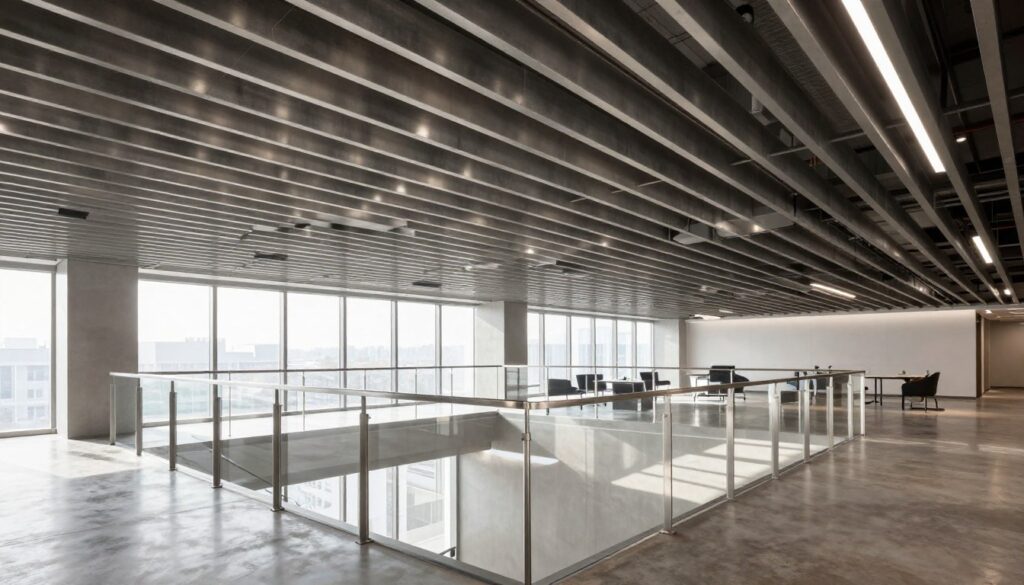
How Baffle Ceilings Compare to Other Metal Architectural Systems
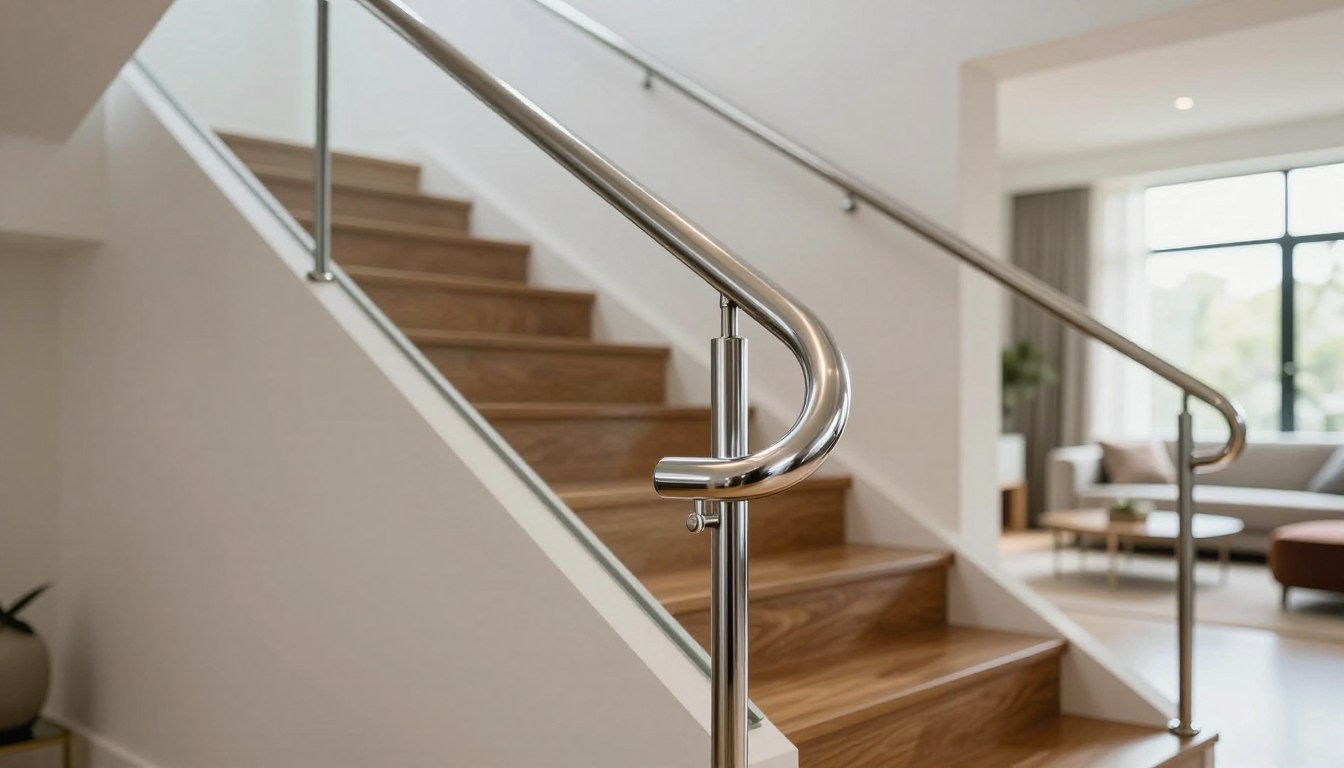
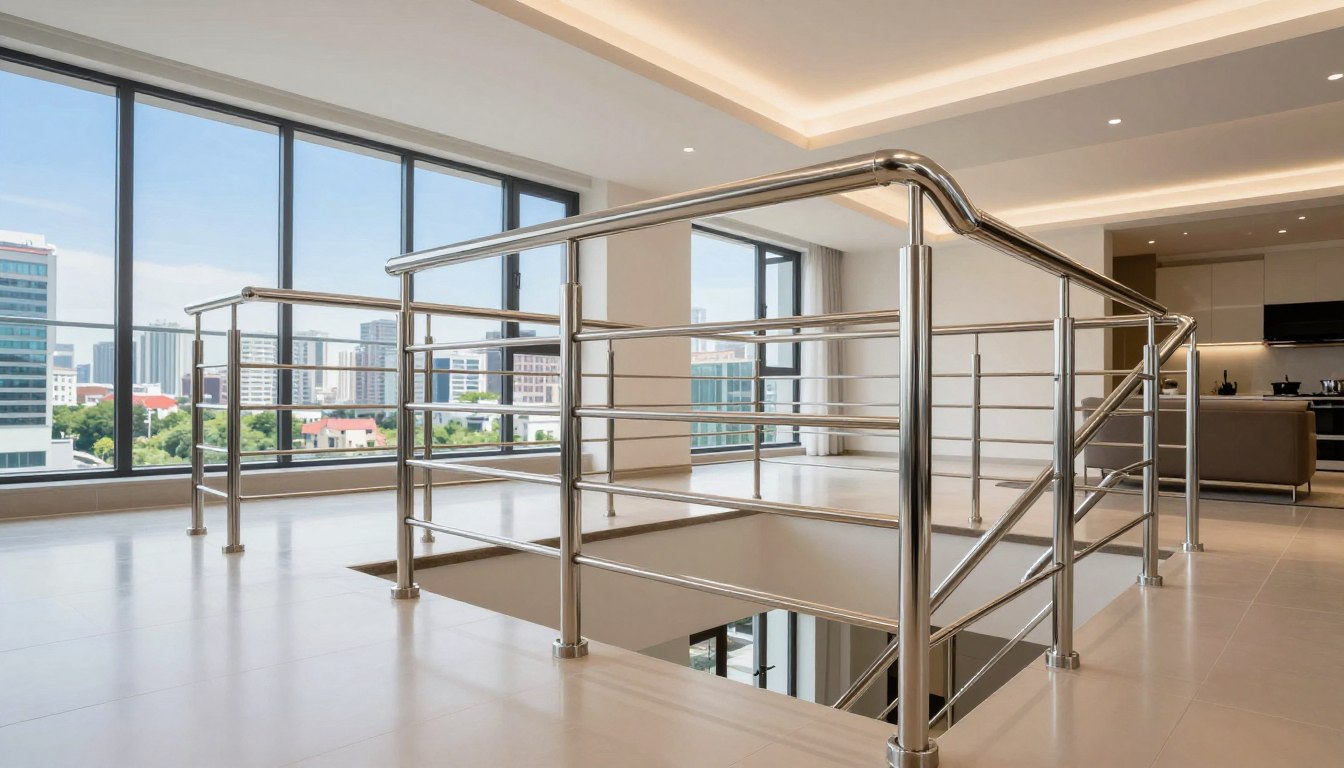
Metal railing systems and baffle ceilings have different roles in buildings. But they both use metal’s strength and look. Railings keep people safe and meet safety codes. Baffle ceilings improve looks and sound quality.
Using metal architectural systems in your project makes things consistent. This makes upkeep easier and ensures everything works well together. Metal components like railings and ceilings focus on lasting quality, safety, and easy upkeep.
Durability and Fire Resistance Standards
Fire-resistant ceiling systems are tested to meet safety standards. Metal baffle ceilings pass these tests, showing they’re safe. Class A systems are best for areas where people gather, like corridors and assembly spaces.
| Fire Rating Classification | Flame Spread Index | Smoke Development Index | Recommended Applications |
|---|---|---|---|
| Class A (Highest) | 0-25 | 0-450 | Egress corridors, assembly areas, hospitals |
| Class B | 26-75 | 0-450 | Commercial offices, retail spaces |
| Class C | 76-200 | 0-450 | Storage areas, utility spaces |
Metal is non-combustible, giving it an edge over other materials. It also stands up to impacts and seismic activity. Tests show it resists corrosion and holds up under weight, including equipment.
Metal baffle ceiling systems meet high standards of durability and fire resistance. Investing in these systems keeps people safe and adds value to your building for years to come.
Conclusion
Metal baffle ceilings are a smart choice for your commercial space. They offer acoustic control, visual appeal, airflow management, and durability. Your ceiling system selection now has a modern solution that does more than hide structural elements.
These systems become active architectural features that shape your space’s look and performance. Whether it’s a corporate office, retail space, or healthcare facility, metal baffle ceilings add value. They work well in many different settings.
Your commercial ceiling decision guide should highlight the key benefits. These systems offer superior acoustic performance, reducing noise and improving speech clarity. They also provide design flexibility, allowing you to make a unique visual statement with custom finishes and configurations.
Their durability is impressive, lasting 15 to 25 years with little maintenance. They also make it easy to access building services, simplifying installation and reducing costs. Plus, they support green building goals with recycled content and recyclability.
When investing in metal ceilings, proper execution is key. Talk to manufacturers or design professionals about your project needs. Choose materials and finishes that match your vision.
Whether you pick aluminum for its light weight or steel for its strength, you’re investing in performance. Ensure precise grid layout, accurate baffle spacing, and careful service integration. With minimal maintenance, your investment is protected.
Your architectural ceiling solutions are clear. Metal baffle systems offer unique design, superior performance, and long-term reliability. Choose with confidence, knowing you’re improving your space functionally and aesthetically.