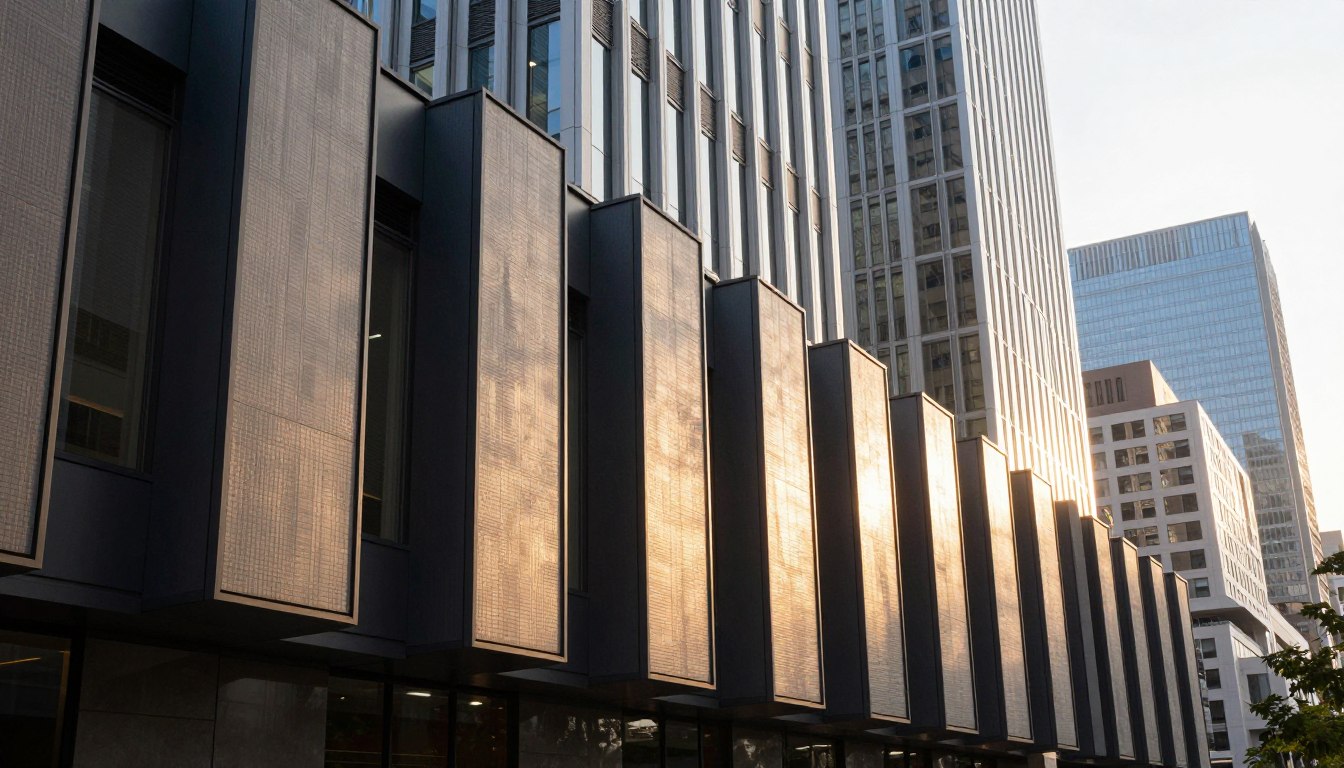
In busy city areas, privacy fins and architectural louvers make buildings look good and work well. They block glare, keep buildings cool, and protect privacy. Designers often look at Instagram for ideas, finding trends like vertical fins and horizontal louvers.
This guide offers tips on choosing and placing exterior fins and sunshades. They should fit with the building’s look and work with light and air. It’s important to match them with windows and consider wind and upkeep to last long in cities.
Key Takeaways
- Privacy fins and architectural louvers offer privacy, solar control, and a strong visual identity for city facades.
- Use imagery on Instagram to evaluate real-world spacing, scale, and material finishes before finalizing designs.
- Balance sunshades and exterior fins with glazing performance to optimize daylight and reduce HVAC loads.
- Select durable materials and plan maintenance access for longevity in polluted, coastal, or high-wind urban contexts.
- Consider adjustable louvers where variable control of light and privacy is required; fixed fins work well for consistent screening needs.
Understanding Privacy Fins & Louvers and Their Role in Urban Architecture
Privacy fins and louvers change how buildings look and work in crowded city areas. Designers pick between thin, vertical fins and slatted systems to fit needs. This choice helps teams plan for sun control, views, and air flow early on.
Definition and differences between privacy fins, louvers, and sunshades
Privacy fins are thin, vertical parts on a building to block views from next door. Louvers have many slats that can be flat or angled to control light and air. Sunshades or brise-soleil are wide, horizontal parts that cut down on heat from the sun.
How fins and louvers address privacy, daylighting, and ventilation in dense urban contexts
Vertical fins help block views while keeping some views open. Louvers can be moved to let in soft light and air, if allowed by codes. These systems help control daylight and cut down on cooling needs when placed right.
Relevant design standards, codes, and sustainability considerations in the United States
Design teams must follow local rules, clear view areas, and fire exit rules. Energy codes favor designs that use natural shading and light. Urban screens should meet building codes and help save energy and keep occupants comfortable.
Site Analysis: Evaluating Urban Context and Solar Orientation
A detailed site analysis is key for privacy fins and louvers. Start with street-level photos and quick mockups. These images show how façades meet sidewalks and where privacy is needed.
Look at neighboring building heights, window placements, and public routes. A sightline study reveals where people can see into units. Use this to decide on fin depth and louver spacing for privacy and views.
Do solar tests early. Sun path diagrams and time-lapse mockups show when glare hits interiors and when heat gains peak. Designers use this to pick solar orientation louvers that cast shade when needed.
Use field photos with digital tools. GIS façade analysis layers parcel data, building massing, and street geometry. This maps shadow patterns, privacy zones, and reflection issues for nearby properties.
Practical checks on site cut risk. Place a small prototype or tape outline on the façade. Instagram-style daytime and evening shots show how fins perform and how louvers shape light as the sun moves.
Below is a compact comparison of common site-analysis inputs and their value to fin and louver design.
| Input | What it Shows | How it Informs Design |
|---|---|---|
| Street photography | Pedestrian sightlines, adjacent windows, sidewalk activity | Determines fin placement and height to block views at eye level |
| Sun path diagrams | Solar angles across seasons and times of day | Guides orientation and tilt of solar orientation louvers to reduce glare |
| Physical mockups | Real-world shadowing and glare behavior | Validates spacing, depth, and material finish before full build |
| GIS façade analysis | Contextual massing, heights, and nearby obstructions | Helps optimize fin layout to balance daylight and privacy |
| Sightline study sketches | Angles from sidewalk, adjacent buildings, and windows | Pinpoints critical zones for screening without over-shading |
| Time-lapse solar studies | Daily shadow progression on façade | Informs louver angle and operability to manage heat gain |
Material Selection and Durability for Urban Conditions
Choosing the right materials for fins and louvers is key. They affect how well they work, how easy they are to maintain, and how they look in the city. Urban areas need products that can handle pollution, salt air, and frequent use.
Designers should think about weight, finish options, and how much they cost over time. This helps pick the best louver materials for a project.
Comparing metals, composites, and façade-integrated materials for longevity
Aluminum fins are popular because they are light, can be shaped easily, and last a long time if treated right. Stainless steel is good for areas that get a lot of wear and tear because it’s strong against impacts. Composite louvers, like FRP and metal-composite panels, look like wood or metal but are lighter and easier to put up.
Façade systems that do everything in one piece are great. They cut down on the number of people needed to work on a project and reduce chances of mistakes. Choosing systems with test data makes it easier to know how long they’ll last and what warranties they come with.
Corrosion resistance, maintenance cycles, and surface finishes suitable for city environments
City life makes finishes wear out faster. Look for finishes that resist corrosion like anodized aluminum, Class 1 fluoropolymer coatings, or passivated stainless steel. Powder coat is good for color choices, but remember to plan for re-coating in your budget.
Maintenance needs vary by finish and where it’s used. Busy areas might need checks and light cleaning twice a year. Places near the coast or with lots of pollution might need re-coating every five to ten years. Choosing panels that can be easily swapped out and fasteners that are easy to get to can save money in the long run.
Acoustical and thermal performance implications of different materials
Acoustic louvers help block noise when they have internal baffles or absorbent linings. Solid metal fins reflect sound, which can make street noise worse unless you add perforations or absorptive backings. Composite louvers can have built-in damping and better sound absorption in tight spaces.
Thermal effects are important for comfort and energy use. Heavy metals add thermal mass and can change how much heat comes through glazing. Aluminum fins conduct heat fast but can be separated from the wall to limit heat flow. Looking at manufacturer R-values and tested assemblies helps understand the trade-offs between shading, thermal bridging, and insulation.
| Material | Durability | Maintenance | Acoustic Behavior | Typical Use |
|---|---|---|---|---|
| Aluminum fins | High with anodize or fluoropolymer; resists rust | Periodic cleaning; re-coat 8–15 years in urban settings | Reflective; add perforation or lining for absorption | Lightweight sunshades, slim profiles |
| Stainless steel | Very high; excellent wear and impact resistance | Low; occasional cleaning; rare rework | Reflective and stiff; can amplify noise without treatment | High-traffic façades, security applications |
| Composite louvers | Good; resistant to corrosion and rot | Low to moderate; clean and inspect sealants | Better absorption; internal core reduces transmission | Warm aesthetics, integrated rainscreen panels |
| Metal-composite panels | High when core and faces are sealed properly | Moderate; monitor edge seals and coatings | Variable; core choice affects damping | Integrated façade systems, curved elements |
| Wood-look composites | Moderate; resists moisture with proper finish | Moderate; periodic washing and re-coating may be needed | Absorptive; pleasant acoustic quality | Residential façades, warm urban contexts |
Balancing Privacy and Views with Effective Fin & Louver Design
In dense cities, designing façades is a delicate balance. It’s about respecting privacy and letting in daylight. By arranging fins and louvers thoughtfully, we can let people see out while blocking views from others. This approach helps in deciding on spacing, angle, and height for different buildings.
Design strategies to preserve outward views while blocking unwanted sightlines
Begin by figuring out where people sit and stand. Using staggered fins and varying spacing can block views at key angles. Yet, it keeps the views open. On balconies, perforated panels and narrow fins offer privacy without cutting off street views.
Before making final decisions, test sightlines with mockups and photos. This includes looking at social media examples. Early talks with manufacturers can turn service areas into attractive screens. This boosts curb appeal and hides utility areas; for more details, see sunshades and louvers in building design.
Adjustable versus fixed louvers: pros, cons, and use cases
Adjustable systems let people control light and glare. They adjust to the sun’s movement, improving daylight and saving energy. They’re great for mixed-use buildings where different tenants have different needs.
Fixed fins are simpler, cheaper upfront, and need little upkeep. They work well on repetitive office façades where the sun’s path is predictable. They create a strong look while keeping offices private.
| Attribute | Adjustable Louvers | Fixed Fins |
|---|---|---|
| Control | Occupant or automated control for variable daylight and glare | Passive control tuned to orientation and climate |
| Maintenance | Higher due to motors and sensors | Low, fewer moving parts |
| Cost | Higher initial cost, potentially energy-saving | Lower upfront cost, simple to make |
| Best use | Mixed-use façades, glare-prone offices, occupant-focused spaces | Repetitive office façades, budget-conscious residential projects |
| Aesthetic impact | Dynamic appearance, can integrate lighting for night branding | Crisp, static rhythm that accentuates building geometry |
Visual privacy for residential units, offices, and mixed-use façades
Residential privacy screens should match balcony sizes and common views. Vertical fins protect patios while keeping views open. Simple screens in multifamily buildings block direct views into living rooms without cutting off light.
Office façade privacy is key for focus. Horizontal louvers and sunscreens reduce glare and heat gain. They improve daylight for better thinking. In retail, perforated metal protects storefronts at night while keeping them visible.
Test designs with mockups and performance tests to find the right balance. Small changes in fin angle or spacing can make a big difference. Test on façade segments and get feedback before rolling out widely.
Integration with Building Systems and Energy Performance
Fins and louvers do more than just look good. They work with building systems to improve comfort and energy use. Posts on Instagram show how passive cooling louvers can make interiors cooler and brighter.
Passive cooling louvers block direct sunlight, reducing heat loads. This helps lower cooling needs during hot afternoons. Architects’ field photos show how interiors become less glazed and glare decreases with louvers.
It’s important to plan glazing and shading early in design. Match louver shapes with glass coatings to keep daylight levels high. Instagram and product pages often highlight the benefits of this matching.
Operable louver controls adjust to time and weather. Motorized blades can follow the sun and occupant needs. Posts from companies like Schüco show how this can lower peak demand.
Simple control strategies can make a big difference. Use schedules and light sensors to balance daylight and cooling loads. Data from sensors and building management systems prove the benefits and help fine-tune designs.
Design teams should set clear performance goals in construction documents. Mention testing needs for louvers, glazing, and controls. Early planning with engineers helps avoid changes and meets thermal and daylight goals.
Fabrication, Installation Logistics, and Cost Management
Building efficient façades starts with careful planning. This planning links fabrication to installation. Prefabricated fins cut down on-site work, speeding up projects and reducing street disruptions in busy areas.
Clear louver shop drawings are key. They outline tolerances and weld details, making field fit-up predictable. This cuts down on requests for information.
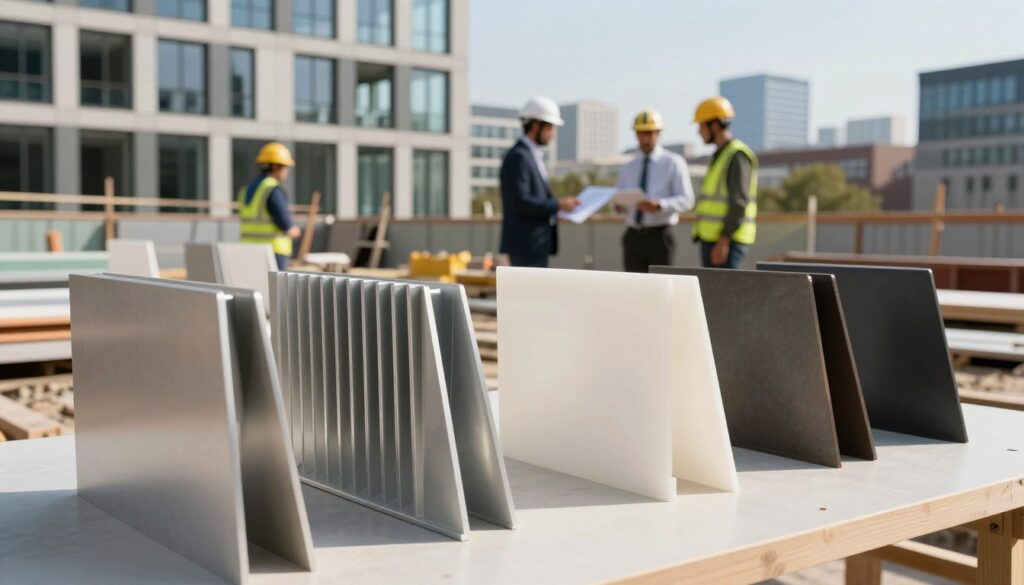
Prefabrication offers various options, from full module delivery to pre-assembled brackets and panels. Modular units are ready for crane lifts, saving labor hours and minimizing sidewalk closures. Good louver shop drawings should include lifting points, bracket interfaces, and sequencing notes for each module.
Urban installation logistics need early coordination with municipalities and vendors. Staging on narrow streets requires permits, protected sidewalks, and tight crane windows. A site plan should sequence deliveries, store material off the curb when possible, and designate safe pedestrian paths.
On-site safety measures must be clear. Use hoarding, fall-protection plans, and trained rigging crews familiar with city constraints. Regular briefings that reference the louver shop drawings help installers match shop conditions to field reality and reduce rework.
Budgeting should consider lifecycle cost against upfront savings. Durable finishes like powder-coat or anodize can add initial cost but lower maintenance and repainting cycles. Value engineering louvers is effective when teams test trade-offs: lower-cost hardware can raise long-term service expenses, while slightly higher-quality materials extend service life.
A compact comparison table clarifies choices for owners and contractors.
| Option | Upfront Cost | Maintenance Frequency | Impact on Installation Time |
|---|---|---|---|
| Fully prefabricated fins (modules) | Higher | Low | Shorter; fewer site adjustments |
| Shop-fabricated brackets with field panels | Medium | Medium | Moderate; requires alignment work |
| Field-fabricated louvers | Lower | High | Longer; weather dependent |
| Powder-coat finish | Medium | Low | Neutral; shop-applied |
| Anodized finish | Higher | Very low | Neutral; shop-applied |
Track costs alongside schedule risk to make informed trade-offs. Use mockups and sample deliveries to confirm tolerances called out in louver shop drawings. This reduces surprises during crane lifts and keeps urban installation logistics predictable.
When teams prioritize façade installation safety and choose prefabricated fins wisely, projects move faster and need fewer corrective visits. This combination improves long-term value and supports responsible city construction practices while enabling value engineering louvers without compromising durability.
Designing for Aesthetics: Rhythm, Scale, and Façade Composition
Visual rhythm and scale make a building stand out. By spacing, repeating, and aligning fins and louvers, we create a unified façade. This turns functional elements into a beautiful street view.
Begin by mapping out the main grid of windows and structural parts. Use louver spacing that mirrors this grid. This makes the façade look like one solid piece, not just a mix of parts.
Small changes in fin depth or angle add depth and shadow. These changes enhance the scale without messing up the main alignment.
Color and texture play a big role at eye level. Options like matte blacks, warm wood, and industrial greys work well in cities. They look great with contrasting glass. Instagram is full of façade ideas that show how different finishes change a wall’s look.
Shadows are a powerful design tool. By arranging fins and louvers, we can create a dynamic shadow effect. This effect changes with the day, reducing glare and adding movement that people notice.
Using computer models helps figure out fin spacing and size. These models help us optimize daylight and reduce heat gain. We can then balance beauty with long-term performance.
Looking at real examples helps turn ideas into reality. Social media and manufacturer sites often share detailed photos and credits. For more on façade design, check out this design guide
For buildings facing the street, focus on human scale near entrances. Use closer fin spacing and finer textures at sidewalk level. Then, relax the rhythm and scale as you go up. This makes the building feel like it’s breathing while keeping a strong façade.
Maintenance Planning and Longevity Strategies
Regular maintenance is key to keeping privacy fins and louvers in top shape in cities. Start with clear access and a maintenance plan. This plan should include cleaning, inspection, and repairs based on the manufacturer’s guidance and warranty terms.
Ensure safe access for cleaning fins before construction ends. Use roof anchors, catwalks, or lift zones for crews to reach all areas safely. Rope access and boom lifts are good for many façades. Make sure to coordinate with contractors about staging and hoisting limits.
Designs that make maintenance easy can save money in the long run. Use removable façade panels and accessible fasteners. This allows crews to reach hidden supports and drainage paths easily. Mark service points on drawings so technicians can quickly remove parts during routine maintenance.
Choose finishes that resist pollution and salt air. Use anti-corrosion coatings like fluoropolymer PVDF, anodized aluminum, or stainless steel. These treatments help louvers last longer in polluted areas. Make sure to specify finish warranties and cleaning protocols that match the coating.
| Maintenance Task | Recommended Interval | Design Recommendation | Warranty/Liability Note |
|---|---|---|---|
| Visual inspection of louvers and fins | Every 6 months | Include access points and removable façade panels for easy inspection | Document inspections to preserve warranty louvers coverage |
| Deep cleaning for pollutant removal | Annually or after major events | Provide access for cleaning fins via lifts or rope-access anchors | Follow manufacturer cleaning limits to avoid voiding finish warranties |
| Fastener and hinge torque check | Annually | Use accessible fasteners and corrosion-resistant hardware | Record maintenance actions for warranty louvers claims |
| Repair of minor damage and re-coating | As-needed after inspection | Specify touch-up kits for anti-corrosion coatings façade systems | Keep receipts and photos to support warranty work |
Align cleaning and inspection schedules with warranty requirements. Ask manufacturers like Alucobond or Hunter Douglas for recommended intervals and procedures. Keep a maintenance log with dates, photos, and technician names. This supports future claims and guides lifecycle budgeting.
Plan for access, materials, and trained crews during procurement. A clear handover package with as-built locations of removable façade panels, service points, and specified anti-corrosion coatings façade treatments makes maintenance straightforward. This reduces costly emergency repairs.
Regulatory Compliance, Privacy Laws, and Community Impact
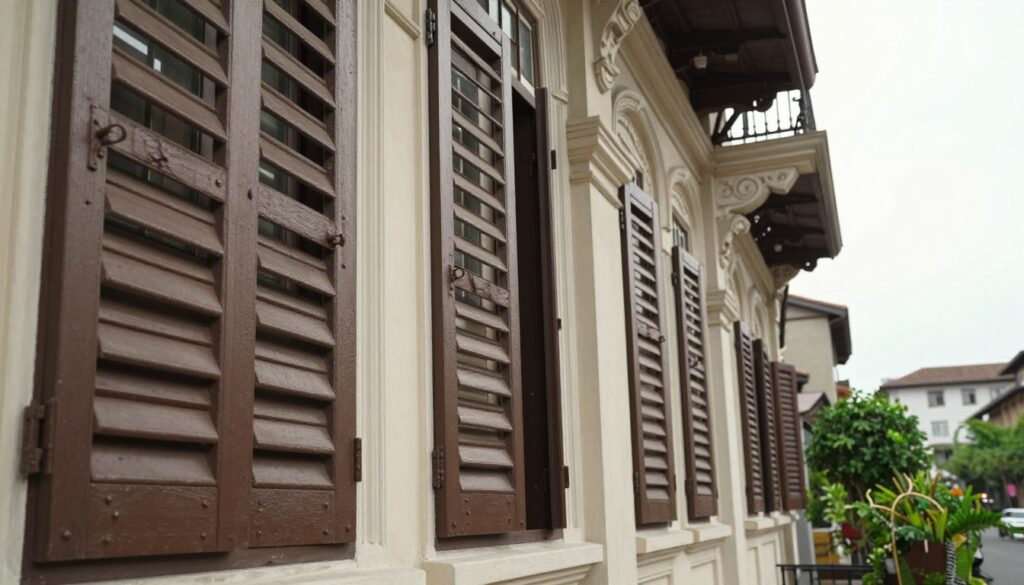
Installing fins and louvers is more than just design. Teams must follow zoning façade rules early to avoid delays. Simple sightline studies and drawings help plan and review impacts.
Zoning review and municipal procedures
Check setbacks, height limits, and projections before attaching elements. Filing complete packages speeds up municipal review. Photos from hearings show what reviewers want: clear images, elevations, and mockups.
Historic context and design sensitivity
In historic areas, designs must follow preservation guidelines. Use materials and finishes that match the period. Submitting alternatives can reduce objections from preservation boards.
Privacy and neighboring property rights
Analyze privacy laws early to avoid easement or view disputes. Provide privacy studies to address concerns. Adjust louvers to preserve daylight and ventilation.
Community engagement and addressing objections
Hold meetings and share mockups to show street impact. Community feedback often focuses on bulk and view loss. Offer design alternatives and samples to build trust.
For durable and adaptable options, check affordable privacy fin and louver solutions. Working with planning and preservation boards helps projects progress smoothly.
Sustainability and Resilience Benefits of Privacy Fins & Louvers
Privacy fins and louvers do more than just shape a building’s look. They also reduce glare and improve how daylight spreads inside. This helps lower cooling needs, thanks to careful planning with solar studies and room layouts.
Designers on Instagram often share before-and-after photos. These show how using privacy fins and louvers can save energy in real projects.
The choice of materials impacts the environment over time. Using recyclable materials like aluminum profiles and certain composites allows for easy reuse or recycling. Posts about products often mention certifications and third-party tests. These confirm the materials’ low carbon footprint and support for circular supply chains.
Designing for wind and storm events is key. Using wind load design fins and proper connections helps protect the building and its occupants. Perforated panels and ventilated setbacks also help manage wind pressure while keeping daylight and privacy.
Operable louvers with daylight sensors and controls can increase energy savings. By reducing peak cooling loads, they help lower HVAC costs. This is important during power outages, supporting building resilience.
How a building interacts with its surroundings affects its temperature. Using sustainable louvers and green spaces can cool down areas. Designers on social media show how adding plants next to louvers can make spaces more comfortable.
Long-term durability and easy maintenance are essential. Opt for materials that are recyclable and resistant to corrosion. Plans that include easy access for inspections and clear warranty paths help keep costs down over time.
Best Practices for Collaboration Between Architects, Engineers, and Contractors
Successful projects start with clear goals and shared models. Early alignment on load paths, attachment details, and waterproofing reduces rework. This preserves the design intent. Teams that focus on collaborative façade design save time during fabrication and installation.
Use staged mockups to test connections and sealants before large-scale work begins. Instagram posts from project teams often show how a prototype reveals critical bracket clearances and flashing needs. A simple mockup can prevent costly changes in the field.
Adopt BIM workflows to keep everyone on the same page. BIM louvers coordination should include structural anchors, conduits, and glazing interface in one federated model. Regular clash detection sessions shrink the number of RFIs and reduce on-site surprises.
Keep shop drawings centralized and consistent. Shop drawings privacy fins must reflect the latest field measurements, tolerances, and fastener schedules. When contractors upload annotated drawings, fabricators can produce brackets that fit first time.
Schedule joint reviews at key milestones. Invite architects, structural engineers, facade consultants, and installers to sign off on details. These reviews build accountability and clarify who owns waterproofing transitions and load transfer points.
Document test protocols and pass/fail criteria early. On-site testing, commissioning, and sign-off protocols for operable systems should list functional checks, control sequences, and acceptance thresholds. Photographic evidence and test reports streamline final approvals.
Coordinate factory acceptance tests with field commissioning plans. For motorized louvers, run bench tests for torque, end-stops, and control logic. Field teams should follow the same sequence during commissioning façade systems to verify behavior under site conditions.
Maintain a single source of truth for changes. Use versioned models, dated shop drawings, and meeting minutes to track decisions. This reduces disputes over scope and ensures that the built façade matches the intended performance.
Foster practical training and handover sessions. A final walkthrough with operations staff and maintenance crews helps owners understand access points, replacement parts, and routine inspections. Clear handover makes long-term upkeep easier.
Conclusion
Privacy fins and louvers bring many benefits to urban projects. They help lower cooling costs and improve natural light. They also make buildings look better and feel more comfortable inside.
Choosing the right materials and finishes is key for lasting results. Aluminum and steel are top choices because they last long and need little upkeep. It’s also important to space them right and use coatings that won’t rust.
Architects and builders can make installation easier and cheaper. They can use modular designs and follow simple steps. Looking at examples and resources, like those at privacy fin resources, helps them make informed decisions.
Using privacy fins and louvers early in design pays off in many ways. When teams work well together and listen to what users need, these features become essential for great urban buildings.