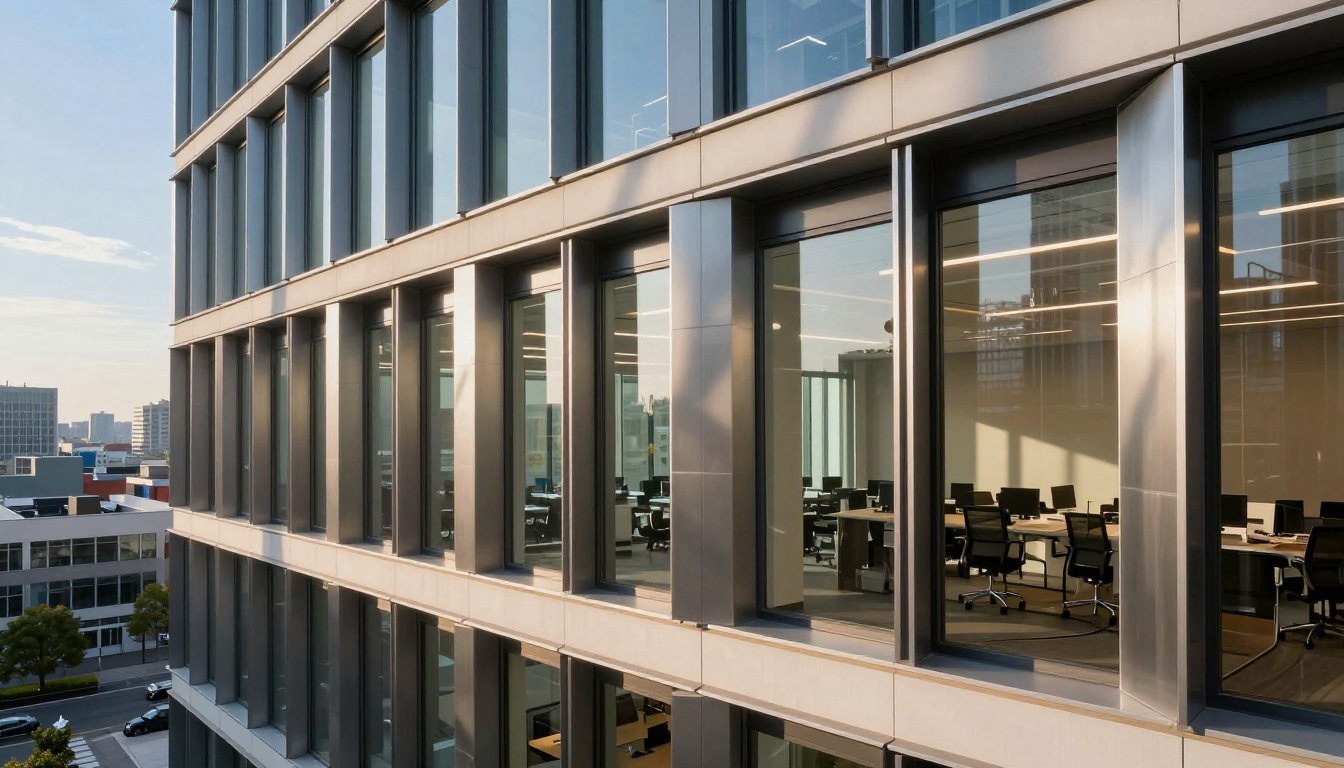
Modern office buildings need to cut energy use and improve comfort. They also must keep a unique look. Privacy fins and architectural louvers meet these needs. They act as passive controls for heat, glare, and air flow, while adding to the building’s design.
By adding privacy fins early, buildings can block solar gain before it hits windows. This helps control sun exposure, lowers cooling needs, and keeps temperatures steady. This is key for keeping workers productive.
Privacy fins and louvers can also be a branding tool. With new technologies like digital printing and LEDs, they can look good and work well. This makes facades last longer and more attractive to customers.
Key Takeaways
- Privacy Fin & Louvers act as passive systems to reduce solar heat gain and glare.
- Architectural louvers improve office building sun control and lower HVAC loads.
- Proper commercial facade shading enhances occupant comfort and productivity.
- Early integration of privacy fins avoids costly retrofits and performance gaps.
- Modern fabrication lets louvers deliver both performance and strong visual identity.
What Privacy Fins & Louvers Are and How They Differ from Fins and Brise Soleil
Architectural louvers and privacy fins are slatted elements on building façades. They shape light, air, and sightlines. Louvers are angled slats that manage airflow and daylight while screening views.
Privacy fins focus on controlling sightlines and occupant privacy. They keep spaces ventilated and bright.
Definition and core functions of louvers and privacy fins
Louvers are shading and ventilation devices. They block direct solar heat gain and reduce glare without eliminating daylight. They also help natural ventilation by allowing air to pass while keeping rain and debris out.
Privacy fins provide visual screening. They preserve daylight and airflow, making them ideal for balconies, facades, and interior partitions.
Differences between privacy fins, architectural louvers, and brise soleil
Privacy fins vs fins is a common design question. Privacy fins focus on sightline control and human scale. They have narrower profiles and closer spacing for screening.
Architectural louvers prioritize solar control and ventilation. They offer options tuned for airflow and thermal performance. Brise soleil are projecting sunshades sized and angled to block sun at specific times of day. They are often heavier and more pronounced than louvers.
Fixed vs operable systems and interior vs exterior placement
Fixed louvers provide predictable shading and low maintenance. They are durable over the long term. Operable louvers add dynamic control for changing conditions and integrate with building automation. They require plans for actuation and maintenance.
Exterior louvers deliver the greatest performance. They intercept solar heat before it reaches glazing. Interior screens and fins help with glare and privacy but do little to reduce cooling loads compared to exterior placement.
Manufacturers like Hunter Douglas and Permasteelisa offer a wide range of fixed and operable options in aluminum and steel. For customizable privacy fins and louver systems, see privacy fin louvers solutions.
Performance Benefits for Office Environments: Thermal Comfort and Glare Control
Exterior sunshades help keep offices cool by blocking the sun’s rays. They prevent windows from getting too hot, which means less work for air conditioning. This approach also saves money by avoiding costly changes later on.
Thermal comfort louvers are designed to keep the temperature steady. They block heat and help maintain a consistent indoor temperature. This makes the office more comfortable without overusing air conditioning.
Controlling glare starts with how the sun hits the office. The right angle and design of sunshades direct sunlight away from screens. This way, natural light enters softly, reducing glare on computer screens.
Good daylighting improves how people see and feel in the office. It balances views, daylight, and shade. Offices that get this right see happier workers and fewer eye problems.
Less glare and steady temperatures boost health and work performance. Natural light helps our bodies stay in sync with day and night. When offices are comfortable and free from glare, everyone works better.
Key takeaway: Adding sunshades early in design is smarter than waiting. It ensures offices are comfortable and energy-efficient in the long run.
Energy Efficiency Gains and HVAC Load Reduction
Privacy fins and louvers do more than just shape a building’s look. They play a big role in keeping it cool by blocking direct sunlight. This helps shift when cooling is needed and boosts energy efficiency.
Passive climate control: lowering peak cooling loads
Exterior louvers stop sunlight from hitting windows. This cuts down on heat absorbed and lowers cooling needs. This means air-conditioning systems work less, saving money and energy.
Case-based reasoning: coordination with glazing performance and building orientation
Shading works best with the right glass and building direction. South sides need special louvers than east or west. By analyzing sun paths, we set up louvers to control sunlight and keep rooms bright.
Long-term energy savings and lifecycle cost benefits
Over time, energy-saving louvers save money on bills and extend HVAC life. They also make buildings last longer. Adding them early saves money and avoids future repair costs.
Ventilation, Airflow Management, and Indoor Air Quality
Louvers are key in managing airflow in buildings. They help control air exchange between inside and outside. This reduces the need for mechanical systems and keeps air inside healthier.
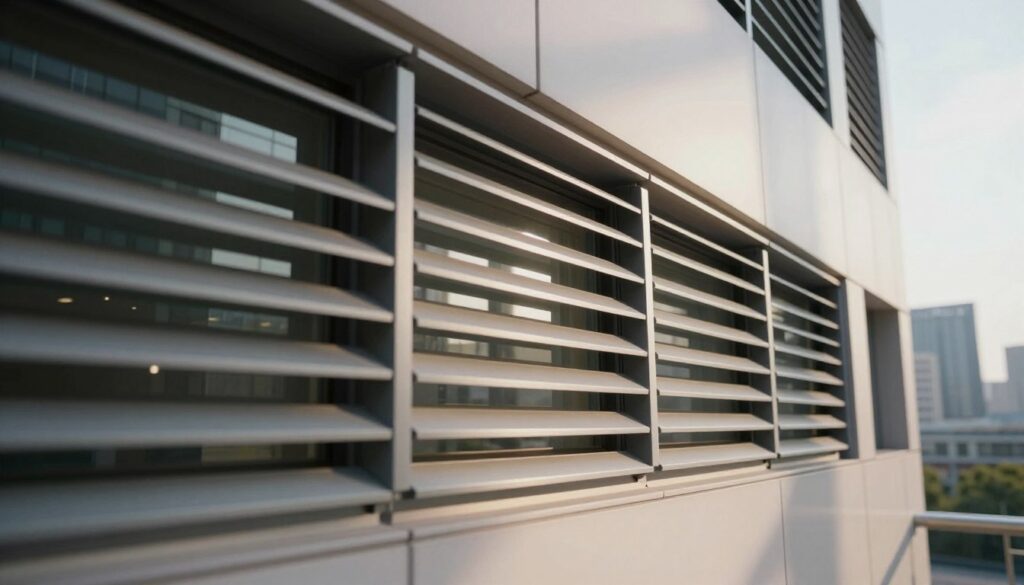
Designers use louvers to help air move through buildings. They work with windows and shafts to move air well. This makes it easy to get rid of stale air and bring in fresh air without needing fans all the time.
Louvers work well with HVAC systems in different weather. In mild weather, natural air flow is used. When it gets colder or hotter, louvers adjust to help fans and chillers work less hard. This keeps people comfortable.
Today’s louvers have special features like keeping out rain and bugs. They also block city noise. These features help louvers last longer and make buildings more comfortable every day.
It’s important to place louvers and windows right. Doing this makes buildings breathe better and ventilate air more effectively. This means less time running HVAC systems and better air inside.
| Function | Typical Louver Feature | Impact on Performance |
|---|---|---|
| Cross-ventilation | Operable blades with insect mesh | Enhanced fresh-air exchange; reduced cooling hours |
| Stack effect | High-level fixed louvers with weather seals | Stable vertical airflow; lower fan dependency |
| Rain and debris protection | Drainable sill and sloped blades | Improved durability; less maintenance downtime |
| Acoustic control | Perforated liners and absorptive baffles | Noise reduction while maintaining ventilation rates |
| Mixed-mode operation | Motorized louvers with sensors | Optimized energy use; seamless shift between natural and mechanical systems |
Material Options and Durability Considerations for Commercial Facades
The choice of louver materials greatly affects a commercial facade’s performance, look, and upkeep. Design teams must consider weight, corrosion resistance, finishes, and exposure when picking between metal, engineered laminates, and natural materials.
Aluminium benefits and practical notes
Aluminium louvers are great for resisting corrosion and have a good strength-to-weight ratio. Their light weight means less support is needed on tall buildings. Powder-coat and anodized finishes keep colors stable and meet durability needs in cities and inland areas.
Regular checks and occasional cleaning are usually enough. But in coastal areas, use marine-grade alloys or special coatings to stop corrosion.
High-pressure laminates for aesthetic stability
HPL louvers keep their color and resist UV damage well, making them great for a woodgrain or designer look. They last longer than untreated wood, saving on upkeep costs even if they cost more upfront.
Choose HPL for durability and a high-end look with minimal upkeep. Make sure to check fire ratings and edge sealing for outdoor use.
Wood and steel: context-driven choices
Wood adds warmth and texture. It works best in covered or semi-outdoor spots where moisture and UV are less. It needs regular sealing and might need to be replaced if exposed to the elements.
Steel and other metals are best for industrial settings where strength matters. They need strong corrosion protection and careful detailing to handle thermal movement and prevent coating failure.
Lifecycle cost and maintenance planning
The material you choose affects how often repairs, repainting, and replacements are needed. In mixed climates, aluminium and HPL louvers usually need less upkeep than painted steel or untreated wood.
Consider local conditions like salt, UV, humidity, and pollution when planning maintenance. Choose the right coatings, fasteners, and cleaning access to protect the facade and lower costs over the building’s life.
Design Choices: Vertical vs Horizontal Louvers and Orientation Strategies
Choosing between vertical and horizontal louvers affects both function and look. This choice is based on sun-path analysis, not just looks. The right louver direction enhances shading, privacy, and light control, creating a unified facade.
Vertical options for east and west elevations
Vertical louvers are best for east and west sides. These areas get the most sun in the morning and evening. They block sun rays without blocking daylight, reducing glare for people near windows.
Horizontal strategies for south-facing facades
Horizontal louvers are great for south sides. They offer steady shading during the day when the sun is high. They work well with curtain walls and big buildings. Adjust overhangs and angles to balance light control with views.
Let sun-path analysis guide profile and spacing
Sun-path analysis is key for choosing louver size, spacing, and angle. It shows how sun moves throughout the year. This helps decide where to stop heat gain or keep views open.
Visual effects and facade rhythm
How you orient louvers affects the building’s look and feel. Vertical elements make a building seem taller and create a rhythmic look. Horizontal elements make it look wider and stable. Together, they create a unique facade rhythm that shows off the building’s design.
Installation, Detailing, and Common Specification Pitfalls
Starting a louver project right means planning early. Work with curtain wall contractors, glazing suppliers, and structural engineers to avoid problems. Make sure the structure can handle the load and check wind-load calculations early.
Get manufacturers involved early to refine details and choose the right products. Clear drawings should show where brackets go and how they connect to the façade and glazing. This helps ensure quality on-site.
Choose the right fixing systems for your project. Use dedicated brackets or concealed rails as needed. Remember to include space for thermal movement to prevent damage from temperature changes. In windy or coastal areas, use strong anchors and double them up for wind-load louvers.
Getting the spacing and alignment right is key for looks and function. Keep blade spacing even and tolerances tight. If alignment is off, you’ll see uneven shading and gaps, and the louvers might rattle.
Quality control is vital. Check for accuracy, finish, and secure anchorage. Make sure factory tolerances work with site conditions. Ask for mock-ups if custom finishes or tight tolerances are needed.
Don’t treat louvers as just decorations. Choose them for their performance, not just cost. Consider wind loads, orientation, maintenance, and lifecycle costs. Make sure both façade and structure teams are responsible for the installation.
| Risk | Cause | Design Response | On-site Check |
|---|---|---|---|
| Rattling and vibration | Loose brackets or no movement allowance | Detail flexible connections and use anti-vibration clips | Operational test at design wind speed |
| Misalignment and poor sightlines | Inconsistent spacing, missing templates | Provide precise shop drawings and installation jigs | Mock-up approval and periodic level checks |
| Structural failure | Undersized anchors or ignored wind-load louvers data | Verify anchor loads with structural engineer and use rated fixings | Torque tests and anchor pull checks |
| Finish degradation | Wrong material for environment | Select corrosion-resistant alloys or coatings per site conditions | Visual inspection after initial exposure period |
| Interface leaks with curtain wall | Poor sealing detail where louvers meet glazing | Coordinate sealant joints and flashings in louver detailing | Water test at critical junctions |
Aesthetic and Branding Opportunities Using Louvers and Privacy Elements
Louvers and privacy fins do more than block the sun. They help create a building’s look, add rhythm, and make facades stand out. By choosing the right placement and finish, architects can make buildings look good and work well in competitive markets.
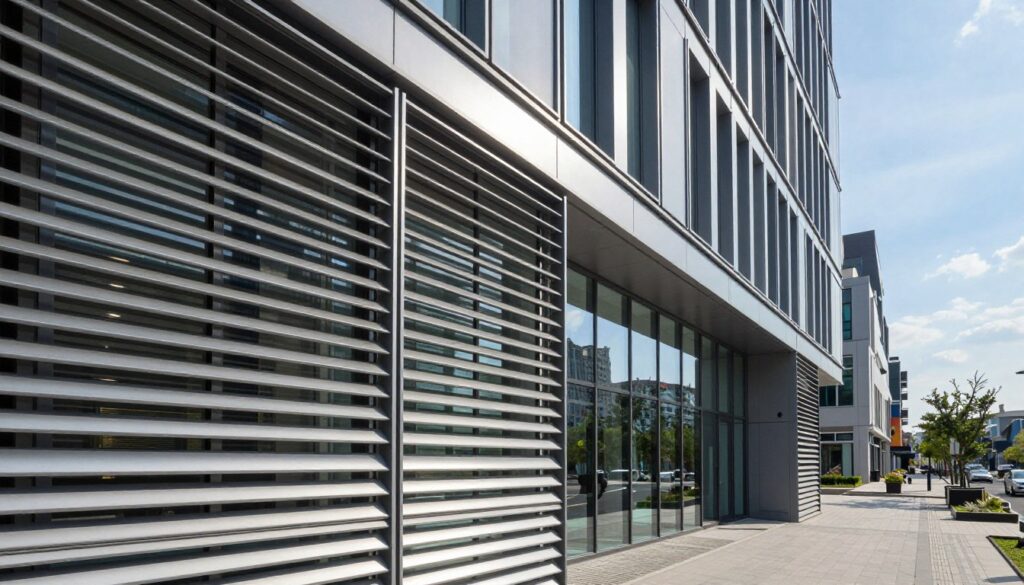
Designers use louvers to add depth and shadow play. This makes buildings look interesting from up close and far away. By adjusting spacing and angles, architects can make buildings look unique without using too much material.
Using louvers for visual depth, shadow play, and facade identity
Designers play with different louver shapes and colors to create dynamic surfaces. These surfaces change as the sun moves, making buildings tell a story. Light colors make buildings look professional, while dark colors give them a sleek, movie-like feel.
Digital printing, perforation, and integrated LEDs for day-to-night impact
Digital printing lets designers add images and patterns to louvers. Perforations and laser cuts let light through while keeping things private. At night, LED louvers turn into glowing signs, making buildings shine after dark.
Concealed louver systems to hide mechanical equipment and service areas
Concealed louvers hide rooftop rooms and loading areas with their ventilated skins. These systems work with curtain walls and keep buildings cool while hiding equipment. This makes buildings look cleaner and tells a story across all sides.
Balancing performance needs with curb appeal in competitive commercial markets
Working with manufacturers early helps create custom designs that fit budgets and needs. Designers can choose from many finishes, like woodgrain or recycled metal, to match the project’s look. This way, buildings can look unique without breaking the bank.
| Design Strategy | Typical Benefits | Branding Opportunity |
|---|---|---|
| White vertical louvers | Enhanced daylight, clean appearance, low glare | Professional, modern corporate identity |
| Black or dark louvers | Privacy, reduced visual intrusion, bold contrast | Premium, high-end branding |
| Perforated and printed panels | Light diffusion, controlled views, graphic application | Custom imagery and messaging via digital printed louvers |
| Integrated lighting blades | Day-night continuity, wayfinding, enhanced visibility | Nighttime identity through integrated LED louvers |
| Concealed maintenance screens | Equipment screening with ventilation | Seamless facade branding using concealed louvers |
| Recycled-material finishes | Lower embodied carbon, durability | Sustainability-focused brand messaging |
For more ideas on vertical solutions and patterns, check out innovative vertical louvers design ideas. With careful design, louvers can meet technical needs while making buildings stand out in busy cities.
Privacy Fin & Louvers: Security, Visual Screening, and Functional Privacy
Privacy fins and louvers control what we see while letting in light and air. Designers use angled fins to block direct views but let in soft light. This way, we don’t need solid walls and keep air flowing where it’s needed.
How angled elements shape sightlines without darkening interiors
Privacy screening limits what we can see from outside. It keeps work areas and meeting rooms private while letting in light. This makes interiors brighter than solid walls and keeps them cooler.
Integrating screening with airflow and service access
Visual screening louvers can open or close for maintenance. They have hidden tracks and hinged parts for easy access. This way, technicians can work on mechanical units without taking down the whole screen.
Applications across building types and security roles
In offices and IT parks, privacy fins keep workstations private and reduce glare. Airports use them to guide sightlines and keep people moving. Hospitals use them to protect patient privacy and meet health codes.
Meeting code and security requirements
Secure louvers meet local codes and third-party standards. Working with makers like Ruskin or Greenheck ensures they fit local tests. This way, they offer both privacy and proven security.
Design tips for effective implementation
Begin with a sun-path study to set blade angles and spacing. Use modular parts for easy maintenance and good airflow. Consider panels with holes or varying density for better views and sound without losing privacy.
Conclusion
Privacy fins and louvers bring big benefits when seen as part of the building’s exterior. They block solar heat, cut down on glare, and help with natural air flow. This makes spaces more comfortable and adds beauty to buildings.
To get the best results, work with makers and façade experts from the start. Make sure designs fit with windows and building frames. Also, do tests for sun and wind effects.
Choosing the right material is key. Aluminum or HPL work well outside, but pick based on weather and wear, not just looks.
Privacy fins and louvers do more than just block views. They can save energy costs, keep spaces bright, and make buildings look good. For more on how to use them, check out privacy fin guidance.