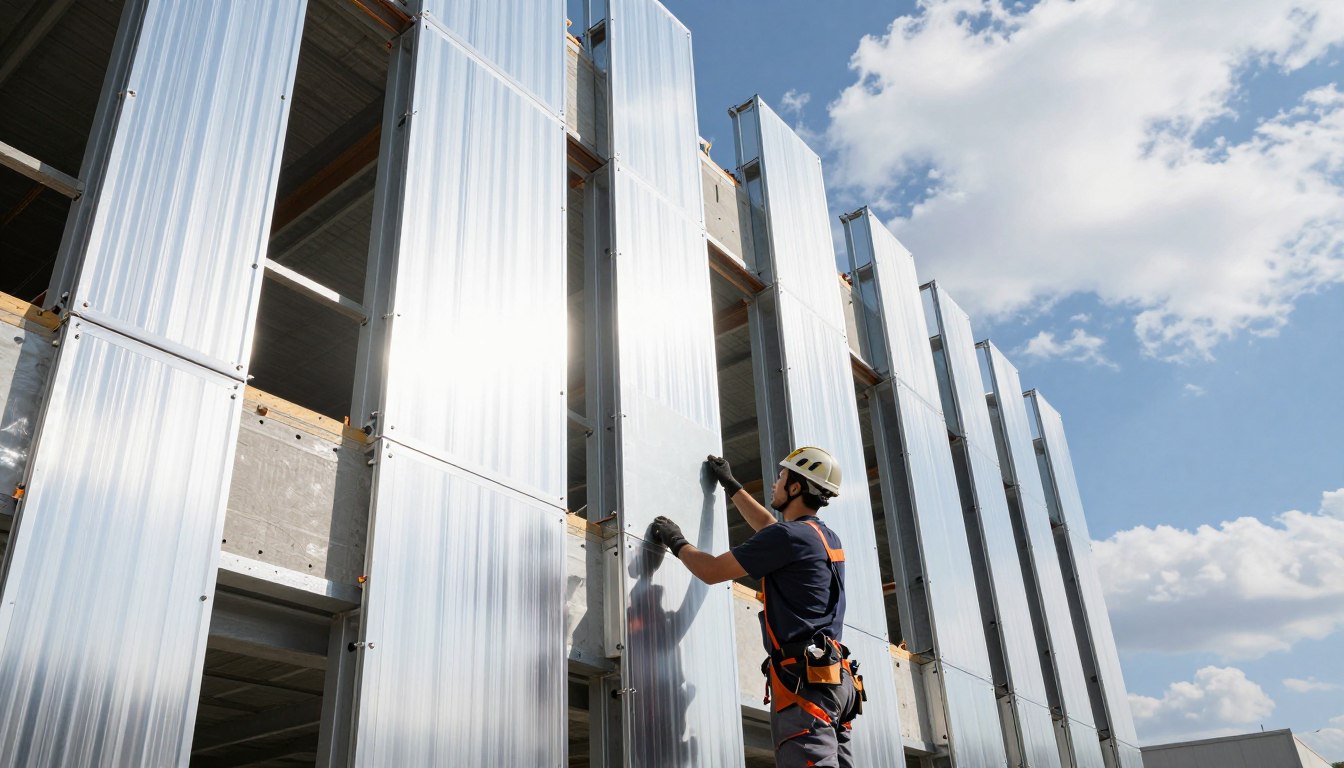
Your building’s exterior is key to its energy use. An aluminum facade system protects against weather and heat loss. Modern materials have changed sustainable construction.
Building owners choose energy-efficient facades for lower costs and less carbon footprint. Aluminum systems offer strength and thermal control. They add weather resistance, sound insulation, and heat control.
The installation process is now simpler and faster. Your building envelope gets better weather and shock resistance. This makes your facility perform better and look modern.
Designers and architects see many benefits in facade systems. They offer thermal comfort, energy savings, and structural safety. This makes your project more attractive to buyers and tenants.
Aluminum panels support exterior facades with durability and long-term savings. Your investment in sustainable construction saves money on energy bills. This case study will show you how aluminum facade systems improve building performance.
Key Takeaways
- Aluminum facade systems cut building energy use and lower operational costs significantly
- Modern aluminum composite materials offer weather resistance, sound control, and thermal insulation
- Quick facade installation reduces labor time and saves money on construction projects
- Sustainable construction with aluminum panels enhances property value and attracts tenants
- Real-world performance data proves commercial building facades deliver measurable ROI
- Facade system integration combines energy efficiency with structural safety and visual appeal
Aluminum Facade System Integration with Solar Technologies for Maximum Energy Efficiency
Your building’s exterior can turn into a power-generating asset by mixing aluminum cladding with modern solar tech. Building-integrated photovoltaics offer a smooth way to blend energy production with design. These systems put photovoltaic panels right into your facade, curtain walls, and exterior cladding materials.
This results in an energy-efficient building envelope that looks good and cuts down on costs.
Aluminum panels are great for solar installations. They’re light but strong, perfect for high-rise buildings and big commercial spaces. Choosing integrated systems early on can make your building more efficient and last longer.
Building-Integrated Photovoltaics and Aluminum Cladding Solutions
Building-integrated photovoltaics turn your facade cladding into energy sources. BIPV technology puts solar capabilities into aluminum panels, making energy-generating facades. You can customize these systems in many ways:
- Adjustable size and color matching to suit your architectural vision
- Variable opacity levels for aesthetic flexibility
- Applications suitable for new construction and building retrofits
- Integration with existing aluminum panel systems
Aluminum’s corrosion resistance and high strength-to-weight ratio make it the top choice for supporting photovoltaic panels in commercial and institutional buildings.
Solar Shading Systems with Aluminum Battens and Thin-Film Technology
Solar shading systems protect your building from too much heat while making renewable energy. Thin-film photovoltaic technology works well with aluminum battens. These systems do two things:
- Reduce cooling loads by controlling solar gain
- Generate on-site electricity simultaneously
- Maintain natural daylighting in occupied spaces
- Lower your building’s overall energy consumption
Thin-film technology works well on angled surfaces, where traditional panels face challenges. Your curtain walls can have these systems without needing structural changes.
Transparent Photovoltaic Glass and Flexible Solar Films for Architectural Flexibility
Transparent photovoltaic glass lets light through while capturing solar energy. This innovation is great for skylights, atriums, and glass curtain walls. Flexible solar films offer more design freedom for curved facades and complex shapes.
You get many benefits with these advanced materials:
- Maintain interior daylighting and visual connections to outdoors
- Adapt to unconventional architectural forms
- Layer multiple technologies across different facade zones
- Achieve higher energy-generating capacity per square foot
Flexible solar films fit into aluminum cladding systems without needing extra structural support. Your building envelope becomes an active energy source while keeping the intended look and occupant experience.
Real-World Performance Analysis: MeeFS Multifunctional Facade System in Mérida, Spain
The MeeFS facade system is a game-changer for retrofitting homes in Mérida, Spain. It started in 2012 and shows how to make old homes energy-efficient. It’s installed on a government building, showing how to fix old buildings without losing their charm.
The MeeFS facade uses two special modules. These modules work together to make the building more energy-efficient:
- Advanced Passive Solar Protector and Energy Absorption Unit with thermal insulation, heat storage, and reflection capabilities
- Advanced Passive Solar Collector and Ventilation Module that adjusts automatically based on climate and time of day
The design of the facade system fits different buildings across Europe. It comes in sizes that work for both cold and warm climates. This makes it easy to fit the new system into old buildings without big changes.
Putting the facade up is made easy by a special anchorage tray system. It attaches to the floor and lets you adjust the panels to fit different floors. This way, you don’t have to change the building too much.
| System Component | Material Selection | Performance Benefit |
|---|---|---|
| Technological Unit Frames | Aluminum | Fire performance compliance and design flexibility |
| Main Structural Profiles | Composite Material | Enhanced structural performance and thermal bridging reduction |
| External Wall Assembly | Integrated System | U-value up to 0.73 W/m²K for superior insulation |
This retrofitting method pays off quickly. The facade can save energy in less than seven years. The windows also work well, keeping heat in and out as needed.
The energy efficiency project in Mérida Spain shows promising results. It teaches us important lessons for our own projects:
- Getting permits takes longer than expected
- Working with residents can be tricky
- Using Virtual Mesh tools helps plan the facade
- Adjusting the panels can solve building problems
This analysis helps plan better for retrofitting homes. The MeeFS facade shows that new energy solutions can work with old buildings. The results from this project give us the data we need for our next projects.
Environmental Benefits and Financial Returns of Energy-Generating Aluminum Facades
Energy-generating aluminum facades offer two big benefits. They make your building better for the environment and save money over time. By using recyclable aluminum and solar tech, you cut down on emissions and boost your finances.
Aluminum is a key part of green building because it’s endlessly recyclable. Most aluminum used in cladding comes from recycled sources. This means it has a much lower environmental impact than new materials.
Carbon Footprint Reduction Through Recyclable Aluminum Materials
Choosing recyclable aluminum for your facade cuts down on carbon emissions right away. Recycling aluminum uses just 5% of the energy needed to make new aluminum. This makes your facade system very low in carbon from the start.
Using aluminum recycling materials helps the planet in two ways. It reduces the impact of materials and saves carbon through solar energy. This makes your facade system a big win for the environment.
- Post-consumer recycled content reduces material embodied energy
- Infinite recyclability without quality degradation
- Supports building performance standards compliance
- Meets corporate sustainability reporting requirements
- Demonstrates measurable carbon reduction achievements
Energy Cost Savings and Net Metering Opportunities
Your energy-generating facade system saves money on utilities and can even make money through net metering. Solar panels make electricity when it’s most needed, lowering your bills. Many places let you get credits for extra energy you send back to the grid.
Over time, your savings add up. Lower energy use means smaller bills, and solar credits keep growing. Most systems pay for themselves in 5-8 years, leaving 15-20 years of profit.
| Financial Metric | Annual Impact | 10-Year Projection |
|---|---|---|
| Energy Cost Reduction | $3,500-$7,200 | $40,000-$85,000 |
| Net Metering Credits | $1,200-$2,800 | $15,000-$35,000 |
| Maintenance Costs | $200-$400 | $2,500-$4,500 |
| Net Financial Benefit | $4,500-$9,600 | $50,500-$115,500 |
Green Building Certifications and Property Value Enhancement
Energy-generating aluminum facades can earn your building green certifications. These certifications, like LEED, reward sustainable choices and renewable energy. Buildings with these certifications are worth more and attract better tenants.
Your facade system helps in many areas for LEED certification. It gets credits for using sustainable materials and for energy savings. It also gets points for using less water by shading the building. This helps you get certified faster.
Having a green building makes it more attractive to investors. They look for buildings that reduce emissions and use renewable energy. Your building’s green features are seen as valuable assets, increasing its worth.
- Achieve LEED Gold or Platinum certification status
- Qualify for local green building incentives and rebates
- Increase property appraisal value by 3-5%
- Attract ESG-focused institutional investors
- Command premium lease rates from sustainability-minded tenants
- Meet municipal climate action commitment requirements
Investing in aluminum facade systems with solar tech brings big wins. They cut down on carbon emissions and save money. This makes a strong case for your business, backed by rules, expectations, and property value growth.
Conclusion
The MeeFS multifunctional facade system in Mérida shows how aluminum facade installation can change how buildings use energy. It combines active and passive technologies to lower energy costs. The system’s modular design lets you adjust it to your climate and building type.
Studies show this facade system saves money in ways regular solutions can’t. It’s a smart choice for your building.
Investing in aluminum facade retrofitting pays off in seven years. After that, you save money on energy for years. The system also reduces your carbon footprint and boosts your property’s value.
It makes your building more attractive to those who value sustainability. This can lead to higher property value and better tenants or buyers.
Energy-generating architecture opens up chances for net metering and local incentives. It lowers your operational costs by generating power on-site. The system works for new buildings and retrofits.
It makes your property a forward-thinking asset. It meets today’s energy codes and prepares for tomorrow’s needs.
Next, talk to facade system experts about your building. Get energy modeling and check out local incentives. Look at case studies that fit your building and climate.
Aluminum facade systems are a smart investment. They meet sustainability goals, cut costs, ensure compliance, and make your building stand out. They’re designed to support future upgrades.