
Choosing the right aluminum ceiling system is key for your commercial space. It affects looks, function, and how well it lasts. Aluminum ceilings are a smart pick for modern commercial needs.
Aluminum ceilings are now common in commercial buildings and public projects. They offer modern looks, last long, and are easy to put up. They also need little upkeep and save money over time. With the right care, they can last up to 50 years.
The global metal ceilings market is expanding at 6.5% each year for the next five years. This shows the construction world sees aluminum ceilings as dependable and green. When picking your ceiling design, think about aluminum’s flexibility and reuse.
Choosing the right aluminum ceiling system is a big decision. It must match your style and needs. You’ll need to think about safety, budget, and how easy it is to install.
This guide will help you with five key factors. Knowing these will help your ceiling meet your vision and project needs. The right choice means years of reliable service.
Key Takeaways
- Aluminum ceiling systems offer durability lasting up to 50 years with minimal maintenance requirements
- Your commercial ceiling solutions should balance aesthetic appeal with functional design needs
- Architectural ceiling design choices impact installation efficiency and long-term project costs
- The aluminum ceiling market is growing due to sustainability and cost-effectiveness benefits
- Five key factors guide your selection process for optimal project outcomes
- Professional installation and proper planning ensure maximum system performance and longevity
Understanding the Role of Natural Light and Window Integration
Your building’s windows are key in choosing and setting up your aluminum ceiling system. The size, placement, and direction of windows affect how light spreads in your space. When designing your ceiling, think about how sunlight moves at different times.
Windows and your ceiling system impact both looks and function. They make your workspace more appealing and efficient.
Natural light can save you money on lighting costs. By matching your ceiling with your windows, you can cut down on artificial light use by 15 percent. This smart move makes your space inviting and eco-friendly.
Coordinating Ceiling Layout with Window Placement
Your modular metal ceilings should match your windows for a unified look. The ceiling’s design, including its grid, finishes, and textures, works with natural light to set your space’s mood. Here are some tips:
- Choose shiny aluminum finishes to spread light better
- Go for matte finishes in sunny areas to avoid glare
- Place ceiling panels to highlight window views
- Match your grid with window spacing for a balanced look
- Think about shadows from window frames and mullions
Different ceiling designs look great with natural light. Shiny surfaces brighten, while textured ones add depth and soften reflections.
Balancing Natural and Artificial Lighting Solutions
Your lighting solutions work with natural light for even lighting all day. Modern ceilings have various lighting options:
- Recessed LED lights that blend with panels
- Linear lights that follow your grid
- Backlit panels for ambient light
- Dimmable lights that adjust with daylight
Combining smart lighting with strategic window placement makes your space adaptable. Morning light cuts down on artificial lighting needs. Afternoon light might need dimming to avoid glare. Evening calls for different lighting levels. This approach keeps your space comfortable and well-lit all day.
Evaluating Ceiling Height and Spatial Perception
Your choice of ceiling system greatly affects how open and spacious your room feels. The size and design of your aluminum ceiling panels play a big role in how we see space. Understanding these effects helps you make rooms that feel welcoming and right for their use.
Different ceiling setups give off different looks. Open cell and mesh ceilings make rooms seem bigger by showing depth and adding interest above. Solid panels with horizontal lines make rooms look wider by guiding our eyes. Baffle ceilings make rooms feel taller by drawing our eyes up.
How deep your ceiling is matters a lot. Suspended ceilings need space above for wiring and equipment. This space can be from three to twelve inches, depending on what you need. For tight spaces, use ceilings that are closer to the ceiling. For more complex systems, choose deeper ceilings.
Matching Ceiling Types to Your Space
Choose a ceiling type based on your space’s needs. Acoustic ceiling tiles absorb sound and keep rooms feeling open. In rooms with low ceilings, use light colors and shiny finishes to make them feel taller and more open.
| Ceiling Type | Best For | Visual Effect | Depth Requirements |
|---|---|---|---|
| Open Cell Ceilings | Modern spaces needing visual interest | Expansive and contemporary | 2-4 inches |
| Acoustic Ceiling Tiles | Offices and classrooms | Warm and sound-absorbing | 3-6 inches |
| Mesh Ceilings | Commercial and industrial settings | Light and airy | 1-3 inches |
| Baffle Ceilings | High-ceiling applications | Vertical emphasis and depth | 6-12 inches |
| Linear Systems | Directional design requirements | Guided eye movement | 3-8 inches |
In rooms with high ceilings, use deeper profiles and bold designs. This adds interest to large overhead areas. For rooms with ceilings over twenty feet, you can use bigger acoustic tiles and more design elements without feeling cramped.
- Measure your actual ceiling height before selecting your system
- Account for ceiling depth considerations when calculating available space
- Choose lighter finishes for spaces under nine feet
- Select darker or textured options for rooms over twelve feet
- Plan infrastructure access within your suspension depth
Your ceiling choice greatly affects a room’s feel. By picking the right aluminum ceiling system, you create spaces that feel balanced and right for their purpose. This careful choice ensures your ceiling meets both looks and function, making the most of your room.
Accessing the Plenum Space for Mechanical Systems
Your aluminum ceiling system needs to work with the space above it. This area, called the plenum space, holds important building systems. Planning for plenum space access saves you money and headaches later. Your ceiling design should allow workers to reach ducts, wires, and pipes without breaking anything.
The plenum space above your ceiling contains critical infrastructure. Air conditioning ducts run through this area. Electrical wiring and data cables need space to run. Fire sprinklers and other safety equipment sit in this zone. Your ceiling must provide easy ways to reach all these systems when they need repairs or updates.
Planning for HVAC and Electrical Infrastructure
When you select your aluminum ceiling system, think about your HVAC ceiling integration needs first. Your heating and cooling ducts need room to fit above the ceiling. Most buildings need between 12 to 48 inches of space depending on system size.
Work with your HVAC team early in your planning. They can tell you what space your ducts need. Electrical contractors can explain their wiring needs. When you coordinate these requirements upfront, your ceiling installation goes smoothly.
- Measure your duct sizes before choosing ceiling height
- Plan electrical tray layouts with your contractor
- Leave clearance for future system changes
- Install access panels near major equipment
- Mark service locations on your ceiling plans
Ensuring Maintenance Accessibility Without Ceiling Damage
Your ceiling maintenance routine should never destroy your ceiling panels. Select systems that allow individual panel removal. Clip-in panels and lay-in tiles work best for this purpose. They let technicians reach systems underneath without causing harm.
Strategic placement of access points makes ceiling maintenance easier. Place panels near valve locations and junction boxes. This design choice prevents workers from removing multiple panels to reach one system. Your building saves money when maintenance stays simple and quick.
| Ceiling System Type | Access Method | Maintenance Level |
|---|---|---|
| Clip-In Panels | Individual panel removal | Easy access to targeted areas |
| Lay-In Tiles | Lift and reposition tiles | Quick access for routine checks |
| Hinged Panel Systems | Large opening capability | Best for major service work |
| Sliding Panel Systems | Side panel movement | Flexible access options |
Proper ceiling maintenance planning protects your investment. Your aluminum ceiling system will last longer when workers can easily access plenum space. Choose designs that keep your systems protected and your maintenance costs down. This approach to accessibility planning saves you significant time and money throughout your building’s life.
Calculating Square Footage and Budget Requirements
Getting the right measurements is key to planning your ceiling budget. Measure the length and width of each room where you’ll install your ceiling. Then, multiply these numbers to find the total square footage. For odd-shaped areas, break them into rectangles, calculate each, and add them together.
When estimating costs, remember to add 5-10% for waste. This extra amount covers cuts for columns, pipes, and other obstacles. Complex shapes and custom trim can also increase your material needs.
Key Cost Components to Include
Break down your project costs into several parts. Knowing each part helps you budget better and avoid surprises during installation.
- Material costs for aluminum panels and grid systems
- Labor expenses based on installation complexity
- Suspension components and fastening hardware
- Trim pieces and edge conditions
- Lighting integration and electrical work
- Acoustic backing or thermal insulation
Cost Advantages of Aluminum Materials
Aluminum ceiling systems save money in many ways. They are light, which means less stress on your building. This is great for tall buildings or large areas.
Aluminum is easy to move and install, saving on labor costs. Most installations take 1-3 hours per 100 square feet, depending on the system.
| Ceiling System Type | Material Cost Per Sq. Ft. | Installation Time Per 100 Sq. Ft. | Lifespan | Best Use Case |
|---|---|---|---|---|
| Standard Lay-in Panels | $8-$15 | 1-1.5 hours | 40-50 years | Budget-conscious projects |
| Perforated Aluminum Panels | $12-$20 | 1.5-2 hours | 45-50 years | Acoustic performance needed |
| Custom Specialty Finishes | $18-$30 | 2-3 hours | 45-50 years | Design-forward applications |
| Baffle Configurations | $20-$35 | 2.5-3 hours | 45-50 years | Open-plan spaces |
Long-Term Value Proposition
Aluminum ceilings might seem pricey at first, but they offer great long-term value. They last up to 50 years with little upkeep. This means you won’t have to replace them often, saving money over time.
Strategies to Optimize Your Budget
There are ways to save money during your project. Use standard panel sizes to cut down on costs and make installation easier. Choose efficient grid systems to save on labor. Working with experienced suppliers helps avoid budget overruns.
- Request detailed quotes from multiple suppliers
- Standardize panel dimensions across your project
- Choose efficient suspension systems
- Plan ahead for MEP coordination
- Schedule installation during off-peak seasons
Managing your ceiling budget well requires accurate calculations and understanding all costs. Choosing the right partners for installation is also key.
Choosing the Right Aluminum Ceiling System for Your Project
Finding the perfect aluminum ceiling system means knowing what your space needs and what you want it to look like. Your choice affects how your space works and looks, long after it’s installed. Different types of aluminum ceilings offer unique benefits, depending on your project’s needs, budget, and design.
Choosing the right ceiling system starts with knowing the options. Each type has its own purpose and works best in certain places. Knowing these options helps you make choices that fit your building’s needs and your design goals.
Exploring Modular Metal Ceiling Types and Configurations
There are mainly two types of aluminum ceilings: lay-in and clip-in. Lay-in panels sit on exposed grids, making them easy to install and maintain. Clip-in panels attach to hidden grids, giving a clean, modern look that’s great for today’s spaces.
But there’s more to choose from. Strip and linear designs create lines that guide your eye across the room. Square and round tube systems add structure and function. Aluminum honeycomb panels are strong yet light. Perforated metal panels are durable and help control sound, making them perfect for offices, schools, and hospitals.
| Ceiling System Type | Best For | Key Benefits | Maintenance Level |
|---|---|---|---|
| Lay-in Metal Ceiling Panels | Commercial offices, retail spaces | Easy access, economical, familiar look | Low |
| Clip-in Panels | Modern commercial, premium spaces | Seamless appearance, concealed grid | Moderate |
| Linear Strip Systems | Contemporary offices, lobbies | Streamlined aesthetic, directional flow | Low |
| Aluminum Honeycomb | High-performance applications | Lightweight, strong, superior durability | Low |
| Perforated Metal Panels | Acoustically sensitive spaces | Sound absorption, visual depth, air circulation | Moderate |
| Square Panel Grid | Standard commercial applications | Uniform light distribution, air circulation | Low |
Matching Ceiling Systems to Your Design Vision
Your design goals should guide your choice of aluminum ceiling types. Linear systems are perfect for modern spaces, creating a clean, streamlined look. Square and rectangular panels offer versatility and a traditional feel, fitting well in offices and stores.
Think about how different ceiling systems change how we see a room. Horizontal lines make rooms seem wider. Vertical lines add height and draw the eye up. Grid patterns create a structured look that’s great for professional settings.
Your architectural style, brand identity, and desired mood should influence your choice. Modern spaces look best with clean, minimalist designs. Traditional settings suit classic square grids. Healthcare spaces benefit from perforated options for cleanliness and sound control. Retail spaces can use striking designs that match your products and brand.
- Evaluate your space’s lighting needs and how ceiling height affects them
- Consider maintenance access requirements for mechanical systems
- Think about acoustic performance for sound-sensitive areas
- Assess fire safety ratings required by your building codes
- Factor in long-term durability and cleaning schedules
- Review warranty and replacement options with manufacturers
Your final choice should balance what’s practical with what looks good. The right aluminum ceiling system improves both function and beauty, lasting through years of use in your space.
Customization Options and Design Flexibility
Aluminum ceiling systems offer more than just standard products. You can choose from various dimensions, textures, and shapes. This lets you create unique designs that reflect your space’s personality.
When it comes to finishes, you have many options. You can choose from brushed, polished, anodized, etched, and hammered finishes. Each one gives your ceiling a different look and feel. Brushed finishes are soft and subtle, while etched surfaces add depth. Hammered textures make industrial metal look warm and sophisticated.
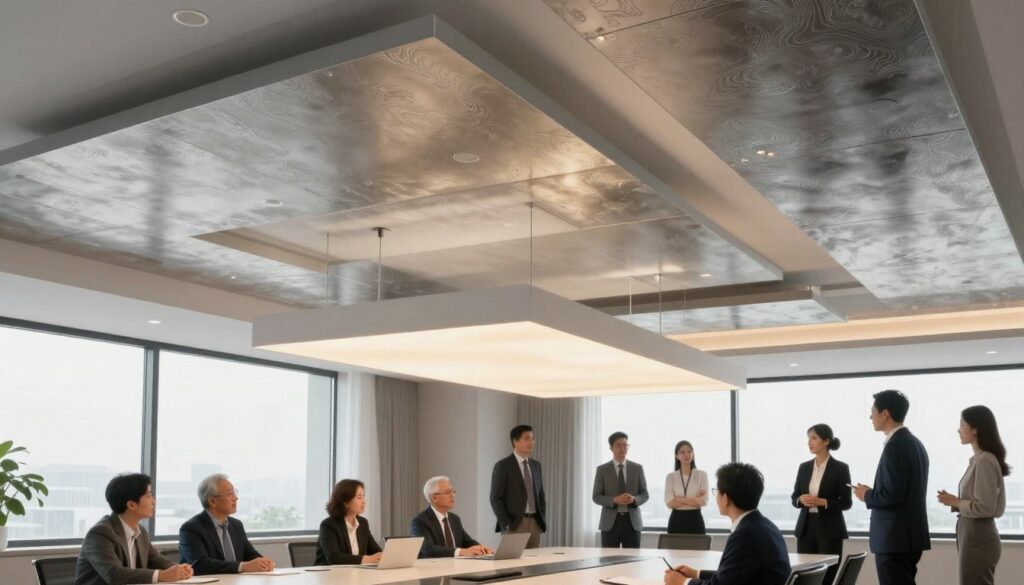
It’s important to work with manufacturers to create samples before making a final order. Metal finishes can look different under different lighting. Getting physical samples helps avoid mistakes and ensures your finishes match your vision.
Exploring Customization Categories
There are several areas where you can customize your ceiling:
- Color matching for brand-specific requirements or architectural color palettes
- Perforation pattern customization for acoustic performance or decorative motifs
- Non-standard panel sizes tailored to your space
- Specialized trim pieces for unique architectural conditions
- Textured metal surfaces that enhance ambiance and warmth
Understanding Cost and Timeline Implications
Custom ceiling finishes can increase costs by 15 to 40 percent, depending on the complexity. They usually take 4 to 8 weeks longer than standard products. Choose customizations that offer the most visual impact within your budget and timeline.
| Customization Type | Visual Impact | Cost Range | Timeline |
|---|---|---|---|
| Standard Color Finishes | Moderate | Base Price | 2-3 Weeks |
| Custom Color Matching | High | +15-25% | 4-6 Weeks |
| Textured Finishes | High | +20-30% | 5-7 Weeks |
| Custom Perforation Patterns | Very High | +25-40% | 6-8 Weeks |
| Non-Standard Dimensions | High | +18-35% | 5-8 Weeks |
Textured metal ceiling panels are great for hospitality, retail, and high-end commercial spaces. They add depth and elegance while keeping the durability of aluminum. Your ceiling customization should balance looks and function, ensuring it stands out and works well.
Fire Safety, Compliance, and Performance Standards
Your aluminum ceiling system must meet strict fire safety requirements and building code compliance standards. Fire-resistant ceilings protect occupants and ensure your project passes inspection. Understanding these standards helps you select the right system for your specific building needs.
Aluminum ceilings offer exceptional non-combustible properties with high melting points. This natural characteristic makes them ideal for protecting your building and meeting regulatory expectations across commercial, healthcare, and educational spaces.
Meeting Building Code Requirements
Building code compliance is mandatory for any ceiling installation. Your aluminum ceiling system must satisfy local building codes, International Building Code (IBC) standards, and ASTM E84 testing requirements for surface burning characteristics.
Fire ratings matter for your project safety. Class A fire-rated aluminum ceilings display flame spread ratings of 0-25 and smoke development ratings of 0-450, making them suitable for corridors, exits, and high-occupancy areas.
Key compliance considerations for your project include:
- Maintaining fire-rated assemblies between floors and ceilings
- Protecting all penetrations for lighting and HVAC systems
- Obtaining proper certifications and test reports
- Understanding local jurisdiction requirements before installation
Evaluating Antibacterial and Safety Properties
Your aluminum ceiling system provides excellent health and wellness benefits. The smooth, non-porous surface naturally resists bacterial growth and mold development, making these systems perfect for hospitals, schools, and food processing facilities.
Safety standards include protecting against health hazards. Aluminum surfaces eliminate porous materials that harbor bacteria and mildew. Your cleaning and maintenance routines become simpler and more effective without ceiling degradation.
Additional safety properties your system offers:
| Property | Benefit | Best Applications |
|---|---|---|
| Non-porous surface | Resists bacterial adhesion and mold growth | Healthcare facilities, laboratories |
| Non-toxic composition | Zero VOC emissions for better air quality | Schools, offices, residential spaces |
| Moisture resistant | Prevents sagging and structural failure | Kitchens, bathrooms, humid environments |
| Easy cleaning | Supports infection control protocols | Food service, medical facilities |
Your documentation must include proper certifications proving your system meets all applicable safety standards. Gather test reports and compliance letters before beginning installation to ensure building permit approval and successful final inspection.
Installation Efficiency and Long-Term Maintenance
Your aluminum ceiling system is a game-changer for timely and cost-effective projects. Metal ceiling panels speed up installation, saving time and money. Pre-finished panels mean no painting on-site, and lightweight materials ease worker strain. This efficiency cuts down labor costs and gets projects done faster.
Getting ready for installation is key to a perfect finish. Make sure the deck is solid, clean, and even before starting. Use precise tools and a grid system for accurate panel placement. This ensures a smooth look and strong structure that lasts for years.
Aluminum ceilings are easy to maintain, lasting up to 50 years with basic care. They often come with 30-year warranties, saving on replacement costs.
Keeping Your Ceiling in Top Condition
Maintaining your aluminum ceiling is simple and affordable. Follow these steps to keep it looking great:
- Clean panels with mild detergent annually or as needed based on your environment
- Inspect suspension components regularly to ensure secure attachment
- Replace individual panels if damage occurs, thanks to the modular design
- Monitor for any signs of shifting or misalignment in the grid system
Aluminum’s natural properties help a lot. It resists corrosion, keeps its shape, and repels dirt and moisture. Your ceiling will stay in top shape with little effort needed.
| Maintenance Task | Frequency | Estimated Cost |
|---|---|---|
| Routine cleaning | Every 1-2 years | Low |
| Suspension system inspection | Every 3-5 years | Minimal |
| Individual panel replacement | As needed | Moderate |
| Complete ceiling overhaul | 50+ years | Not required |
Working with pros for installation ensures your ceiling works well from the start. They know how to handle materials, choose the right tools, and focus on alignment. This expertise makes your ceiling last longer and requires less upkeep.
Aluminum ceilings offer fast installation and low upkeep, making them a smart choice. They help you save time and money over the long run.
Conclusion
You now know the five key factors for choosing smart aluminum ceilings. Natural light and ceiling height greatly impact your space. Planning the plenum space is also vital for building systems. Budget and square footage help keep your project on track.
Choosing the right system type is important for both looks and performance. These elements together ensure a successful ceiling installation.
Aluminum ceilings are a top pick for commercial and institutional projects. They offer both beauty and strong performance. Eco-friendly options use recycled materials, reducing waste and saving energy.
These ceilings can cut heating and cooling costs by up to 15 percent. They support green building goals and may earn LEED points.
The market trusts metal ceiling technology more and more. The global green building materials market hit $254.9 billion in 2020. It’s expected to reach $1.5 trillion by 2030.
The metal ceilings market is growing at 6.5 percent annually. Architects and builders see the value in quality ceiling materials. Your guide should include customization and safety standards.
Work with experienced suppliers and design pros who know your project. Choose a ceiling system that performs well and looks great. By considering all factors, you ensure your project’s success.
Your investment in eco-friendly ceilings adds lasting value. Your building will serve reliably for decades, thanks to sustainable performance.