Your building needs smart solutions that work hard for you. Commercial louvers offer three key benefits. They control airflow, block outside views, and cut energy costs.
Louver ventilation systems are more than just looks. They’re essential for your building’s performance. The right louvers improve air quality, privacy, and lower bills.
Think of commercial louvers as smart investments. They manage air flow and keep prying eyes out. Plus, they ease the load on your HVAC, saving you money on energy.
Your facility must follow building codes for ventilation. Commercial louvers meet these standards while protecting your business’s privacy. Quality systems balance all three needs better than cheaper options.
Knowing how louvers work gives you control. You’ll learn about their effectiveness, best materials, and size needs. This knowledge turns louvers into a strategic investment that saves your money.
Key Takeaways
- Commercial louvers improve ventilation while maintaining privacy in your building
- Louver ventilation systems reduce your energy costs by lowering HVAC demands
- Proper louver selection helps you meet building codes and regulations
- Quality louvers protect indoor air quality for occupants
- These systems provide long-term savings through reduced utility expenses
- Strategic louver placement blocks unwanted sunlight and external views
Understanding Louvers and Their Essential Functions
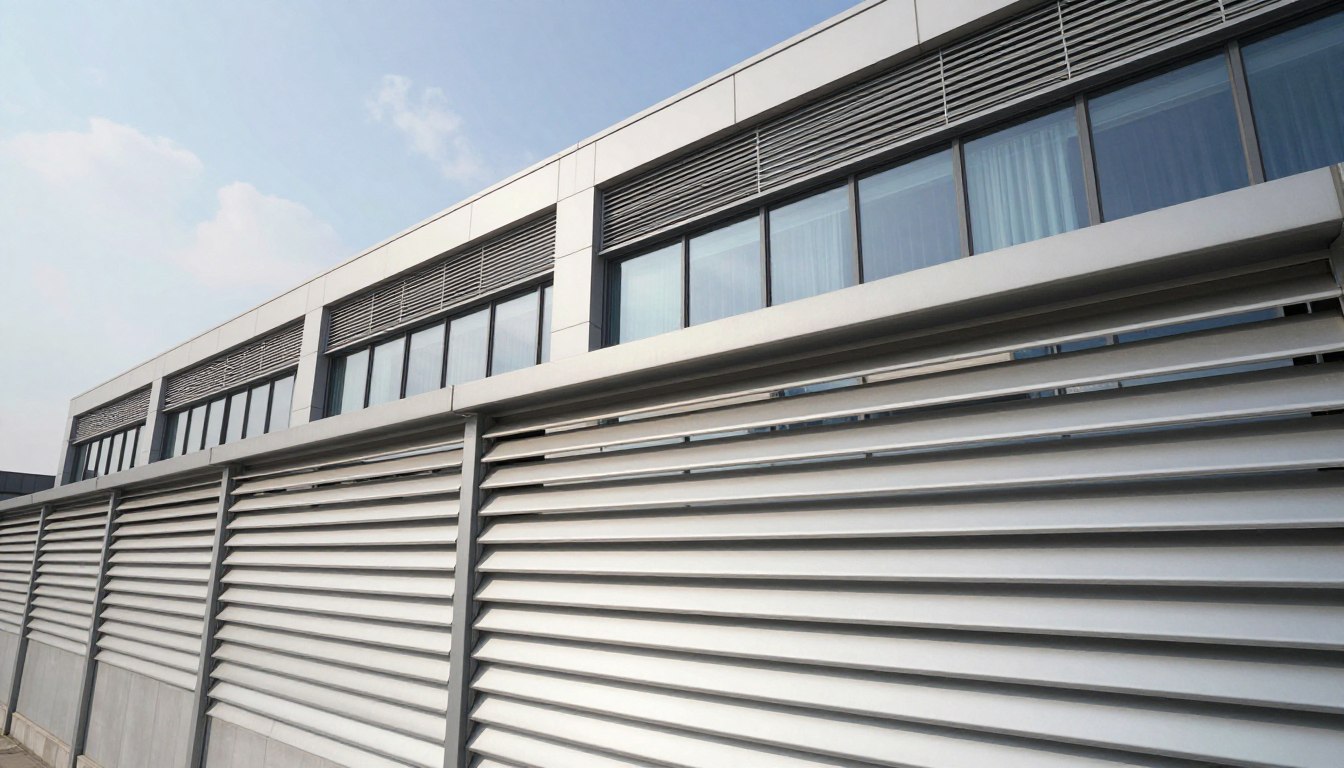
Louvers are key ventilation parts found on doors, walls, and windows in commercial buildings. They have angled slats or blades that manage airflow and protect your inside spaces. These blades let air flow while keeping rain, debris, and sunlight out.
When installed right, louvers help control ventilation, privacy, and energy use. They are very effective in your property.
The performance of your louver system depends on several key factors. Knowing louver performance criteria and selection considerations helps you choose the right type. Important metrics include free area, air volume (CFM), water penetration start point, and pressure drop. These elements affect how well your louvers manage ventilation and protect against weather and particles.
What Are Louvers and How Do They Work
Louvers work by using blades to block weather while letting air in. Air flows through the blade openings into your building. Rain and debris hit the blades and slide down, not getting in.
The angle and spacing of the blades control airflow and weather protection. Your louver system acts as a gatekeeper, letting in good air and keeping out bad.
The design of your louver blades is very important. Blade profiles, angles, and spacing affect water rejection and air flow. Adjustable louvers offer flexibility for changing ventilation needs.
Your HVAC system works best when louvers are sized and positioned right. This ensures the right airflow without too much resistance.
Materials Used in Commercial Louver Construction
The material of your louvers affects durability, maintenance, and performance. Steel louvers are strong and secure, perfect for industrial and high-traffic areas. Steel resists damage and supports structures well in tough environments.
Aluminum louvers are weather-resistant and look good, ideal for places where weight and corrosion matter. Aluminum doesn’t rust and needs little upkeep. It’s light, easy to install, and fits modern designs well. Its corrosion-resistant nature is great for coastal or moist areas.
| Material Type | Strength Rating | Weather Resistance | Maintenance Level | Best Applications |
|---|---|---|---|---|
| Steel Louvers | Maximum | Good with coating | Moderate to high | Industrial, high-traffic spaces |
| Aluminum Louvers | Good | Excellent | Low | Commercial, coastal areas |
Types of Louvers for Different Applications
Fixed louvers are stationary and provide consistent airflow and protection. They work well in places with constant ventilation needs. Your HVAC system benefits from their predictable airflow.
Adjustable louvers let you control airflow at any time. They’re flexible and can adjust to changing conditions or needs. This flexibility helps maintain comfort and reduce energy use. Adjustable louvers are common in spaces with changing ventilation needs.
Combination louvers offer the best of both worlds. They have fixed and adjustable blades for consistent and adjustable airflow. This hybrid approach balances ventilation control, weather protection, and energy efficiency in complex environments.
The Critical Role of Proper Ventilation in Commercial Buildings
Your commercial building’s ventilation system is key to health and comfort. Without it, your space can become stale and unhealthy. It removes harmful pollutants and controls temperature and humidity.
Building ventilation requirements are in place for a reason. They protect against respiratory issues and allergies. Without proper ventilation, your HVAC system works harder, increasing energy bills and reducing lifespan.
Quality indoor air quality louvers help ensure continuous fresh air exchange. This keeps your space healthy and meets local codes.
Your employees and customers spend a lot of time indoors. Poor air quality can cause headaches and fatigue. Studies show that good ventilation boosts focus and cuts sick days by up to 35 percent.
This improvement can help your business by increasing performance and reducing turnover.
Building ventilation requirements are not just about following rules. They are a key investment in your occupants’ health and your business’s success. Strategic placement of indoor air quality louvers ensures even air distribution. This prevents hot spots and areas with stale air.
| Ventilation Factor | Impact on Your Building | Health and Productivity Benefits |
|---|---|---|
| Fresh Air Exchange Rate | Removes CO2 and indoor pollutants | Improved focus, fewer respiratory issues |
| Humidity Control | Prevents mold and moisture damage | Reduced allergies and asthma triggers |
| Temperature Regulation | Maintains consistent comfort levels | Better sleep and cognitive function |
| Pollutant Removal | Eliminates VOCs and contaminants | Lower sick days and absenteeism |
| Energy Efficiency | Reduces HVAC strain and costs | Sustainable operations and savings |
Your investment in proper ventilation brings many benefits. Healthy indoor air quality louvers integrated into your building ventilation requirements create spaces where people thrive. Better air circulation means fewer complaints, improved employee retention, and enhanced customer satisfaction.
Commercial property owners who prioritize ventilation systems see measurable returns. They enjoy reduced operational costs and increased occupant satisfaction.
How Louver Size Directly Impacts Airflow and HVAC Performance
Your choice of louver size is key to your ventilation system’s success. The size of your louvers affects how much air flows through your building. Knowing this helps you pick the right HVAC louvers for your space.
Louvers that are larger let more air through, making your system work less hard. This means your equipment uses less energy and costs less to run. On the other hand, smaller louvers limit airflow. This is useful in areas where you need exact temperature control or less air exchange.
The Relationship Between Louver Openings and Air Resistance
As your louver openings get smaller, air resistance goes up. This is because the air has a harder time passing through. Your HVAC system has to work harder, using more energy to move the same amount of air.
Understanding this pressure relationship is key to controlling airflow. If your louvers are too small, your system struggles. If they’re too big, you lose control over your indoor climate and waste energy. Today, you can find affordable privacy fin louvers that can be sized just right for you.
Balancing Airflow Control with Structural Integrity
Choosing the right louver size is a delicate balance. Louvers that are too big can weaken your doors or walls. They can fail under stress or wind pressure. On the other hand, louvers that are too small make your HVAC system work too hard, shortening its life and increasing energy costs.
Your louver size should consider three main things: how much air you need, how much pressure drop you can handle, and your building’s structural limits. Getting this right ensures your system works well and your building stays strong. This protects your investment and keeps your facility running smoothly for years.
| Louver Size | Airflow Capacity | Air Resistance Level | Best Application |
|---|---|---|---|
| Small (2″-4″) | Low to Moderate | High | Precise temperature control, limited spaces |
| Medium (4″-6″) | Moderate to High | Moderate | Standard commercial applications, balanced control |
| Large (6″+) | High | Low | High-volume ventilation, industrial facilities |
Cross Ventilation Systems and Natural Airflow Strategies
Cross ventilation is a great way to cool your building without using mechanical systems. It works by opening windows on opposite sides of your building. This creates a pressure difference that pulls fresh air in and pushes stale air out.
This method uses outdoor breezes to cool your space. It reduces the need for air conditioning, saving energy. By understanding wind patterns and how air moves, you can place louvers for the best airflow.
Positioning louvers correctly captures high-pressure air and lets it out on the other side. This makes cooling efficient and saves on electricity. Using durable louver materials ensures they last all year.
Natural ventilation works best in open spaces where air can flow easily. It improves air quality, cuts down on carbon emissions, and lowers HVAC costs. Choose a louver design that fits your climate and building layout.
Cross ventilation louvers are great in mild seasons. They save energy without compromising comfort or air quality.
| Ventilation Method | Energy Consumption | Initial Cost | Maintenance Needs | Best Season |
|---|---|---|---|---|
| Cross Ventilation Louvers | Minimal | Moderate | Low | Spring & Fall |
| Mechanical HVAC | High | High | Moderate | Year-Round |
| Hybrid Systems | Low-Moderate | High | Moderate | All Seasons |
Louvers as Privacy Solutions Without Compromising Ventilation
Your commercial space needs protection from unwanted views and intense sunlight. Louver privacy solutions deliver this protection while keeping fresh air moving through your building. The angled slats in louvers create a smart barrier that blocks direct sight lines into your space while allowing continuous airflow. This dual function solves a challenge many building managers face—balancing privacy needs with ventilation requirements.
Louvers work by directing air around obstacles while their blade angles prevent outsiders from seeing into your interior. The steeper the blade angle, the greater your visual privacy protection. Combination louvers offer flexible options for different areas of your building, letting you customize privacy levels based on each space’s specific needs.
Blocking Direct Sunlight While Maintaining Air Circulation
Direct sunlight creates two problems in commercial spaces: glare that strains eyes and heat gain that overworks your cooling system. Louver privacy solutions stop harsh direct rays from entering your building. The angled blades scatter sunlight, allowing soft, diffused natural light to penetrate while blocking the intense beams that cause problems.
Your airflow never stops. Unlike solid walls or heavy curtains, louvers maintain constant air circulation even while filtering sunlight. This means you get natural light benefits, temperature control, and fresh air all at once. Retail shops, office windows, and healthcare facilities gain particular advantages from this combination of light control and ventilation.
Controlling Visual Access in Commercial Spaces
Ground-floor offices, street-facing storefronts, and spaces near neighboring properties need visual barriers. Combination louvers provide exactly this protection. Your employees work comfortably knowing passersby cannot see into sensitive areas. Clients appreciate the professional appearance of controlled, filtered views.
Adjustable louvers give you dynamic control over privacy levels. Change blade angles seasonally or throughout the day to match your needs. Morning adjustments can maximize privacy during peak foot traffic hours. Afternoon settings shift to allow more natural light as sun angles change. This flexibility makes louver privacy solutions ideal for retail environments where display visibility matters during business hours.
| Privacy Feature | Ventilation Impact | Best Applications |
|---|---|---|
| Steep Blade Angles | Maintains airflow with minimal resistance | Street-level retail, ground-floor offices |
| Medium Blade Angles | Balances privacy and air circulation equally | Mid-rise office buildings, healthcare facilities |
| Shallow Blade Angles | Maximizes airflow with reduced privacy | Industrial spaces, warehouse loading areas |
| Combination Louvers | Adaptable to specific seasonal and daily needs | Multi-use commercial complexes, hospitality venues |
Combination louvers represent the most versatile option for commercial buildings managing multiple competing priorities. You adjust blade positions based on occupancy patterns, seasonal weather changes, and specific activities happening in each space. Morning business hours might call for maximum privacy; afternoon light might justify opening angles wider. This responsive approach keeps your building comfortable year-round while protecting sensitive areas from external observation.
Energy Efficiency Benefits of Properly Sized Louvers
Choosing the right louver size boosts your commercial building’s energy use. With the right size, you need less mechanical HVAC. Natural ventilation takes care of most cooling and air exchange.
This means less energy use and lower bills. Your savings grow over time, month after month and year after year.
Good louver sizes ensure the best airflow with little pressure loss. Your HVAC fans work less hard and use less power. In mild weather, you might not need to use mechanical cooling at all. This can cut your energy costs a lot.
Energy savings aren’t just for cooling. In winter, adjustable louvers help control ventilation. This reduces heat loss and keeps air quality good for people inside.
For your commercial building, these savings boost your net operating income. You cut a big part of your expenses.
Quality energy efficient louvers also lower peak electrical demand. This can lower your utility rates and avoid extra charges. The savings can pay back in a few years. Then, you save money for decades, making your property more valuable.
| Operating Condition | HVAC Dependency | Energy Savings Potentia | Cost Impact |
|---|---|---|---|
| Moderate Weather (Spring/Fall) | Minimal to None | 80-95% | Free Natural Cooling |
| Summer Peak Hours | Reduced Operation | 40-60% | Lower Utility Demand |
| Winter Heating Season | Controlled Ventilation | 30-50% | Reduced Heat Loss |
| Off-Peak Hours | Significantly Lower | 70-85% | Minimal Fan Operation |
| Sustainable Building Louver System | Year-Round Optimization | 50-70% Overall | Substantial Annual Savings |
Sustainable building louvers work well with your HVAC system. They help your mechanical equipment run better. This reduces energy use and costs. It also improves air quality for everyone in your building.
Key Factors to Consider When Selecting Louver Size
Choosing the right louver size for your commercial building is important. You need to understand local building codes, space needs, and environmental conditions. Making the right choices ensures your ventilation system meets standards and works well.
Building Codes and Ventilation Rate Requirements
Local building codes set minimum ventilation rates based on occupancy and square footage. Your louver installation must meet these standards to pass inspection. It’s important to check your area’s specific regulations before deciding on louver size.
Ventilation rates vary from 5 to 20 cubic feet per minute per person. Spaces like conference rooms need more airflow than storage areas. Your louver materials and design should handle these needs without causing air resistance.
Space Function, Occupancy, and Environmental Conditions
The purpose of your building affects louver sizing needs. High-occupancy spaces need larger louvers for enough fresh air. Storage areas and mechanical rooms require less ventilation, so they can have smaller louvers.
Weather, humidity, and temperature changes impact louver planning. Buildings in extreme weather need larger louvers for HVAC system performance. Sun-exposed facades require louvers to regulate temperature and reduce cooling loads.
Wind patterns and nearby obstructions affect airflow. Your choice of louver materials, like steel or aluminum, influences sizing. Seasonal ventilation changes also need consideration for comfort throughout the year.
| Space Type | Occupancy Level | Ventilation Rate (CFM/person) | Louver Size Requirement |
|---|---|---|---|
| Conference Room | High (15-20 people) | 15-20 | Large |
| Office Area | Medium (6-10 people) | 10-15 | Medium |
| Storage Room | Low (1-2 people) | 5-10 | Small |
| Retail Space | High (20+ people) | 15-20 | Large |
| Mechanical Room | Minimal (equipment only) | 5-10 | Small |
By carefully evaluating these factors, you can choose the right louver size. This ensures your system meets codes, meets needs, and performs well.
Passive vs. Active Cross Ventilation Systems
Your building’s ventilation strategy depends on climate, location, and wind patterns. Knowing the difference between passive and active ventilation systems is key. Each has its own benefits based on your environment and needs.
Passive ventilation uses natural wind and smart building design. You place louvers, windows, and doors to catch the wind without mechanical help. This method is great for coastal areas and places with steady winds. Fixed louvers are used here because they offer steady airflow without using energy.
Active ventilation systems use fans and mechanical devices to improve airflow. They’re useful when wind patterns are not steady or are too weak. These systems ensure good airflow in your building, no matter the weather. Combination louvers work best here because you can adjust them to match fan operation, improving efficiency.
Many buildings use a mix of both passive and active systems. They work passively when natural conditions are good. But, they use mechanical ventilation when needed to keep the air comfortable or meet ventilation standards. This way, you save energy while ensuring your building stays comfortable all year.
| System Type | Energy Use | Best Climate | Louver Type | Operating Cost |
|---|---|---|---|---|
| Passive Ventilation | None | Consistent winds, mild climates | Fixed louvers | Low |
| Active Ventilation Systems | Fan-powered | Variable winds, hot climates | Combination louvers | Moderate to high |
| Hybrid Solution | Mixed approach | All climate types | Fixed and combination | Moderate |
Check your location’s wind patterns and building layout to pick the best system. Passive ventilation is best with steady winds. Active systems are better where wind is not reliable. Your louver choice should fit your chosen ventilation method.
Long-Term Cost Savings and Sustainability Advantages
Investing in the right commercial louver systems saves money in the long run. You’ll see lower energy bills and maintenance costs. This is because natural ventilation helps your HVAC systems work less, saving energy.
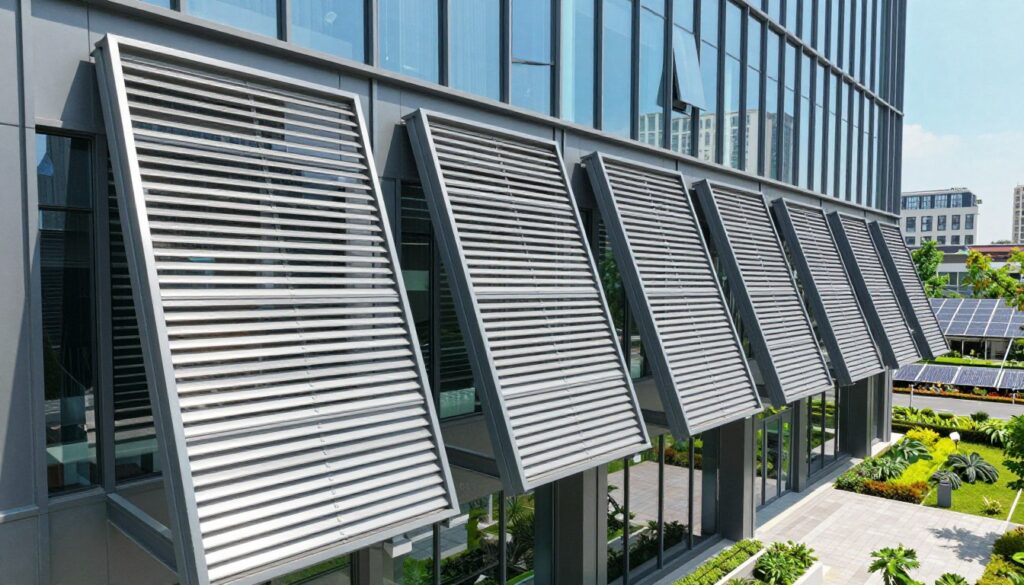
By using natural ventilation, your property can cut energy use by 20 to 40 percent. This means lower utility bills and more money for your property. Plus, quality louvers help you meet green building goals and earn LEED certification.
Reducing HVAC Dependency and Energy Consumption
Placing louvers wisely cuts down on the need for air conditioning and fans. Your HVAC systems last longer and cost less to maintain. This also means less energy used and a smaller carbon footprint.
Supporting LEED Certifications and Green Building Practices
LEED certification louvers help you earn points for green building. They count towards energy and atmosphere credits. Your property’s value goes up, attracting eco-friendly tenants and showing your company cares.
| Financial Benefit | Time Frame | Impact on Property |
|---|---|---|
| Initial Louver Investment Recovery | 2-4 Years | Energy savings exceed installation costs |
| Annual HVAC Cost Reduction | Year 1 Onward | 20-40% lower mechanical system expenses |
| LEED Certification Achievement | 6-12 Months | Increased property valuation and tenant appeal |
| Maintenance Expense Reduction | Continuous | Extended equipment lifespan and fewer repairs |
Indoor Air Quality Improvements Through Strategic Louver Placement
Your commercial building’s air quality depends on louver placement. The right spots for these components ensure fresh air flows in and stale air goes out. This keeps your workspace clean by removing pollutants and odors.
Louver systems work best when they bring in fresh air and take out bad air. Kitchens, restrooms, and copy rooms are pollution hotspots. Placing exhaust louvers near these areas helps remove harmful substances before they spread.
Your employees will feel the difference. Cleaner air means fewer sick days and better focus. Studies show better ventilation boosts productivity and reduces complaints about bad air.
Zoned louver systems offer flexibility. You can manage different areas with different ventilation needs. This ensures each zone gets the right amount of air, improving overall air quality.
| Louver Placement Location | Primary Function | Air Quality Benefit | Typical Application |
|---|---|---|---|
| Supply Louvers (Occupied Areas) | Deliver fresh outdoor air | Introduces clean air to breathing zones | Office spaces, conference rooms |
| Exhaust Louvers (Pollution Sources) | Remove contaminated air | Eliminates odors and contaminants | Kitchens, restrooms, storage |
| Cross-Ventilation Louvers | Facilitate passive airflow | Reduces stagnant air pockets | Long hallways, open floor plans |
| High-Level Exhaust Louvers | Remove warm, polluted air rising | Maintains consistent air exchange rates | Warehouses, manufacturing floors |
Investing in proper louver placement has many benefits. It reduces complaints and sick days, saving on insurance. Clean air makes your workspace a better place to be.
Success in commercial ventilation comes from understanding your space. Each building is unique, needing a tailored approach. Work with experts to improve your air quality and make your workspace healthier and more productive.
Conclusion
Louver systems improve your building in three key ways. They boost ventilation, keeping air fresh and healthy. They also protect privacy without blocking airflow. Plus, they help save energy, reducing HVAC costs and supporting green building solutions.
Knowing how louvers work is key to your project’s success. You learned how to size them and choose materials for your climate. You also found the best ventilation systems for your building’s needs.
Now, find a reliable supplier for your louver system needs. CDF Distributors and United Enertech offer top-quality systems. They can guide you in picking the right products and ensuring they meet local codes.
Upgrading to louver systems is a smart move. You’ll see lower energy bills and better air quality. Your building will be more comfortable and last longer, adding value to your property.