Modern buildings need to balance comfort, daylight, airflow, and look. Privacy Fin & Louvers are key to achieving this balance. They control sunlight and air flow, reducing glare and heat gain.
By adding Privacy Fin & Louvers early in design, buildings become more energy-efficient. These elements block radiation, lowering cooling needs and HVAC costs. They also add a design element that supports privacy and style.
The choice of material and how well they are installed affect their performance over time. Options like aluminum, HPL, wood, and steel have different benefits and drawbacks. For durable and customizable solutions, check out aluminum privacy systems here.
Key Takeaways
- Privacy Fin & Louvers control light, airflow, and sightlines while improving façade looks.
- Architectural louvers outside glazing cut solar heat gain the most.
- Early design inclusion and coordination with glazing and orientation are vital for energy efficiency.
- Material choice impacts maintenance, lifespan, and sustainability.
- Well-designed solar shading systems lower cooling needs and enhance comfort.
What Privacy Fins & Louvers Are and How They Work
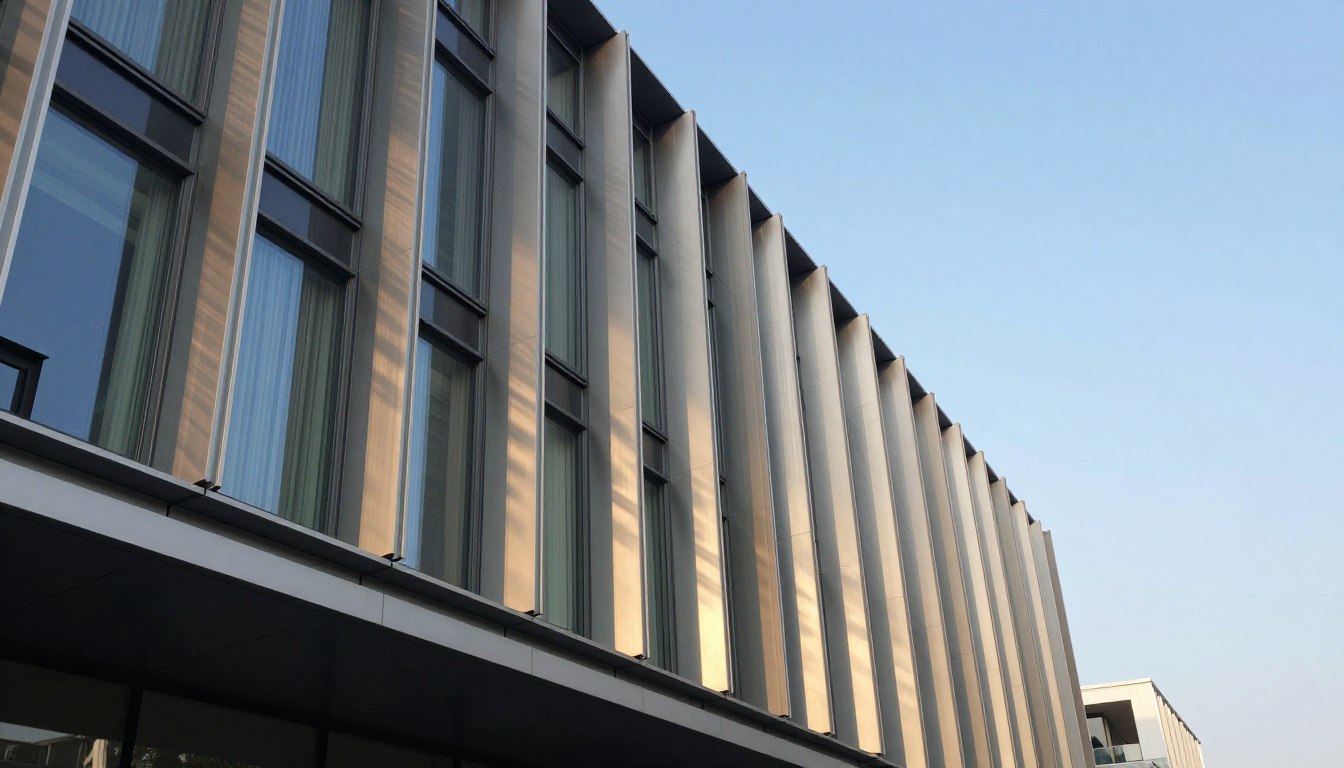
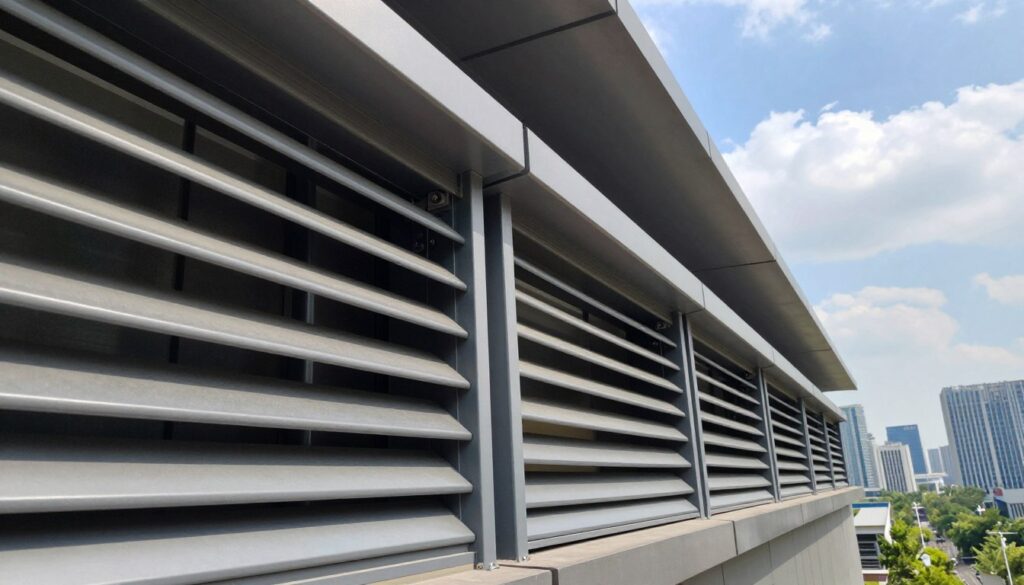
Privacy fins and architectural louvers are slatted elements that shape how a building interacts with sun, wind, and sightlines. They block direct solar radiation, reduce glare, and allow controlled airflow. They also create visual screening without fully darkening interiors.
Design choices make them part of the façade language while meeting thermal and daylight goals.
Fixed systems deliver steady, predictable shading. Fixed fins are low maintenance and perform well when sun angles are known. Operable louvers add adaptability.
With motorized or manual adjustment, operable louvers vs fixed fins offer dynamic control of daylight, glare, and ventilation. This is useful for mixed-mode strategies in offices and schools.
Blade geometry, spacing, and tilt often matter more than decorative shape. These variables tune solar interception, manage view corridors, and shape daylight distribution. Privacy fins functions include sightline control, daylight harvesting, and maintaining outward views while limiting visibility from public areas.
Placement affects thermal impact. Exterior louvers performance stems from stopping solar heat before it reaches glazing, cutting cooling loads and reducing glare at source. Interior louvers provide visual screening and local comfort, yet they are less effective at lowering cooling demand because heat enters through glazing first.
| Feature | Fixed Fins | Operable Louvers | Exterior vs Interior |
|---|---|---|---|
| Primary benefit | Reliable, low-maintenance shading | Adaptive daylight and ventilation control | Exterior prevents heat gain; interior controls privacy |
| Performance predictability | High | Variable with control strategy | Exterior offers higher thermal performance |
| Maintenance needs | Minimal | Higher due to moving parts | Exterior requires weather resistance and cleaning access |
| Impact on HVAC | Reduces cooling peaks when well-placed | Optimizes energy use when automated | Exterior louvers performance reduces cooling load most |
| Privacy and sightlines | Fixed, constant screening | Adjustable sightline control | Privacy fins functions work both inside and out; exterior better for concealment |
Performance Benefits for Solar Shading and Heat Gain Reduction
Exterior louvers and fins block direct sunlight before it hits the glass. This cuts down on solar radiation and limits heat inside. It also reduces glare for people inside.
How louvers intercept solar radiation
Louvers act as barriers to block or reflect sunlight. When set up right, they shadow the glass during the hottest times. This stops energy from being absorbed by the glass and frames.
Companies like Sunframe and Hunter Douglas make systems that work well. They show how fixed and movable blades can be adjusted to fit local needs and cut down on heat gain.
Impact on cooling loads and HVAC demand
Louvers lower solar heat gain, which means less cooling is needed. This helps reduce the load on HVAC systems during the cooling season. For buildings with lots of glass, this can mean smaller chillers and lower electricity bills.
Building owners often use louvers with high-performance glass. This combo helps save energy and makes the building more comfortable for people inside.
Orientation and sun-path considerations for maximum shading
How louvers are designed depends on their orientation. Horizontal blades are best for south-facing walls to block midday sun. Vertical blades work better for east and west walls to control morning and evening sun.
Design teams should do sun-path analysis early. This helps balance daylight and shading benefits. It also supports reducing HVAC loads without losing natural light or views.
Privacy Fin & Louvers
Privacy fins and louvers have similar goals but serve different needs on a building’s façade. Designers pick one over the other based on sightline control, airflow, and daylight or view needs. Knowing the difference between privacy fins and louvers helps choose the right solution for buildings.
How they differ in sightline control
Privacy fins block direct views from streets and neighbors while keeping spaces open. They use tight spacing, deep profiles, or sharp angles to block views without cutting off air.
Louvers focus more on controlling sunlight and air flow. Their design often allows for better air and glare control than strict visual screening. This makes privacy fins better for areas where blocking views is key.
Balancing visual screening with daylight and views
Good fin design lets in soft light and chosen views by adjusting blade size and angle. Too dense screening can block light and make spaces feel cramped.
By placing and angling fins correctly, they can block views while letting in light. This improves comfort and keeps outdoor areas usable.
Applications in urban façades, balconies, and commercial glazing
In crowded areas, balcony privacy solutions block views without losing air flow. They’re great for mid-rise and high-rise buildings where outdoor living is important.
Commercial buildings often use a mix of louvers and fins to hide equipment, control sunlight, and maintain a uniform look. Airports and hospitals prefer systems that offer shading, air flow, and neat hiding of equipment.
For practical advice, material guidance, and tested performance, check out the FLEXfence showcase. It shows examples of fences and louvers that highlight trade-offs and installation details: FLEXfence fence and louver examples.
Ventilation, Natural Cooling, and Indoor Air Quality Benefits
Louvers control airflow and keep out rain and debris. They help with natural cooling and reduce the need for mechanical systems. Designers use louvers to balance airflow, shading, and privacy.
Louvers as enablers of natural and mixed-mode ventilation
Operable and fixed louvers work with windows and dampers for mixed-mode systems. In mild climates, opening louvers at cooler times brings in fresh air. This improves comfort without needing AC.
Stack effect and cross-ventilation strategies with louver placements
Intake louvers are placed low, and exhaust louvers high to encourage airflow. Louvers on opposite sides of a building help cross-ventilation. This moves air through the building, reducing the need for fans.
Reducing mechanical ventilation energy through passive airflow
Louvers for ventilation can reduce the need for mechanical systems. This means less energy use and longer HVAC life. Louvers also improve indoor air quality by increasing fresh air while controlling drafts and solar gain.
| Strategy | How Louvers Help | Typical Energy Impact |
|---|---|---|
| Low-level intake with high exhaust | Drives stack effect; steady vertical airflow | Reduces exhaust fan run time by 15–30% |
| Opposing façade openings | Promotes cross-ventilation with louvers; cools occupied zones | Reduces cooling energy by 10–25% |
| Operable louvers with sensors | Enables mixed-mode control; balances IAQ and comfort | Optimizes HVAC cycling; saves up to 20% annual ventilation energy |
| Integrated shading and ventilation | Combines daylight control with airflow management | Lowers lighting and cooling demand; improves occupant comfort |
Material Choices and Lifecycle Performance
Choosing the right louver materials is key to durability, upkeep, and long-term value. This guide compares common options. It shows the trade-offs that impact lifecycle decisions and sustainable façade materials strategies.
Aluminium: corrosion resistance, lightweight, recyclability
Aluminum louvers are light and strong for big façades. They fight off corrosion in coastal and urban areas. They also need little care and keep their factory finish for a long time.
They are great for recycling and often cut down on material use. This can lower lifecycle costs when designers think about durability and easy replacement.
HPL and WPC: UV resistance, thermal insulation, low maintenance
HPL louvers keep their color and resist UV damage well. They’re perfect for exterior cladding where looks matter. HPL stays vibrant and textured with little upkeep.
WPC louvers mix recycled wood with plastics for good insulation and bug resistance. They need less upkeep and can have lower environmental impact if made from recycled materials.
Wood and steel options: aesthetic trade-offs and maintenance needs
Wood louvers add warmth and a natural feel. But, they need regular sealing and are best in sheltered or semi-outdoor spots. Owners should plan for refinishing to keep them looking good.
Steel louvers are strong for industrial uses and long spans. They need strong protection against rust and add weight, affecting structure support and framing.
Lifecycle costs and sustainability considerations (recyclability, embodied energy)
Lifecycle costs depend on initial cost, upkeep, and end-of-life recovery. Aluminum and WPC/HPL balance durability with low upkeep, saving costs over time.
Sustainable façade materials should be chosen based on embodied energy, recyclability, and supplier openness. Opt for materials with recycled content, certified supply chains, and predictable upkeep. This controls long-term costs and environmental impact.
Design Variables: Blade Profile, Orientation, Spacing, and Angle
Choosing the right louver design is key to comfort, daylight, and energy savings. The shape, depth, orientation, and spacing of blades affect solar control and views. These factors help meet specific performance goals for a building’s facade and climate.
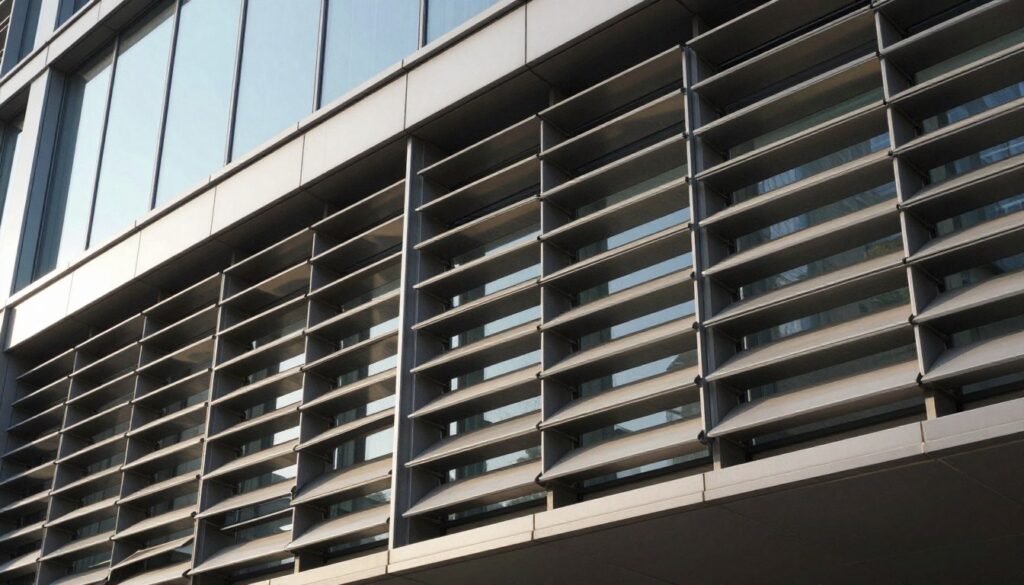
Blade shape and depth influence how sunlight and glare enter a room. Airfoil profiles are efficient at blocking solar gain and reducing wind loads. Tubular blades offer strong visual screening with minimal daylight loss.
Flat blades are easy to make and can be effective with the right angle for shading. Deeper blades increase shading but may limit diffuse daylight. It’s important to balance depth with the need for interior light.
Orientation is more important than looks when it comes to performance. Vertical elements work best on east and west sides where the sun is low in the morning and evening. Horizontal elements are better for south sides to block midday sun.
A sun-path study helps choose between horizontal and vertical louvers. This ensures good shading during important times of the day.
Spacing and alignment affect both the look and function of louvers. Close spacing blocks more light and reduces views. Wider spacing lets in more daylight and keeps views open. Uniform alignment prevents uneven shadows and ensures consistent solar performance.
Blade angle controls how much diffuse light enters while blocking direct sun. Small changes in angle can significantly alter solar cutoff and glare patterns. Combining angle with profile and spacing creates a solution that meets daylight needs without losing thermal control.
Below is a compact comparison to guide early decisions based on facade aspect and desired outcomes.
| Design Variable | Typical Option | Performance Trade-off |
|---|---|---|
| Blade profile | Airfoil, tubular, flat | Airfoil improves airflow and strength; tubular gives screening; flat is economical but may need deeper sections for similar shading. |
| Orientation | Horizontal vs vertical louvers | Vertical excels on east/west façades for low-angle sun; horizontal works on south façades for midday protection. |
| Depth and shape | Shallow to deep blades | Deeper blades increase shading but reduce daylight; shape refines glare control and reflected light distribution. |
| Spacing | Tight, medium, wide | Tighter louver spacing improves privacy and reduces glare; wider spacing balances daylight and views. |
| Blade angle | Fixed or adjustable | Fine-tunes solar cutoff and daylight admission; adjustable blades allow seasonal optimization. |
Integration into Façade Design and Early-Stage Planning
Early decisions are key to long-term success. In the early stages of façade planning, choosing louvers is vital. It prevents costly changes later and ensures the façade meets its goals.
Thoughtful integration of louvers into the design makes them a key part of the thermal strategy. This approach avoids making them an afterthought.
Why specify louvers early
Adding louvers early in the design process is essential. It becomes harder to add effective shading once the glazing is set. Early planning ensures enough space for anchors and brackets.
Specifying louvers early also helps choose materials that match the climate and wind loads. This saves time and money during construction and protects the façade’s lifespan.
Coordinating performance analysis
Good results come from teamwork between designers, facade engineers, and energy modelers. Use shading analysis and thermal modeling to size and position louvers. This ensures energy savings under real sun conditions.
Run checks on glazing performance alongside louver integration. This ensures U-values and visible transmittance work well together. Collaboration prevents common mistakes, like treating louvers as just decorative.
Practical use cases
Commercial offices and IT parks use louvers to reduce glare and cooling needs while keeping views. Airports and hospitals benefit from controlled daylight and reduced HVAC needs.
Educational buildings and mixed-use developments improve natural ventilation and occupant comfort. For detailed guidance, check out a design guide on architectural louvers. It covers materials and installation.
| Project Type | Primary Benefit | Key Design Focus |
|---|---|---|
| Office / IT Park | Lower cooling loads, glare control | Shading analysis for louvers, glazing coordination |
| Airport | Daylight control, visual comfort | Façade thermal modeling, robust fixing systems |
| Hospital | Patient comfort, reduced HVAC demand | Louver integration with ventilation strategy, material durability |
| Mixed-use / Residential | Privacy, solar control, aesthetic rhythm | Orientation study, spacing and alignment |
Installation, Fixing Systems, and Long-Term Maintenance
Proper installation is key for decades of reliable performance. Use this louver installation guide to check structural load capacity and wind-load calculations. Choose anchoring systems that fit your site conditions. Early planning with structural engineers helps avoid costly rework and ensures code compliance, like ASCE 7 for wind.
H3: Structural load checks and anchoring methods
First, check the building substrate and attachment points. Pick louver anchoring methods like brackets, rails, or welded frames based on size, weight, and exposure. In high-wind zones, treat wind load louvers as key structural elements. You’ll need stamped engineering calculations and heavy-duty anchors like stainless-steel through-bolts or chemical anchors.
H3: Allowing for thermal expansion and vibration control
Make sure fixings allow for movement. Use slotted holes, neoprene shims, or floating clips for thermal expansion. Add vibration-damping washers or isolators at contact points to stop rattling and noise. This prevents early failure and tenant complaints.
H3: Inspection regimes and cleaning strategies
Set up a regular inspection schedule for fastener integrity, alignment, and finish. Check anchor torque, look for corrosion, and confirm blade alignment every six months in coastal or polluted areas. Simple cleaning with soft brushes and mild detergent keeps drainage clear and preserves performance.
| Issue | Recommended Action | Typical Frequency |
|---|---|---|
| Loose fasteners | Retighten or replace with stainless-steel bolts; inspect surrounding substrate | 6 months |
| Corrosion on anchors | Remove corrosion, apply protective coating, replace if structurally compromised | 12 months |
| Rattling or vibration | Install damping washers, adjust clearances, verify thermal movement allowances | As observed |
| Blocked drainage or debris | Clean blades and channels with soft brush; flush with water if needed | 3–12 months depending on environment |
| Finish degradation | Touch-up powder coat or re-seal wood; follow manufacturer care | 12–36 months |
H3: Material-specific care and long-term planning
Aluminum and HPL need little upkeep and respond well to washing and anchor checks. Wood requires scheduled sealing to protect against UV and moisture. WPC resists termites and corrosion but needs debris removal to prevent moisture trapping. Include louver maintenance in building preventive maintenance systems to keep appearance and function intact.
Keep the louver installation guide and inspection records handy. Having detailed records of louver anchoring and wind load calculations makes repairs faster and supports warranty claims.
Cost, Energy Savings, and Return on Investment
Choosing between louvers and privacy fins starts with understanding costs and savings. The material, customization, and installation complexity affect the initial cost. Aluminum frames and standard blades are cheaper than custom motorized systems or heavy-gauge steel for high wind zones.
Costs are more than just material prices. Custom finishes, operable motors, and structural anchoring increase the cost. Coastal or high-wind areas need reinforced fixings and wind-zone analysis, raising labor and engineering fees. It’s important to compare costs and savings early to avoid surprises.
Energy savings come from less solar heat gain and better daylight control. Proper louvers lower cooling loads and reduce electric lighting use. This can cut utility bills and improve energy ROI for the building.
Durable materials like aluminum, HPL, and WPC reduce repair cycles and repainting needs. This means lower maintenance costs over time. Privacy fins and louvers can save money over decades, depending on climate and use.
Commercial projects must balance initial costs with long-term façade performance. Well-chosen systems improve occupant comfort, support sustainability, and extend cladding life. Owners can recoup initial costs through energy savings and reduced renovation needs.
The table below compares typical choices, key cost drivers, and long-term impacts to help stakeholders evaluate options clearly.
| Option | Typical Upfront Cost Drivers | Operational Impact | Long-Term Value |
|---|---|---|---|
| Aluminum fixed louvers | Material, powder coat finish, standard anchoring | Strong solar shading, low maintenance | High recyclability, steady lifecycle savings privacy fins offer |
| Operable aluminum louvers | Motors, controls, wiring, higher installation time | Adaptive daylighting, peak load reduction | Higher energy ROI louvers achieve with active control |
| HPL / WPC fins | Panel fabrication, UV-stable coatings, moderate anchoring | Good thermal performance, low repaint needs | Lower maintenance costs and solid lifecycle savings |
| Wood or steel bespoke fins | Custom fabrication, protective treatments, skilled install | High aesthetic value, variable durability | Can boost commercial façade value if maintained regularly |
| Full motorized façade systems | Controls integration, structural upgrades, commissioning | Maximized energy control, complex servicing | Strong performance payback where energy costs are high |
Teams should model savings with local climate data, utility rates, and maintenance schedules. Use realistic performance assumptions to compare costs and savings over 10, 20, and 30 years. This gives a clearer view of energy ROI louvers can provide.
Also, consider embodied energy and recyclability in financial models. These elements affect net lifecycle costs and help quantify how privacy fins contribute to sustainability and commercial façade value.
Conclusion
Privacy fins and louvers make buildings both useful and beautiful. They help control the sun’s heat and keep views private. This makes buildings more comfortable and saves energy.
Choosing the right materials and design is key. It affects how long they last, how much they cost to maintain, and their environmental impact. Options like aluminum, HPL, WPC, wood, and steel each have their own benefits and drawbacks.
Using louvers wisely is important. It means working with the windows, planning for the sun, and making sure they’re well-attached. Doing this well saves energy, makes buildings more comfortable, and adds value to the design.