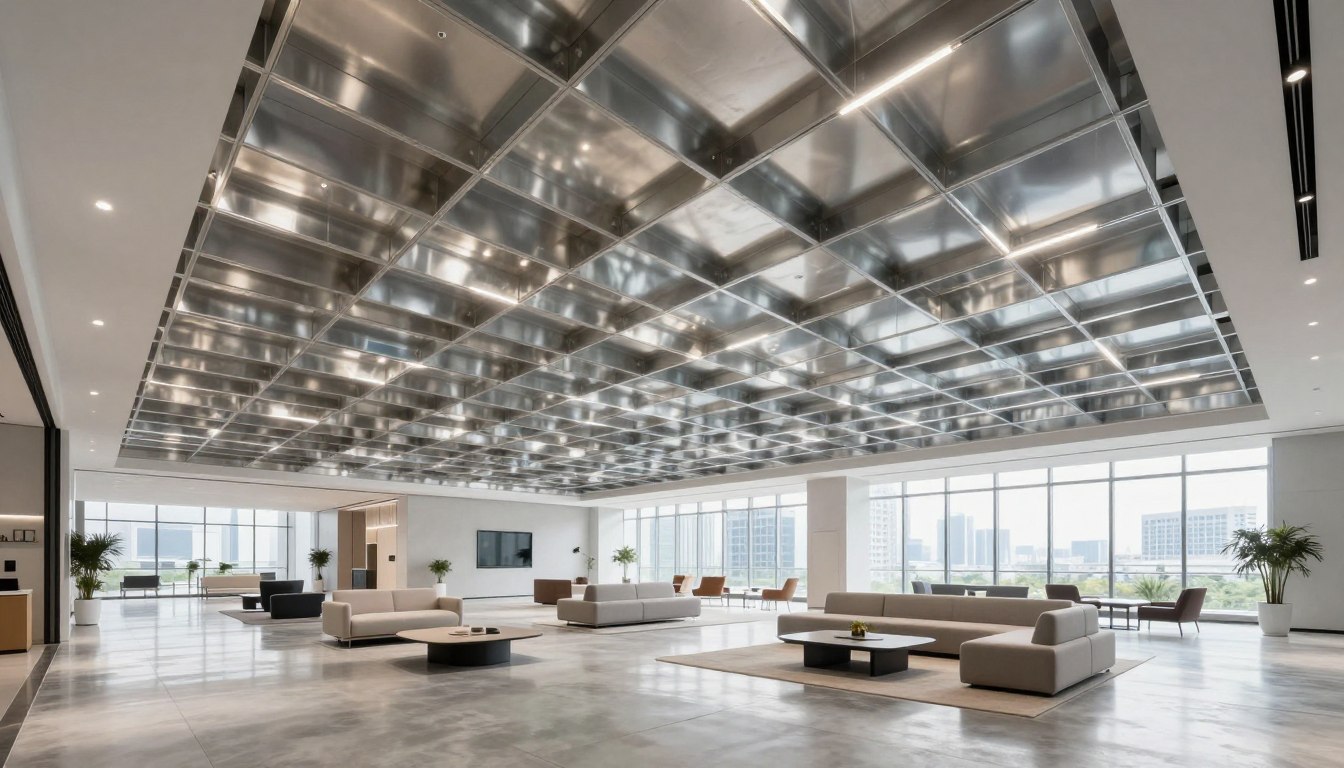
An aluminum ceiling system is a big change in building design. It uses lightweight aluminum panels and grid frameworks. This makes ceilings in buildings across the U.S. look good and be easy to access.
Old ceilings just hid the building’s inside. But an aluminum ceiling system does more. It lets you design your ceiling and keeps access to pipes and wires easy.
Today’s offices, schools, and stores often have aluminum ceilings. They use metals like AA3003 or AA5005. These are strong but light. They fit into a grid system for quick setup and changes.
Aluminum ceilings are popular because they offer many benefits. They make buildings last longer, look better, and save money. They’re also easy to install and maintain. Plus, aluminum is good for the environment because it can be recycled.
Modern buildings use aluminum ceilings because they solve big problems. They look great and work well. They fit any building type, from offices to homes.
Key Takeaways
- Aluminum ceiling systems are modular suspended ceiling solutions that combine aluminum panels with grid frameworks for versatility and accessibility.
- Drop ceiling systems using aluminum alloy materials offer faster installation compared to traditional drywall ceilings.
- Your building gains easy access to mechanical systems, pipes, and electrical infrastructure for maintenance and repairs.
- Modern architecture increasingly specifies aluminum ceiling systems for commercial, institutional, and residential applications across the United States.
- These systems provide design flexibility, durability, and cost-effectiveness throughout the building’s lifecycle.
- Aluminum materials are recyclable and contribute to green building certifications and sustainability goals.
- Customization options allow you to match your aesthetic requirements while maintaining professional functionality.
Understanding Aluminum Ceiling Systems in Modern Architecture
Aluminum ceiling systems are changing how we design buildings. They’re becoming popular in offices and homes. Knowing how they work and differ from old methods shows why they’re growing in use.
Definition and Core Components
An aluminum ceiling system has parts that work together. It starts with aluminum panels made from strong alloys. These panels are thin but strong, lasting a long time without being too heavy.
The main parts are:
- Aluminum ceiling panels in standard sizes like 600x600mm and 600x1200mm
- Ceiling grid systems that support the panels above your head
- Torsion spring ceiling mechanisms that allow quick installation and removal
- Optional acoustic backing materials for sound control
- Integration points for lighting fixtures and HVAC ducts
These systems let you customize your space. The torsion spring technology makes it easy to add or remove panels. This is great for when you need to get to the space above.
How Aluminum Ceiling Systems Differ from Traditional Ceilings
Drywall ceilings are hard to change once they’re up. Making changes means a lot of work and cost.
Here’s how they compare:
| Feature | Aluminum Ceiling Systems | Traditional Drywall Ceilings |
|---|---|---|
| Installation Time | Quick installation with torsion spring ceiling technology | Extended installation requiring finishing work |
| Access to Plenum | Easy removal of aluminum ceiling panels for maintenance | Difficult access requiring cutting and patching |
| Design Flexibility | Multiple finishes, patterns, and configurations available | Limited design options after installation |
| Renovation Costs | Affordable changes with modular ceiling systems | Expensive modifications and repairs |
| Concealment Ability | Effective hiding of wiring, plumbing, and ductwork | Requires additional preparation |
| Durability | Long-lasting aluminum materials resistant to damage | Susceptible to water damage and cracks |
Aluminum ceiling systems keep wiring and ductwork hidden. This makes it easy to access them for repairs or upgrades. Drywall ceilings don’t offer this, making changes hard and expensive.
With aluminum panels, you can choose from many designs. This flexibility is not possible with traditional methods. Modular systems mean you can change your mind without a big cost.
The Structural Advantages of Aluminum in Ceiling Applications
Aluminum is a top pick for ceiling systems today. It’s strong yet light, making buildings better. Aluminum ceilings are tough but don’t weigh much, helping your building stay strong without extra stress.
They’re about one-third the weight of steel. This means you can put them up quicker and save on labor costs.
Choosing aluminum ceilings means you get a material that fights off corrosion on its own. Unlike steel, which needs a coat to avoid rust, aluminum forms a protective layer. This keeps your ceilings looking good and working well in damp places like kitchens and bathrooms.
Aluminum is perfect for tough jobs because it’s strong but not heavy. This is great for renovations where adding weight is expensive. You can also use it outside without worrying about it rusting.
Aluminum can be shaped in many ways, keeping its strength. Aluminum ceiling solutions can be made into complex shapes that architects love. This lets you design freely while ensuring your ceiling lasts for years in homes and offices.
| Material Property | Aluminum | Steel | Benefit to Your Project |
|---|---|---|---|
| Weight (per cubic inch) | 0.098 lbs | 0.284 lbs | Reduces structural load and labor costs |
| Corrosion Resistance | Natural oxide layer | Requires coating | Lower maintenance requirements |
| Strength-to-Weight Ratio | Excellent | Good | Maximum durability with minimal burden |
| Lifespan in Humid Environments | 20-30+ years | 10-15 years | Extended performance and value |
| Installation Time | Faster | Slower | Reduced labor expenses |
Using aluminum ceilings makes your building stronger. It stays solid in all kinds of weather. You can trust aluminum for both inside and outside jobs without losing quality or style.
- Natural corrosion resistance eliminates need for protective coatings
- Lightweight construction simplifies installation and reduces labor time
- Maintains structural integrity in high-humidity environments
- Flexibility enables custom designs and complex geometries
- Minimal structural load on building frameworks
Customization and Design Flexibility with Aluminum Ceiling System
Aluminum ceiling systems offer endless design options. You can change any room with various panel styles, finishes, and features. Your design ideas can shine without compromising function.
Modern aluminum ceilings mix beauty with smart design. They help you create spaces that are both stunning and practical.
Panel Options and Finishes
Custom ceiling designs can have many surface treatments. Powder-coated aluminum comes in countless colors, letting you control the look. You can also choose PVDF coatings for durability, anodized finishes for a metallic look, or wood grain laminates for warmth.
Perforated ceiling panels add a design twist. They’re not just functional; they’re also a design feature. You can pick from simple acoustic holes to complex graphics with Graphic Perf®. This way, you can add branded elements, artistic patterns, or designs that manage light and sound.
Popular configurations include:
- Vapor® Cluster for dimensional cloud effects
- Trace® Straight for clean, linear aesthetics
- Particle™ Phase for textured appeal
- Delta Drop® for dramatic three-dimensional installations
Integration with Lighting and HVAC Systems
Your aluminum ceiling system works well with building infrastructure. It has mounting points for diffusers, sprinkler heads, and mechanical elements without losing its look.
Lighting fits right in too. InLine LED lighting is built into panel systems, and backlighting creates amazing visuals. Frosted backers and acoustic Soft Sound® backers in various colors boost functionality.
This means you don’t have to choose between looks and performance. Your space will be both beautiful and fully functional.
Durability and Longevity Benefits
Aluminum ceiling systems are known for their durability and long life. They are a wise choice for any building project. Unlike other materials, aluminum ceilings don’t wear out quickly. They stay looking good for many years, often longer than their 10 to 15-year warranty.
Aluminum’s strength comes from its natural oxide layer. This layer protects the metal from corrosion, unlike steel or other materials. Your building gets this protection without needing extra treatments.
Aluminum ceilings are great in tough environments where others fail. They work well in:
- High-humidity spaces like bathrooms and indoor pools
- Coastal buildings exposed to salt air
- Industrial facilities with chemical exposure
- Outdoor installations facing constant weather
Fire safety is another big plus. Your fire-rated ceilings achieve A2 non-combustible ratings. This helps your building meet strict fire codes. It also adds value and keeps people safe.
Moisture-resistant ceilings are also a benefit. PVDF coatings protect against UV and chemicals, perfect for outdoors or areas with cleaning products. Powder-coated finishes are great for most indoor uses.
Your aluminum ceiling won’t rot, warp, or grow mold. The aluminum panel system maintains its look and function well. It offers a great return on investment, unlike materials that need frequent replacement or lots of upkeep.
Installation Efficiency and Accessibility Features
Aluminum ceiling systems make installation fast and easy. They cut down the time needed to install compared to old methods. This means your project can start sooner, saving money and time.
Torsion Spring Technology for Quick Assembly
The torsion spring mechanism is a big leap forward in ceiling installation. It lets installers push panels into place, securing them without tools. This makes installation simple and fast, unlike traditional drywall methods.
Installing a ceiling with aluminum systems is much quicker. It takes hours, not days, compared to old methods. This saves on labor costs and shortens project timelines.
- Panels lock without fasteners or complex procedures
- Installation proceeds efficiently in occupied spaces with minimal disruption
- Reduced labor hours cut project budgets significantly
- Quick assembly enables faster occupancy of your space
Easy Access to Building Infrastructure
The accessible ceiling design offers ongoing benefits. The same technology that makes installation fast also lets panels be removed quickly. This makes it easy to access wiring, plumbing, and HVAC systems for repairs.
Accessing these systems for maintenance is a breeze. No more waiting hours for repairs. This saves money and reduces downtime.
| Maintenance Task | Traditional Ceiling | Aluminum Modular Installation |
|---|---|---|
| Panel Removal Time | 30+ minutes per section | Under 1 minute per panel |
| System Access | Requires professional ceiling repair | Immediate access without damage |
| Future Renovations | Limited without major work | Simple panel modifications |
| Building Adaptability | Limited without major work | Flexible system changes |
Your building can easily adapt to new needs without expensive changes. The modular design keeps access easy for the life of your facility.
Acoustic Performance and Sound Management
In today’s fast-paced world, quiet spaces are key. Your aluminum ceiling system can help control noise and reduce sound reflections. This makes spaces feel more peaceful.
Unlike solid panels, perforated aluminum panels work with sound-absorbing materials. This combo creates better acoustic environments for everyone. Workers, students, and visitors all benefit.
Sound travels through the small openings in the panels and hits the absorptive backing. This reduces echo and lowers noise levels. The size and spacing of the perforations affect how much sound is absorbed.
Adding materials like Soft Sound® acoustic backers boosts noise reduction. Your system looks modern and clean while delivering measurable results.
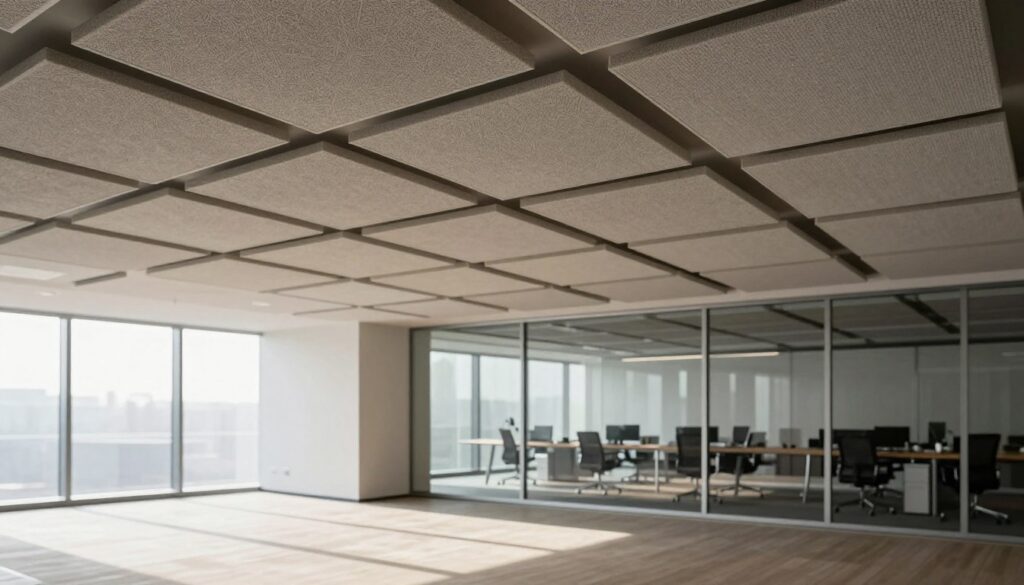
Your choice of acoustic ceiling panels is important for sound management. Perforated aluminum ceiling systems fit well with acoustically performative ceilings. They come in various colors to match your design.
These systems have Noise Reduction Coefficient (NRC) ratings similar to traditional ceiling tiles. But they offer better durability and style options.
Different spaces need different acoustic solutions. Here are key areas where noise reduction is critical:
- Open-plan offices where speech privacy supports concentration
- Educational facilities where classroom acoustics improve learning
- Healthcare settings where quiet spaces promote healing
- Auditoriums and performance venues requiring sound quality
- Airports and transit facilities needing announcement clarity
- Restaurants where comfortable conversation enhances dining
The acoustic performance of your ceiling system depends on several design factors. These factors work together:
| Design Factor | Impact on Acoustic Performance | Your Benefit |
|---|---|---|
| Perforation Size | Larger perforations allow more sound to reach backing material | Better noise reduction in higher-frequency sounds |
| Blade Spacing | Closer spacing affects sound wave passage | Customized acoustic control for your needs |
| Backing Material Type | Quality absorptive layers capture sound energy | Consistent performance and durability over time |
| Installation Method | Proper mounting ensures acoustic integrity | Maximum effectiveness of your noise reduction system |
| NRC Rating | Measures sound absorption from 0 to 1.0 | Clear comparison tool for acoustic effectiveness |
Your aluminum ceiling system offers great sound absorption without losing durability. Traditional acoustic tiles crumble and stain over time. But aluminum keeps its acoustic properties for decades.
Perforated aluminum panels with quality backing materials create spaces for focus, learning, healing, and enjoyment. Investing in proper acoustic performance boosts productivity, health outcomes, and user satisfaction in your building.
Sustainability and Environmental Impact
Aluminum ceiling systems are great for the environment. They meet today’s eco-friendly construction standards. Choosing aluminum means you’re picking a sustainable option. It’s good for the planet from start to finish.
Aluminum is special because it can be recycled forever. It keeps its strength and quality. This makes it a top choice for green buildings.
Aluminum ceiling systems help you reach your green goals. They often use recycled aluminum, up to 40% or more. This cuts down on new material use and supports the circular economy.
Recyclability of Aluminum Materials
Aluminum is very valuable for recycling in construction. When your ceiling system is done, the aluminum is worth a lot. It can be recycled right away.
Recycling aluminum saves a lot of energy. It needs only 5% of the energy to make new aluminum. This lowers your building’s carbon footprint.
The recycling process for aluminum panels doesn’t lose any quality. It keeps the same strength and performance as new aluminum. This makes it a great choice for sustainable projects.
- 100% recyclable without quality loss
- Requires 95% less energy to recycle versus virgin production
- Prevents waste from entering landfills
- Recovers embodied energy in the material
- Maintains scrap value at end of service life
Contribution to Green Building Certifications
Using aluminum ceiling systems helps you get green building certifications. It can earn points for LEED and WELL Building Standard. Aluminum ceilings last long, which means less waste and less need for replacements.
Aluminum ceilings help in many ways for green building credits. They get points for recycled content and recyclability. They also get points for being safe and not emitting harmful chemicals. Manufacturers’ documents help prove your project’s green credentials.
| Green Building Credit Category | How Aluminum Ceilings Contribute |
|---|---|
| Materials and Resources | Recycled content documentation and full recyclability at end of life |
| Indoor Environmental Quality | Zero VOC emissions and low off-gassing characteristics |
| Energy and Atmosphere | Reflective properties support lighting efficiency |
| Innovation Credits | Exceptional environmental performance and circular economy benefits |
Maintenance Requirements and Cost-Effectiveness
Aluminum ceiling systems are top picks for low maintenance ceilings. They require little upkeep, keeping costs down over time. Unlike old ceiling tiles, aluminum ceilings stay looking good with just basic care.
To keep your aluminum ceiling looking great, follow simple steps. Just dust it with a soft, dry cloth or use a vacuum with a soft brush. This keeps it looking fresh and needs doing only a few times a year.
For deeper cleaning, use mild soap and water with a soft cloth or sponge. The powder-coated finish resists stains and chemical damage. But, avoid harsh cleaners and chemicals that could scratch it. After cleaning, rinse with clean water and dry to avoid water spots.
The real benefit is in the long-term costs. Aluminum ceilings cost more upfront than basic tiles. But, they save money over time. Here’s why:
- They last 30+ years, while tiles last 10-15 years
- They need very little maintenance each year
- They save energy with built-in lighting systems
- They help lower HVAC costs
- Replacing damaged panels is easy and cheap
If a panel gets damaged, you can easily replace it. This avoids big repair costs. You can also keep spare panels for future repairs, ensuring perfect color matches.
Looking at costs over many years, aluminum ceilings are a smart choice. They save money on maintenance and have lower total costs than traditional ceilings.
Versatile Applications in Commercial and Residential Spaces
Aluminum ceiling systems have become a go-to for any building type. They work well in offices, retail spaces, healthcare facilities, and homes. These systems offer both beauty and function, fitting various needs.
Aluminum ceilings are not just for offices anymore. They make professional spaces in corporate offices, stores, and hotels. They help with sound and look modern, impressing everyone who sees them.
In offices, aluminum ceilings are great for open layouts. They help with sound, reduce distractions, and let you show off your brand. For example, Timberland’s headquarters in New Hampshire uses Delta Drop® ceilings.
At home, aluminum ceilings are a hit for their durability and style. They protect basements, patios, and outdoor areas from the weather. The Stanford Home of Champions shows how they can look in a home.
Schools, universities, and libraries need ceilings that block sound well. They must last through lots of students and help students learn better. Hospitals also need ceilings that are easy to clean and keep germ-free.
Airports and transit stations use aluminum ceilings for big projects. Renovations can get a quick update with drop ceilings. Factories and warehouses use them because they stand up to chemicals and moisture.
| Application Type | Key Benefits | Example Projects |
|---|---|---|
| Corporate Offices | Professional aesthetics, acoustic performance, brand expression | Timberland headquarters (Delta Drop®) |
| Educational Facilities | Durability, sound absorption, student-resistant design | Elmer A Knopf Learning Center (Vapor® Pixel) |
| Healthcare Settings | Easy cleaning, infection control, acoustic comfort | Exact Sciences Innovation Laboratory (Delta Drop®) |
| Residential Spaces | Design flexibility, moisture resistance, elegant finishes | Stanford Home of Champions (Vapor® Graphic Perf®) |
| Hospitality Venues | Aesthetic impact, durability, distinctive design | Hotels, restaurants with Trace® Slant systems |
| Transportation Hubs | Large-scale capability, quick installation, maintenance ease | Airports, transit stations with commercial solutions |
| Industrial Spaces | Chemical resistance, temperature control, moisture protection | Manufacturing facilities, food processing plants |
There are many ways to install aluminum ceiling systems. You can use them on walls with Vertika™ systems. This makes your space look unique. Aluminum ceilings also work well in big areas, keeping quality consistent.
Renovations get a big boost from aluminum ceilings. They hide old ceilings, improve sound, and add function without the cost of tearing things down. This is great for making over offices or buildings, saving time and money.
- Corporate and office environments with professional aesthetics
- Retail spaces enriching customer experience through unique design
- Educational institutions needing top-notch sound quality
- Healthcare facilities requiring easy-to-clean, durable surfaces
- Hospitality venues balancing beauty with performance
- Residential applications in basements and outdoor areas
- Transportation infrastructure supporting large-scale installations
- Industrial facilities resisting chemical and moisture damage
Choosing the right ceiling system depends on your needs. Aluminum is versatile, working well in any space. It adds value to every project.
Conclusion
Aluminum ceiling systems are now the top choice for modern buildings. They offer strength and lightness, lasting for decades without rust. These systems cut down on building loads and last longer than other options.
Choosing an aluminum ceiling means investing in a system that will last for generations. It’s a smart move for your building’s future.
Aluminum ceilings stand out because they can be customized. You can pick panels, finishes, and designs to fit your style. This choice greatly affects the look and feel of your space.
These systems also work well with lighting and HVAC, meeting today’s design needs. They’re eco-friendly, helping you earn green building credits.
Aluminum ceilings are also a smart financial choice. They’re easy to install, saving time and money. They’re simple to maintain, keeping your space looking great with little effort.
This means you save money over the life of your building. It’s a win-win for your wallet and your space.
Aluminum ceilings work in many places. They’re great for offices, schools, and even airports. They’re perfect for new buildings or updates.
Working with experts ensures you get the best system for your space. Choosing aluminum ceilings shows you value smart design and cost-effectiveness.