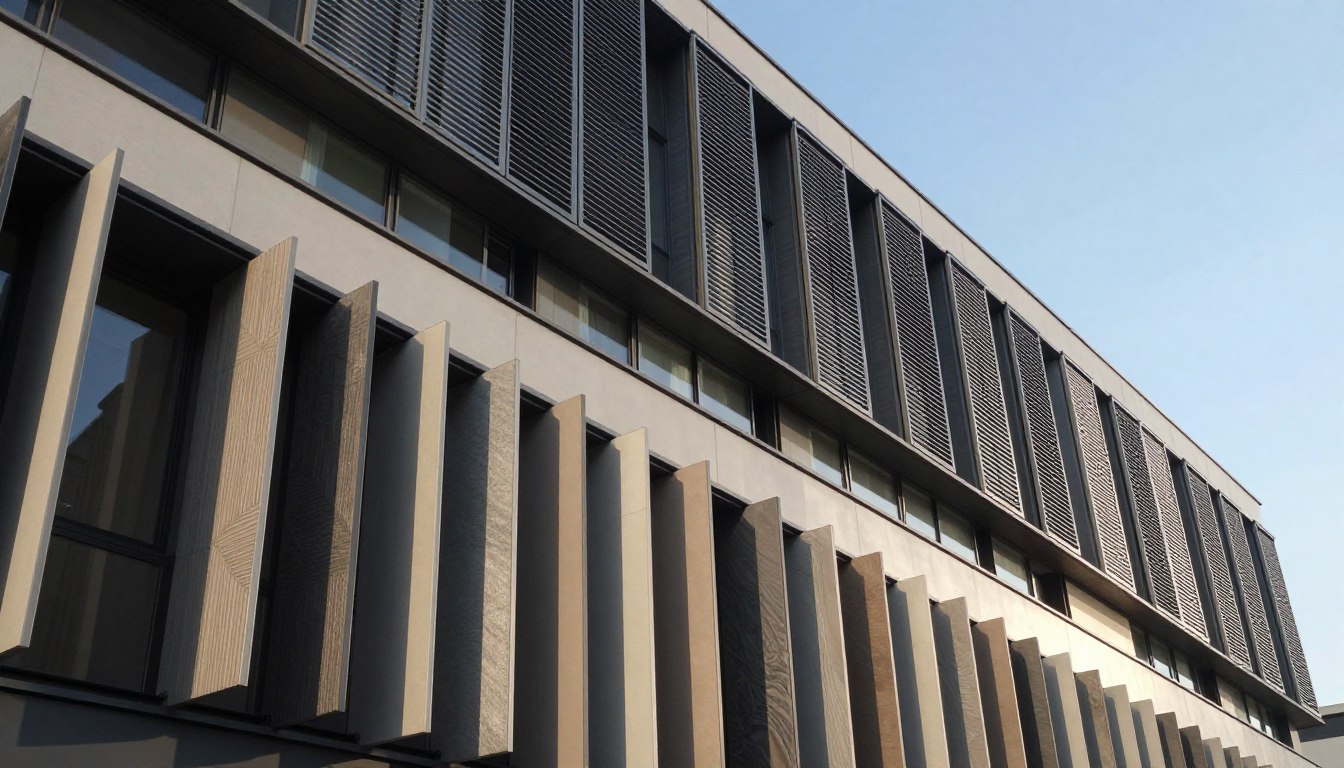
Privacy fins and architectural louvers are slatted elements used on building exteriors and interiors. They manage light, airflow, and sightlines. These components can be fixed or operable, acting as facade sun control to block heat and direct daylight.
As passive shading systems, privacy fins and louvers help reduce cooling loads and improve comfort. It’s important to specify them early and coordinate with glazing and structure. This ensures they enhance building envelope performance, not just look good.
Materials like aluminum are popular for their corrosion resistance and low maintenance. They’re great for facades, rooftop screening, and parking structures. Choosing the right type, orientation, and manufacturer is key. This way, these elements control the environment, not just look nice.
Key Takeaways
- Privacy Fin & Louvers regulate sunlight, ventilation, and privacy while improving facade sun control.
- Architectural louvers are effective passive shading systems that lower cooling demand and raise comfort.
- Early integration into design improves building envelope performance and reduces retrofit risk.
- Aluminum louvers provide durability and low maintenance for exterior applications.
- Treat louvers as engineering elements, not mere decoration, to realize their full environmental benefits.
Introduction to Privacy Fin & Louvers in Contemporary Facade Design
Today’s facades are all about looks and function. Architects use thin, slatted systems to control light, air, and privacy. These designs also add visual interest to buildings.
H3: Definition and core functions
Louvers are slatted elements that help manage sunlight, glare, ventilation, heat, and privacy. They play a key role in controlling solar heat gain and glare. They also allow natural light in while keeping buildings cool.
H3: Why louvers and fins matter beyond aesthetics
Glazed facades can lead to too much heat, glare, and higher cooling costs. Privacy fins do more than look good. They help control the climate, reducing cooling needs and energy costs.
H3: How early facade integration affects building performance
Designing with louvers early on ensures a smooth facade integration. This approach avoids costly retrofits and ensures energy savings. Treating privacy fins as essential parts of the design prevents common issues.
How Privacy Fins & Louvers Work as Passive Environmental Controls
Privacy fins and louvers do more than look good on buildings. They help control daylight, airflow, and heat. By choosing the right design, they can make buildings more comfortable and save energy.
Mechanisms for solar shading and glare control
Exterior fins block direct sun before it hits windows. This cuts down on heat gain and glare. The design’s success depends on how it’s set up, not just its look.
Vertical blades work best for sun coming in from the sides. Horizontal ones are better for sun from above. Adjustable louvers can change with the day to control light and views.
Ventilation support and natural airflow strategies
Louvers help with airflow by guiding it through openings. They work with windows and building layout to cool buildings naturally. This reduces the need for fans.
Fixed louvers keep airflow steady. But adjustable or motorized ones can change with the weather. This lets designers balance air flow with safety and protection.
Temperature regulation and reduction of cooling loads
Privacy fins block solar radiation, keeping buildings cooler. This means less work for air conditioning systems. It also cuts down on cooling needs over time.
Using shades with windows and interior shading is key. It leads to better temperature control. Over time, this can save money and improve building performance.
| Control Goal | Typical Louver Strategy | Key Benefit |
|---|---|---|
| Solar interception | Horizontal blades on south facades, vertical on east/west | Reduced solar heat gain and improved glare control |
| Daylight tuning | Adjustable louvers with automated controls | Consistent diffused daylight, lower artificial lighting use |
| Natural ventilation | Perforated or slotted natural ventilation louvers integrated with windows | Enhanced cross ventilation, passive cooling |
| Thermal load management | Exterior fins coordinated with high-performance glazing | Lower peak demand and reduced cooling loads |
Types of Privacy Fins and Louvers: Fixed, Operable, Vertical, and Horizontal
Choosing the right louver type starts with knowing what you need. Fixed louvers are strong and save money by blocking sun and sightlines. Operable louvers let you change daylight, privacy, and air flow as needed.
Fixed louvers are easy to keep up and cost less. They work well when the sun’s path is easy to predict. But, they might not do as well on sides that get sun at different times.
Operable louvers can be moved by hand or motor to control light and air. They can help save energy and make spaces more comfortable. But, they cost more upfront and need occasional upkeep.
Fixed versus operable systems — pros and cons
Go for fixed louvers if you want to save money and don’t mind less flexibility. Operable louvers are better for places where people need to adjust things often. Think about how much you’ll save on energy and comfort when deciding.
Vertical louvers: best uses for east/west façades
Vertical louvers are great for east and west sides. They keep out morning and evening sun while letting in air and views. They’re good for tall buildings, hotels, and places near the sea that need durable materials.
Vertical fins can be full or partial height. They’re good for moving blades inside for rooms and big open spaces. Designers often pick aluminum or stainless steel for them to last long in salty air.
Horizontal louvers: effectiveness for south-facing façades
Horizontal louvers are perfect for south sides. They block sun at midday and look good in corporate and campus settings. They reduce glare and cool spaces without blocking views.
| Feature | Fixed Louvers | Operable Louvers |
|---|---|---|
| Cost | Lower initial cost | Higher initial cost |
| Maintenance | Minimal | Scheduled actuator service |
| Performance Flexibility | Limited | High |
| Best Orientation | Predictable sun angles | Variable façades and mixed-use |
| Typical Applications | Parking screens, simple facades | Office towers, adaptive façades |
Choosing between louver types depends on the building’s needs. Sun path analysis helps decide between vertical or horizontal blades. Companies like Kawneer and Hunter Douglas offer systems that make choosing easier.
For more on privacy fins and louvers, check out detailed catalogs and performance data. This resource can help match components to your project’s goals.
Material Choices and Lifecycle Performance for Louvers and Fins
Choosing the right material affects a facade’s performance, cost, and upkeep over time. Designers must consider durability, looks, and exposure when picking between aluminum, HPL, wood, and metal louvers. It’s important to think about how the material’s lifecycle impacts long-term costs and maintenance needs.
Aluminium: corrosion resistance, weight, and common use cases
Aluminum is strong yet light, perfect for big spans and tall buildings. It resists corrosion well, thanks to anodizing or powder coating. This means less need for repainting and repairs. Architects often choose aluminum for commercial buildings and transit centers where upkeep is minimal.
HPL: UV stability, finishes, and premium exterior applications
High-Pressure Laminate panels keep their color and texture even under strong sunlight. HPL louvers offer woodgrain and modern looks without the upkeep of real wood. They’re ideal for high-end exterior projects where appearance and minimal fading are key.
Wood and other metals: situational suitability and maintenance
Wood louvers add warmth and a natural feel, great for semi-outdoor or sheltered spots. They need regular sealing and checks, which shortens their life in full sun. Steel and hybrid metals are strong for industrial settings but need strong corrosion protection and repainting.
Coastal and stormy areas need extra care for coatings and fasteners. Aluminum and finished metals work best in saltwater environments with the right anchors and warranties. Keeping track of louver material lifecycle during design helps avoid surprises, keeps costs steady, and boosts facade durability.
Design Considerations: Orientation, Spacing, and Angle for Optimal Performance
Good facade design starts with understanding solar geometry and site orientation. Use sun path analysis to set louver orientation and guide angle optimization. This ensures glazing and shading work together to reduce cooling loads and control glare.
Match louver spacing and profile to the building’s needs and desired look. Consistent spacing prevents uneven shadows and visual noise. Choose a profile that balances daylight and sightlines while keeping spacing uniform across bays.
For facades with operable blades, plan for clearances and coordinate actuators with controls and power. Vertical louvers need extra planning for blade travel and maintenance access, as sun paths change quickly on east and west elevations.
Start addressing wind performance early by confirming design loads and connection details. Calculate wind loads for local codes and exposure, important in coastal and high-wind areas. Anchoring systems must handle uplift and cyclic loading without fatigue.
Detail structural attachment louvers to allow movement and protect finishes. Brackets, rails, and slots should allow thermal expansion and prevent rattle. Review manufacturer shop drawings for anchoring patterns and corrosion protection in marine climates.
Use a table to compare common configurations and design trade-offs for quick coordination on projects.
| Configuration | Primary Benefit | Key Design Note |
|---|---|---|
| Horizontal shallow blades | High solar cutoff for low sun angles | Requires precise louver angle optimization and close louver spacing for effective shading |
| Vertical deep blades | Good for low glare on east/west façades | Actuation clearance and motor coordination are critical for operable systems |
| Perforated or patterned fins | Balanced daylight with privacy | Profile shape affects shadow quality; maintain uniform louver spacing for aesthetics |
| Open-frame sun louver assemblies | Lightweight, ventilated screening | Design attachments to resist wind loads louvers and allow thermal movement |
Early coordination of sun path analysis, louver spacing, and attachment details reduces surprises during construction. Clear shop drawings and structural review streamline approvals and protect long-term performance.
Energy, Comfort, and Operational Benefits of Privacy Fins & Louvers
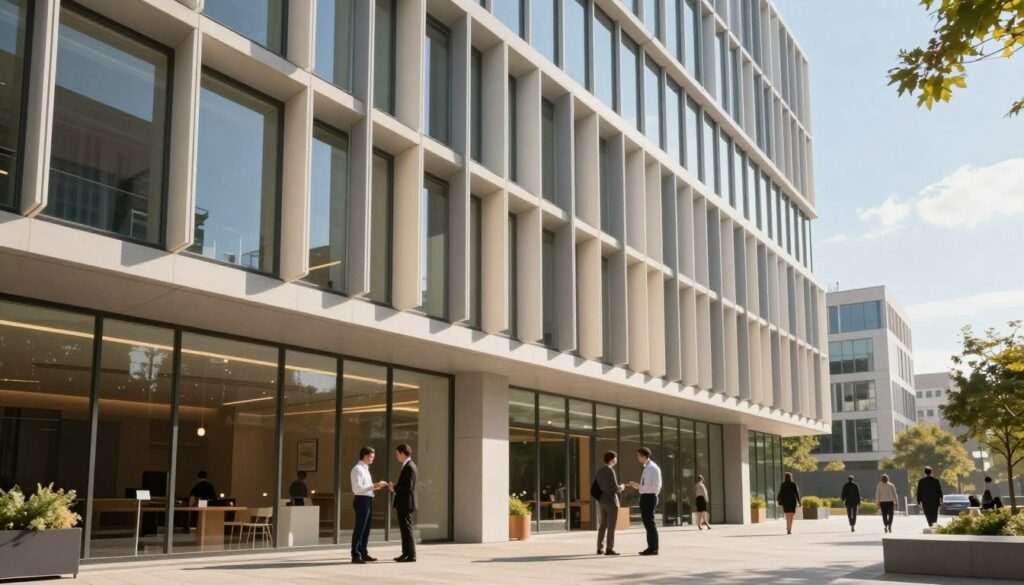
Privacy fins and louvers help control the climate without using energy. They block direct sunlight on windows, which lowers cooling needs. This keeps the indoor temperature steady while reducing HVAC use.
Reducing solar heat gain with passive shading
Louvers are angled to block summer sun and let in winter light. This reduces the need for cooling and makes HVAC systems work better. Designers use solar modeling to show how louvers cut HVAC demand in real buildings.
Managing daylight and visual comfort
Adjustable louvers control daylight and prevent hotspots. They provide soft light, reducing the need for electric lights. This improves comfort for office workers and students.
Glare management and tailored daylight strategies
Both fixed and operable louvers manage glare by redirecting sunlight. They work well with interior shades and lighting controls. This reduces glare complaints and boosts performance.
Material choices that lower long‑term costs
Choosing durable materials like aluminum or high-pressure laminate saves on maintenance. This reduces the need for frequent repainting and replacements. It also lowers the overall cost of louvers over time.
Operational value from quality detailing
Good planning, accurate brackets, and professional installation prevent problems. This includes rattling, misalignment, and early failure. It makes the initial investment last longer and brings long-term benefits.
Common Applications: Facades, Parking, Rooftop Screening, Interiors, and Storm Protection
Louvers and fins have many uses in buildings. They control daylight, hide equipment, and support ventilation. They also protect buildings from the weather. Choosing the right louvers helps meet performance goals while keeping buildings looking good.
Office towers, airports, hospitals, and commercial buildings use facade louvers. They control sunlight and create a unified look. These louvers help reduce cooling needs, manage glare, and add beauty to tall buildings.
Parking garages and ventilated areas need louvers that let in air but keep out rain and debris. Parking garage louvers offer ventilation while blocking headlights and reducing noise. They are essential in places where natural ventilation is required by code.
Rooftop equipment needs to be hidden but not block airflow. Rooftop screening louvers hide HVAC and other equipment. They allow for free airflow and improve the look of rooftops for everyone.
Interior louvers serve as walls, dividers, and light filters. In lobbies, classrooms, and meeting rooms, they separate spaces while keeping light flowing. They come in different styles and finishes to match various materials.
Places prone to storms need durable louvers that can handle salt, moisture, and strong winds. Use anodized or coated aluminum, stainless steel, or HPL for these areas. Strong anchors and wind tests ensure they last long in harsh weather.
Design teams should choose the right louver for each job. The right choice reduces upkeep costs and ensures they work well for a long time.
Specification, Installation Best Practices, and Common Mistakes to Avoid
Early decisions are key to louver performance. Start by specifying louvers in the schematic design phase. This ensures they align with glazing, structural, and MEP plans. If changes are made late, fixing issues can be costly or impossible.
Good facade coordination helps avoid costly rework and energy waste. It ensures the louver system works as intended.
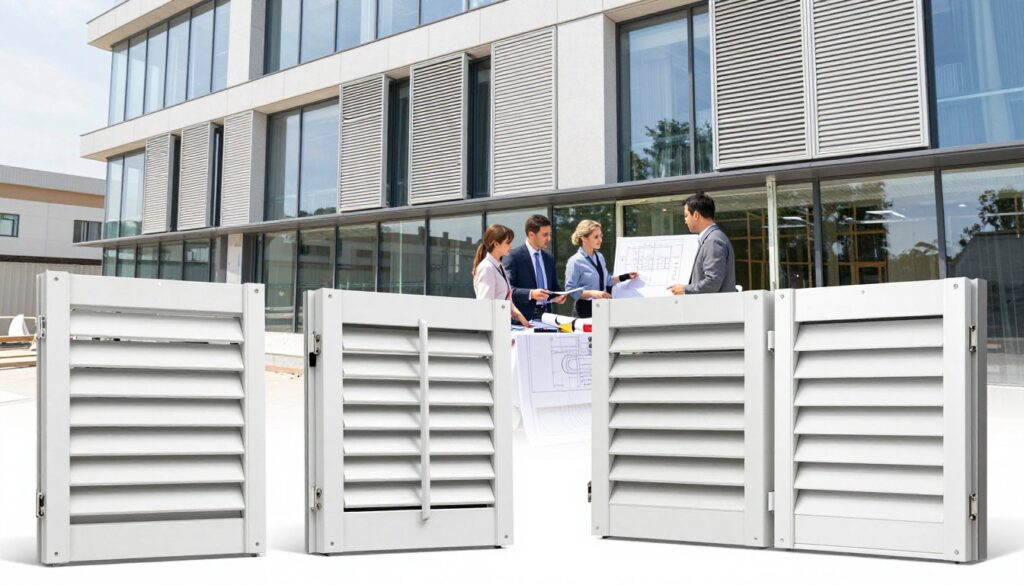
Choose suppliers with a track record and industry certifications. Brands like Kawneer, Hunter Douglas, and Kingspan offer custom solutions. They also provide corrosion protection and finish warranties for coastal areas.
Before making a final choice, ask for test data and material certificates. Also, ensure the warranty terms are clear.
Installers must follow best practices from the start. Use engineered brackets and frames that meet local wind loads. Allow for thermal expansion to prevent rattling and misalignment.
In high-wind zones, use rated anchors and ensure redundancy. This ensures the louvers stay secure.
Include design details on connection points and clearances. Label field tolerances and the sequence of operations. This prevents conflicts between glazing and louvers.
Use simple shop drawings that match structural plans. This streamlines work and reduces errors.
Understand the importance of louver anchoring systems. In coastal areas, mechanical anchors need corrosion-resistant fasteners and coatings. For heavy or large assemblies, specify shear plates or continuous rails.
Ensure the louver system is functional, not just decorative. Avoid choosing materials based only on initial cost. This ignores long-term exposure, maintenance, and corrosion resistance.
Verify that materials are suitable for the project’s climate. Aluminum with anodized or PVDF finish is good for many urban towers. Stainless steel or marine-grade alloys are best for coastal sites. High-pressure laminate is suitable for protected areas unless the manufacturer guarantees UV and moisture resistance.
Create a checklist with design loads, finish warranties, and anchorage details. Field mock-ups help confirm alignment and reveal spacing or expansion issues early. Good planning and clear installation practices reduce change orders and ensure performance.
Performance Comparison: Vertical vs Horizontal Louvers and Material Trade-offs
Choosing the right louver type and material is key for facade performance and budget. A sun-path analysis is more important than looks. Early planning and advice from facade experts are vital for US facade design louvers in different climates.
Vertical louvers work best on east and west sides to block glare and ensure privacy. Horizontal louvers are better for south sides to control summer sun and let in winter light. This approach matches daylight and thermal goals from studies and projects.
Material choices affect cost and performance over time. Aluminum is light, corrosion-resistant, and easy to maintain for big buildings and coastal areas. High-pressure laminate (HPL) offers premium looks and UV protection for unique projects.
Wood adds warmth but needs regular upkeep and can’t last long outside unless treated. Stainless steel and coated steels are strong for harsh areas but heavier and may need corrosion protection. Consider these trade-offs for your project’s needs.
Use metrics like daylight and thermal performance to guide your choice. Useful daylight illuminance and seasonal solar heat gain differences help determine the best design. For a detailed approach, see this study on shading system performance and.
Here’s a quick guide for louver selection in U.S. projects. Think about the orientation, lifespan, and upkeep needs for schools, hospitals, and commercial buildings.
| Aspect | Vertical Louvers | Horizontal Louvers | Typical Materials |
|---|---|---|---|
| Best Orientation | East / West façades | South façades | Aluminum, HPL, Wood, Steel |
| Sun Control | Strong for low-angle glare; good privacy | Effective for high-angle summer sun; steady shading | Coatings and finishes tailor performance |
| Privacy | High where view control is needed | Moderate; depends on blade tilt and spacing | HPL and wood improve visual warmth |
| Maintenance | Low to moderate; depends on material | Low to moderate; easier cleaning for horizontal blades | Aluminum lowest; wood highest |
| Durability in Coastal/Storm Zones | Good if stainless or coated; consider wind loads | Good if properly anchored; consider uplift | Stainless steel or coated aluminum preferred |
| Lifecycle Cost | Competitive for commercial projects | Competitive; depends on span and supports | HPL higher upfront; aluminum lowest total cost in many cases |
Make louver selection a part of integrated design reviews. Test designs with energy and daylight models early. Include lifecycle costs and maintenance plans to match materials with the building’s needs and climate for durable US facade design louvers.
Conclusion
Privacy fins and louvers are more than just decorations. They help reduce heat from the sun, improve air flow, and cut down on energy costs. They also add beauty to a building’s exterior.
Designing them early on is key. This involves studying how the sun moves, working with the building’s windows and structure, and choosing the right materials. Options include aluminum, HPL, wood, or stainless steel.
Louvers have many benefits in real-world projects. They work well in office buildings, parking garages, and even on rooftops. They keep buildings looking good and working well, even in harsh weather.
It’s important to install them correctly and take care of them. This ensures they last long and perform well. Doing so also keeps the warranty valid.
Louvers offer real benefits like lower cooling needs, better comfort for people inside, and less upkeep. They succeed when design, materials, and construction are well-planned. This makes them a smart choice for modern buildings in America.